Tools Bench.

Product launches and open-source repos with enough signal to earn a second look.

Last Brew Time: Aug 9, 2026, 10:22 AM PT

Insight

The surprise this run isn't builders orbiting agents again, it's how many independently built the same control-panel-for-your-coding-agents idea at once

Featured

GitHub125.3K

The most powerful and modular diffusion model GUI, api and backend with a graph/nodes interface.

Market Signal

Why It Has Market Pull

ComfyUI is a genuine, well-funded company behind one of the most widely used AI image/video generation tools -- $30M raised in April 2026 at a $500M valuation led by Craft Ventures, with reported enterprise customers including Netflix, Apple, and Ubisoft and roughly 4M users. On GitHub it has over 125,000 stars, continuous multiple-commits-per-day development, and hundreds of active contributors, making it one of the most credible and battle-tested tools in this batch and worth a closer look.

  • 125,356 GitHub stars, 14,830 forks, 4,495 open issues -- verified directly via the GitHub API
  • $30M raised April 2026 at a $500M valuation led by Craft Ventures (about $48M raised across two rounds total)
  • Reported ~4M users, with enterprise customers including Netflix, Apple, and Ubisoft
  • Shipped App Mode, App Builder, and ComfyHub in March 2026, extending reach beyond node-graph power users
  • G2 rating of 4.0/5 from verified reviewers

feedbacks

What People Are Saying

  • "ComfyUI hits $500M valuation as creators seek more control over AI-generated media"TechCrunch

  • "Enterprise clients generate thousands of assets, as seen in Super Bowl ads and Netflix titles"Industry coverage (Tech-Insider)

  • "the de-facto standard for professional AI image work by 2026"Community guide (BitsMinds)

  • "Workflows above ~50 nodes become hard to maintain visually"Production guide (Runflow)

  • "workflows that work on one machine may refuse to load on another's"Production guide (Runflow)

  • "4.0 out of 5 stars"G2 review

GitHub17.6K

No description captured yet.

Market Signal

Why It Has Market Pull

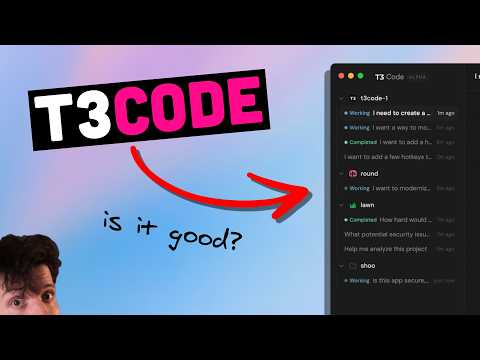
T3 Code is a real, fast-growing open-source project from Theo (t3.gg / Ping Labs), an established developer with an existing audience and business track record (T3 Chat, T3 Stack). It's an alpha-stage control surface for driving coding agents (Claude Code, Codex, Cursor, etc.) from web, desktop, and a newly shipped mobile app. GitHub numbers back up real usage: 17,581 stars but a notably high 1,383 open issues, meaning a large share of its base is filing real bug reports rather than just passively starring. Early reviews are mixed -- genuine day-to-day use exists, but core gaps are flagged by both the community and Theo himself, worth testing hands-on before relying on it.

  • 17,581 stars, 3,995 forks, 1,383 open issues per the GitHub API -- a high issue-to-star ratio signaling active real usage, not just starring
  • 36+ tagged releases since launch; grew from 0 to 9.6k stars fast per SourcePulse, now past 17.5k
  • Built by Theo (t3.gg), a founder with an existing business (T3 Chat, Ping Labs, T3 Stack) and large following
  • Shipped iOS/Android mobile app for remote agent control (Aug 2026), free and fully open source
  • Independent review flags concrete alpha-stage gaps: broken tilde path resolution, missing diff views, no web-server auth

feedbacks

What People Are Saying

  • "broken tilde path resolution, missing file diff views, and no security for its web server mode"daily.dev review

  • "brings little new to the table and needs significant work before daily use"daily.dev review

  • "Well it is in alpha so that is expected. I don't know about the unusable part given that is what I have been using since last week."daily.dev comment

  • "Over the last 4 days I've spent 3+ hours trying to work around weird bugs... did not expect the experience to be 10x smoother in our open source app"X post

  • "T3 Code Mobile app is getting way too good way faster than expected"X post

  • "T3 Code is now available on iOS and Android... Still 100% free. Still 100% open source."X post

GitHub17.1K

Agent Skills for Google products and technologies

Market Signal

Why It Has Market Pull

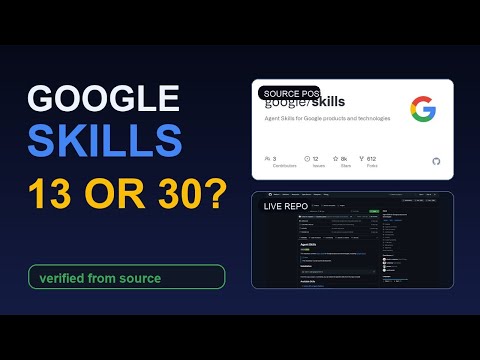
This is Google's own official, Apache-licensed Agent Skills repository, announced on stage at Google Cloud Next 2026 -- about as credible a signal as exists for this category. It already has real adoption (17,140 stars per the GitHub API), and Google has since added formal governance (automated link/metadata checks, weekly regression tests, internal eval scoring) purely to keep pace with internal teams wanting to contribute, a strong signal of real internal usage pressure rather than a one-off marketing repo. Worth close tracking given its role in standardizing the Agent Skills format industry-wide.

  • 17,140 GitHub stars, 1,390 forks, 32 open issues per the GitHub API (repo created March 2026, ~5 months old)
  • Announced on Day 1 of Google Cloud Next 2026 as Google's official Agent Skills repository
  • Installable via 'npx skills install github.com/google/skills'; compatible with Antigravity, Gemini CLI, and any Skills-spec agent
  • Google added automated URL/metadata validation and weekly regression testing after internal teams outgrew ad hoc contribution
  • Covers Google Cloud (BigQuery, GKE, Cloud Run, Firebase) and Workspace (Gmail, Docs, Sheets, Calendar) products

feedbacks

What People Are Saying

  • "A skill with weak instructions, dead links or incomplete handling of edge cases can undermine the wider repository and lead to poorer results from AI agents."Google Cloud Blog

  • "a living product rather than a one-off document"Google Cloud Blog

  • "Google Just Launched an Official Agent Skills Repository. Here's What It Actually Solves."DEV Community article

  • "a quiet announcement, but it points at one of the most persistent unsolved problems in production agentic AI"DEV Community article

  • "Google tightens oversight of its AI Agent Skills repository"ITBrief coverage

  • "The initial community reception exceeded expectations with over 15,000 GitHub stars."Industry coverage (AIToolly)

GitHub10.5K

A self-improving RLM agent for coding workflows and long-running autonomous tasks.

Market Signal

Why It Has Market Pull

Prime Agent is a fast-growing, MIT-licensed self-improving coding agent from Prime Intellect, a company that just closed a $130M Series A at a $1B valuation with an elite investor list. It combines real open-source momentum, credible funding, and a headline benchmark claim that has drawn both excitement and healthy scrutiny, making it worth a closer look for real coding-agent workflows.

  • 10,676 GitHub stars and 1,105 forks within roughly 3 months of its May 2026 repo creation
  • 218 contributors and near-daily releases (v0.7.0 and v0.7.1 shipped within the same week of August 2026)
  • Backer Prime Intellect raised $130M Series A at a $1B valuation in July 2026, led by Radical Ventures with Nvidia Ventures, Intel Capital, and angels including Aravind Srinivas and Aaron Levie
  • Claims 95.5% on ARC-AGI-3, edging the reported human-expert baseline of 95.4%, though this is a self-reported result on the public eval set pending independent replication
  • Covered by TechCrunch, MarkTechPost, and multiple AI newsletters within days of release

feedbacks

What People Are Saying

  • "A self-improving RLM harness for coding and long-running autonomous tasks, designed to be both token-efficient and expressive through programmatic tool calling"X post (Prime Intellect)

  • "A legitimate question about whether Prime Agent's self-improvement loop violates ARC-AGI-3's few-shot constraints"HN comment

  • "Skeptics have been burned before by systems that ace a leaderboard and then stumble the moment the test changes"Press analysis

  • "A score that clears the median human is harder to wave away than most AI headlines this year"Press analysis

  • "Empty draft session files (ghost sessions) and orphaned leases accumulate on shutdown"GitHub issue

  • "TUI: mouse selection highlight should persist after release instead of flickering"GitHub issue

  • "Show current working directory in the editor status line"GitHub issue

Sources

GitHub

LLM 驱动的多市场股票智能分析系统:多源行情、实时新闻、决策看板与自动推送,支持零成本定时运行。 LLM-powered multi-market stock analysis system with multi-source market data, real-time news, decision dashboard, automated notifications, and cost-free scheduled runs.

Why is this running? Trace any process, port, container, or file back to what started it - CLI + TUI.

The ultimate RAG for your monorepo. Query, understand, and edit multi-language codebases with the power of AI and knowledge graphs

Product Hunt

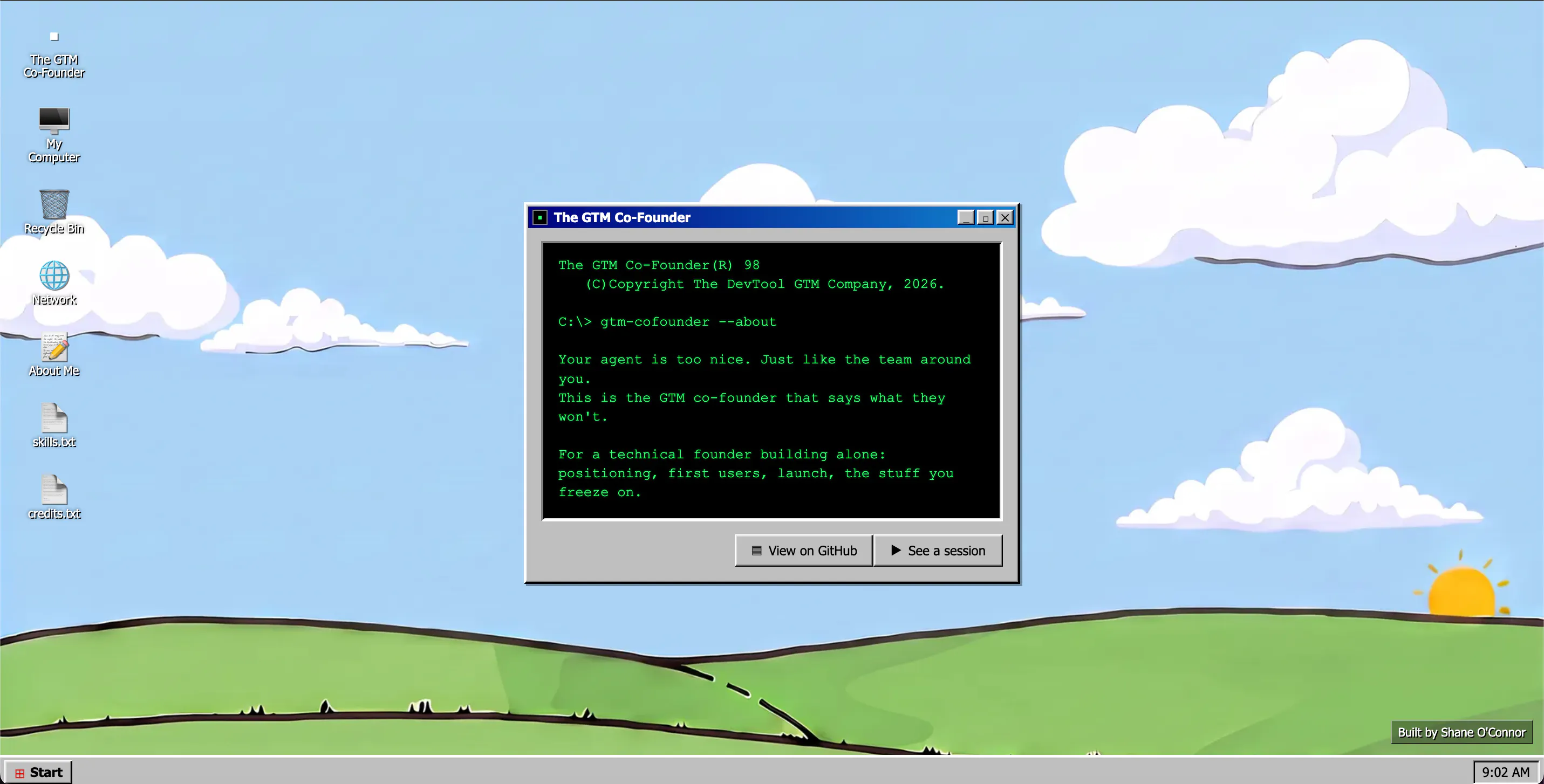
Most AI hands dev-tool founders the same generic sales and marketing advice. The GTM Co-Founder doesn't. It's a set of open-source skills that interview you once, learn your real product and market, then walk you move by move through a prioritised GTM roadmap: who it's for, positioning, your first 50 users, launch, pricing, etc. Grounded in the playbooks of Adam Frankl and Jakub Czakon, plus my own time as a Founding AE and GTM advisor. Free and open source.

An animated pixel-art map of the solar system with every body at its real current position, computed from published orbital elements rather than copied from a list. Zoom from the Sun to the Kuiper belt, browse 171 catalogued objects with sourced facts, and see what the sky is doing for the next six months. Every rock is also for sale: claim an asteroid for $5, keep it forever, name it whatever you like. A name here is shown on AstraPixels only, and is not an IAU designation.

One place where your company's AI skills, tools and knowledge live - centrally managed, reviewed and access-controlled, and usable from any AI agent. Hexis is a layer on top of Git: same core (versioning, PRs), plus a clean UX so anyone can use skills, suggest changes, and submit new ones and admins can govern which context, tools, and skills each person, team, or agent can access. Consumed via MCP, works in any agent in the company.

Subscribe to any Basedash dashboard or chart and get a fresh snapshot delivered on a schedule—straight to your inbox or a Slack channel. Pick the cadence (every Monday at 9am, daily, monthly on the 1st), choose who receives it, and each delivery arrives with up-to-date charts and a link back to the live dashboard. No exporting, no screenshotting, no remembering to share. The Monday metrics email your team wants, without anyone building it. Your dashboards, delivered on schedule.

A free, open source, local MCP gateway. Set up each server once and every AI agent shares it (Claude, Cursor, VS Code, Codex, and 29 more). Instead of dumping every tool definition into context, it exposes a few meta-tools your agent searches on demand. Benchmarked and graded for correct answers, that's up to 91% fewer tokens at the same task success. Secrets live in your OS keychain, not client configs. Rug-pulls and tool poisoning get flagged, and destructive calls can wait for your approval.

Most people quit fitness apps in week three. You do everything right for 21 days, the mirror looks identical, and all the app gives back is a number. Pocket Fit makes progress visible. Take one photo and AI shows you 1, 2, 3 and 6 months ahead and a 3D avatar changes as you train. Underneath: workouts with weights auto-picked and progressed, food logged by photo, muscle coverage tracking, mood, streaks, and a crew who roast you for skipping leg day. Built by two people in London.

YC Launch

Making aerospace and naval parts faster and cheaper for defense GUILD · Summer 2026 · Industrials Tags: Compliance, Manufacturing, Supply Chain, Defense, AI. Website: https://www.guildai.co

Hacker News

Scraping modern websites has become a massive headache. You basically have two choices: pay for an expensive API like Firecrawl/Browserbase, or run a fleet of headless Chrome instances that eat 1GB of RAM per page and still get blocked by Cloudflare. I built Draco to fix this. It’s a fast, single-binary web scraper written in Rust. You point it at a URL, and it spits out perfectly clean Markdown or structured JSON for LLMs. The secret sauce is that it doesn't just boot a browser for every reques... (14 points, 10 comments).

Creating 3D is hard. LLMs seem to be getting better at tool use and spatial understanding. While MCPs have proved to be a good way to use these tools- the current methods have these challenges: - Access to scene graph and core C modules of Blender - Lack of parallelism, only way is to run blender headless - Lack of deterministic and fast verification layer - Inference stack- only way to use inference is to hook another MCP We're building Mixar, think Cursor for 3D. One access point to all genera... (6 points, 6 comments).

Setting up developer environments is surprisingly manual. Most teams rely on a mix of docs, shell scripts, and tribal knowledge. We built Codify to make the process reproducible with a Terraform-like workflow. The project consists of an open-source CLI, a JSON5 based configuration language, a library of 50+ resources, a web/desktop editor, and an AI assistant. The workflow mirrors Terraform: plan + apply to make changes, and import + refresh to synchronize an existing configuration with the curr... (4 points, 5 comments).

Hey, built watchfire because I wanted a way to run multiple agentsnat the same time without having to click accept permissions. That evolved into a way to do it securely, which then evolved into a spec-based dev approach with tasks. Last addition was to add support to expose watchfire as an mcp server. Would love to get feedback. (3 points, 2 comments).

HF Spaces

Demo of the Collection of Qwen Image Edit LoRAs Qwen-Image-Edit-2511-LoRAs-Fast is a Hugging Face Space tagged with gradio, mcp-server, region:us. It has 2380 likes on Hugging Face.

Use multiple FLUX.2-Klein LoRAs Note: This space is experimental and may log image-uploads during certain periods for performance monitoring. Always comply with HF and model Terms of Service. Any stored images are automatically deleted after 7 days. FLUX.2 Klein multi-LoRA is a Hugging Face Space tagged with gradio, mcp-server, region:us. It has 346 likes on Hugging Face.

Wan2.2 I2V Blink Effect The public app.py is a bootstrap. It downloads and executes app.py from the private Hugging Face model repository configured by LORAREPO. Required Space secrets/variables: LORAREPO: private model repository ID containing the backend app.py PRIVATEMODELKEY: read token for that repository LORABACKENDREVISION: optional pinned commit SHA (defaults to main) LORABACKENDSHA256: optional SHA-256 of the private app.py Wan2.2 I2V OmniBlink is a Hugging Face Space tagged with gradio, region:us. It has 206 likes on Hugging Face.

194 likes

Video generation with a synchronized soundtrack MiniMax-H3 — unquantized, split across two Spaces Joint video and soundtrack out of a single denoising pass, at bfloat16 with no quantization anywhere. This Space is the denoising half: the 61.73 GiB transformer and the two autoencoders. The 62.14 GiB Qwen3-VL conditioner runs in qwen3vl-conditioner, which this Space calls over the gradio API for every request. The weights are the public MiniMaxAI/MiniMax-H3 diffusers checkpoint. MiniMax-H3 is 195.9 GiB in bfloat16 and a ZeroGPU Space is evicted at 150 GB of storage. An unquantized single Space is therefore impossible, which is why quantized demos of it run NVFP4 or float8 weights. Cut the Mini...

Multi-view character sheet from one image (FLUX.2 LoRA) This Space demonstrates the CharacterSheet QuadView LoRA applied on top of FLUX.2 Klein 9B. Upload a clear, well-framed image of a character and the model produces a multi-view character sheet: a face close-up plus front, side, and back full-body views on a single 1536×1024 sheet. CharacterSheet LoRA Demo is a Hugging Face Space tagged with gradio, mcp-server, region:us. It has 104 likes on Hugging Face.

Unquantized MiniMax-H3 from image, audio, video refs MiniMax-H3 — omni-references, unquantized, split across two Spaces Joint video and soundtrack out of a single denoising pass, conditioned on an ordered list of image, video and audio references, at bfloat16 with no quantization anywhere. This Space is the denoising half of the ref2va task: the 61.73 GiB transformerref partition and the two autoencoders. The 62.14 GiB Qwen3-VL conditioner runs in qwen3vl-conditioner, which this Space calls over the gradio API for every request — the same conditioner Space, and the same resident weights, that the keyframe half minimax-h3 uses. MiniMax-H3 is 195.9 GiB in bfloat16 and a ZeroGPU Space is evicte...

AI Tools — August 9, 2026 Edition | Agentic Brew