Tools Bench.

Product launches and open-source repos with enough signal to earn a second look.

Last Brew Time: Oct 18, 2026, 11:04 AM PT

Insight

Builders are converging on packaging agent capability as an installable unit rather than hand-rolling it

Featured

GitHub216.3K

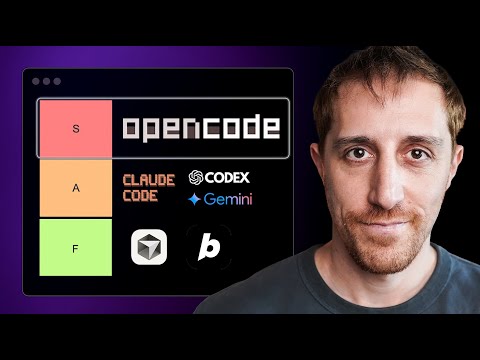
The open source coding agent.
Market Signal

Why It Has Market Pull

Opencode (from Anomaly, formerly SST) is one of the most established open-source coding agents around, with over 216,000 verified stars and genuinely detailed, mixed independent feedback on Hacker News — some users find it more stable than Claude Code, others flag resource use and release-stability concerns. This is a mature, real product worth tracking, even in a crowded category.

  • Verified at 216,421 stars and 28,974 forks on GitHub, pushed again today
  • A Hacker News user reports OpenCode has been much more stable for them over 6 months of comparing it against Claude Code
  • Another Hacker News commenter counters that it releases at an extremely high cadence without enough testing
  • Supports 75+ model providers and ships as a terminal UI, desktop app, and IDE extension

feedbacks

What People Are Saying

  • "they're constantly releasing at an extremely high cadence, where they don't even spend the time to test or fix things"HN comment

  • "OpenCode has been much more stable for me in the 6 months or so that I've been comparing the two in earnest."HN comment

  • "it's fairly resource inefficient (often uses 1GB of RAM or more. For a TUI)."HN comment

  • "OpenCode does not sandbox the agent. The permission system exists as a UX feature... not designed to provide security isolation."GitHub issue

  • "over 180,000 GitHub stars and a large contributor base"Dev.to article

  • "compatibility with over 75 models, including Claude, OpenAI, Gemini, and local models"Dev.to article

GitHub138.4K

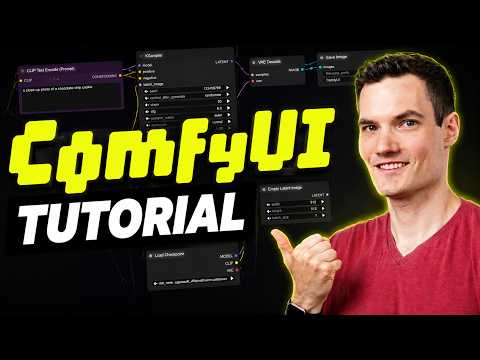
The most powerful and modular diffusion model GUI, api and backend with a graph/nodes interface. The fastest local inference engine in the world.

Market Signal

Why It Has Market Pull

ComfyUI is an established, company-backed product that is already the de facto standard node-based interface for image and video diffusion work, with sustained multi-year community adoption across dedicated communities with hundreds of thousands of members. This is a proven, mature tool rather than a fresh discovery, and it remains worth tracking for ongoing feature and ecosystem moves.

  • Verified at 138,517 stars and 16,494 forks on GitHub, continuously active since its 2023 creation
  • Treated as the standard tool by a 750,000+ member Stable Diffusion community and a dedicated ComfyUI-focused community
  • Independent reviewers note it runs faster than comparable interfaces for similar workflows, per community benchmarks
  • Users consistently describe a real learning curve that was deemed worth it after months of investment to get fluent results

feedbacks

What People Are Saying

  • "the most powerful and most discussed Stable Diffusion interface in the AI art community"Dev.to article

  • "The learning curve is steep, but it was deemed worth it after months of investment to become fluent enough to generate desired results."Reddit r/comfyui

  • "faster performance than comparable interfaces for the same tasks per community benchmarks"Reddit r/comfyui

  • "The node graph interface is not for everyone — the learning curve is real"TechCrunch article

  • "needs a videocard with at least 12GB of VRAM"Reddit r/comfyui

  • "every generation step is visible and editable"Dev.to article

GitHub96.3K

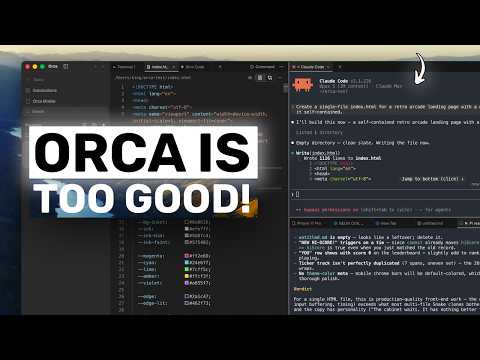
Orca is the place for working with a fleet of agents (e.g. Grok Bot, Claude Code). Run any coding agent with your own subscription. Available on desktop, mobile and remote runtime.

Market Signal

Why It Has Market Pull

Orca is a real, actively-shipping product from a funded startup (Stably) with daily releases, a working mobile companion, and genuinely positive independent reviews and Hacker News testimonials — this looks worth a closer look rather than just hype. The caveat is that daily shipping cadence trades off some polish, with users citing rough edges and missing features.

  • Verified at 96,444 stars and 6,167 forks on GitHub, pushed again today
  • A Hacker News commenter reports using Orca recently for both coding and as a terminal and liking it a lot
  • Independent review calls its Design Mode the workflow that paid IDEs have been promising for a while and which Orca shipped first as open source
  • Ships daily per its own README, though that pace comes with acknowledged rough edges (missing vim bindings, slower editing UX for some users)

feedbacks

What People Are Saying

  • "I'm using Orca recently for both coding and as a terminal and like it a lot"HN comment

  • "If you've been running three terminal panes and cd-ing between worktrees — Orca is the tool you've been building badly in your head."Dev.to article

  • "This is the workflow that paid IDEs have been promising for a while and which Orca shipped first as open source."Dev.to article

  • "we ship daily, so this feature list is perpetually behind"GitHub issue

  • "found the editing experience too slow for daily use and noted missing polish features like vim bindings"HN comment

  • "enormously better than manually checking"Dev.to article

GitHub12.7K

Cursor plugin specification and official plugins

Market Signal

Why It Has Market Pull

This is Cursor's own open plugin standard, not a scrappy side project, and it already has nearly 12,700 real GitHub stars plus co-sponsorship from AWS, GitHub, VS Code, and Vercel, so there is genuine cross-vendor momentum. Early usage reports are mixed, with cloud-agent plugin compatibility still rough around the edges, so it's worth tracking as it matures rather than treating as finished.

  • Verified at 12,686 stars and 1,246 forks on GitHub, actively pushed as recently as today
  • Backed by Cursor, with the standard co-developed alongside AWS, GitHub, VS Code, and Vercel
  • Official Cursor account promoted it directly on X as an open standard for bundling skills and MCP servers for use across agents
  • Early adopters report cloud-agent plugin compatibility gaps (e.g. Slack and other integrations not yet working the same way they do locally)

feedbacks

What People Are Saying

  • "Cursor now supports Agent Plugins, an open standard for bundling skills and MCP servers for use across agents."X reply

  • "MCP servers bundled with skills as a single deployable unit — basically a package manager for agents."Dev.to article

  • "Most installed plugins are not compatible with cloud agents."GitHub issue

  • "the cloud agent doesn't seem to have access to installed plugins like Slack"GitHub issue

  • "CLI-backed repo compatibility scans plus agents that audit startup, validation, and docs against reality"GitHub issue

  • "Support for .agent folder compatibility"GitHub issue

HF Spaces103 likes

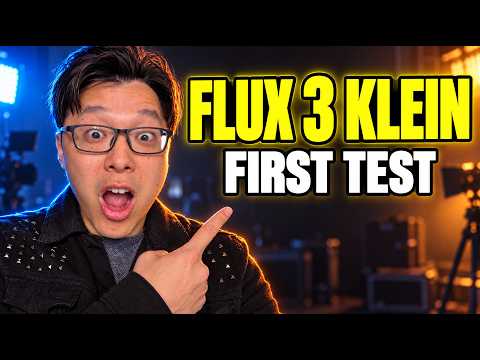
5.6B open weights. Text-to-image, editing, bounding boxes FLUX 3 Image Klein is a Hugging Face Space tagged with gradio, mcp-server, region:us. It has 103 likes on Hugging Face.

Market Signal

Why It Has Market Pull

FLUX 3 Image Klein is a genuine flagship release from Black Forest Labs, the research team behind the FLUX model family, making it one of the most credible entries among similar tools. There's real builder and press momentum around it, though early hands-on testing has surfaced quality complaints worth watching before wider adoption.

  • Published directly by Black Forest Labs, the team that created the FLUX image-model line, not a third-party wrapper
  • The underlying model card has gathered over 140 likes and more than 31,000 downloads in a single month
  • Covered by major outlets including a dedicated Hacker News front-page thread and the official Hugging Face blog within days of launch
  • Early testers flagged anatomy and face-quality regressions compared to the prior FLUX 2 Klein release
  • 103 likes on the demo page itself, with active discussion threads opened within the last few days

feedbacks

What People Are Saying

  • "FLUX 3 Image Klein is here. Open Weights with the quality of a large frontier model... 5.6B parameters and runs on a single consumer GPU."X reply

  • "we just released the best open weight image model: FLUX 3 Image Klein is super efficient and mega nice"X reply

  • "The Text-to-Image component is VERY poor. It's not a good sign when the stock ComfyUI template produces SD 1.5 levels of half-melted faces."HN comment

  • "I gave Flux 3 Klein my typical human test that has never failed on newer image models and it did fail; the fingers were definitely not the correct proportions."HN comment

  • "Very disappointing compared to Flux 2 Klein. This model is absolutely atrocious."HN comment

  • "Pretty bad~~ Not as good as the previous generation~!"HF Space discussion

Sources

GitHub

76.4K

🌊 The original agent harness. Deploy intelligent multi-player swarms, coordinate autonomous workflows, and build conversational AI systems. Features adaptive memory, self-learning intelligence, federation, vector RAG integration, and native Claude Code / Codex / Hermes and many more Integrated

VoiceStudio is the open-source, fully-local ElevenLabs alternative — voice cloning, voice design, video dubbing, dictation, transcription & audiobook creation in 646 languages.

"CLI-Anything: Making ALL Software Agent-Native" -- CLI-Hub: https://clianything.cc/

The job search that runs on your machine. AI job application framework built on Claude Code: evaluate postings, tailor CVs, write cover letters, prep interviews. Fork it and own it.

Product Hunt

NitroStack is the full-stack platform for building production-ready MCP servers and AI apps. Build with open-source TypeScript & Python SDKs, test and debug visually in NitroStack Studio, orchestrate agent workflows with NitroStack Workflow, deploy on NitroStack Cloud, and ship branded experiences with NitroStack Chat. Auth, testing, deployment and frontend stay in one workflow. Connect to ChatGPT, Claude and other AI clients. Powering 80,000+ MCP servers.

Caldera turns your Obsidian vault into a public page that updates itself, and a digital garden of notes you grow in public. Plant a note and it becomes a page marked seedling, budding or evergreen, with a license you choose. Link to a note in a friend's garden and the backlink appears on theirs. Private by default: nothing leaves your vault unless you choose it, and contact details are stripped. Free, open source and self-hostable.

Notion 3.8 turns your workspace into the shared context layer for every AI agent your team uses. Unlike chat tools that start from zero each time you switch models, Notion keeps your docs, databases, and Skills in one place any MCP agent can read and update. Connect Claude, ChatGPT, or any MCP agent, plug Notion Agents into 150+ tools, sync Skills everywhere with the new Skills API, and see every agent edit in upgraded version history. Plus column permissions and rebuilt synced databases.

Craft Agents is fully open source and runs locally on your machine — your data and keys never leave it. Bring any AI provider: Claude, GPT, Gemini, or local models. Agents connect to your real tools (MCP, APIs, local files) and act across all of them. Code diffs, data tables, diagrams, and live previews render inline. Turn results into persistent Pages, teach reusable Skills, and run Automations on a schedule — all in a desktop UX you can actually live in.

GPU cloud pricing is scattered across dozens of providers. GPU Terminal brings recent hourly rates into one dashboard. Pick your GPU, compare provider offers, explore price history, and check original sources. Open source and built by Context.dev.

Agents write most of the code now. Ultracite is the linter and formatter for agentic development, a zero-config preset for Oxlint, Biome, and ESLint that keeps agent-written code consistent and type-safe. Ultracite checks every edit agents make against hundreds of strict rules in under half a second, so what reaches review is consistent, type-safe code instead of slop. Used by engineering teams at OpenAI, Vercel, Mintlify, and thousands of open source projects: ultracite.ai

YC Launch

Hacker News

Back when I lived in Central Florida, it took me years to learn what native plants could benefit wildlife and the local ecosystem as I slowly replaced parts of my yard to make it more resilient to drought. After moving to Seattle a few years ago, I had to start all of that from scratch. LLMs made the process a bit easier but I still had to routinely ask the same kinds of questions over and over, despite being far more familiar with native plants these days and leaning more on native plant societ... (119 points, 48 comments).

Hello HN! Wonderhop is a small browser game with no account needed to play, everyday there are 4 rounds of 7 quesitons like "Name a food that a lot of people hate" The goal depends on the mode: Either gives the answer most people would give, the one no one would give, the oldest answer or the most recent one and there's a leaderboard for the day. The most interesting part of the project was understanding answers that are typed freely and in 10 languages, there was some typos, plurals, nickname,... (117 points, 95 comments).

About 11 months ago i revived the amazing but unfortunately unmaintained spotify-tui. Since then I have been working on it almost non stop, finding a lot of problems on the way. One of the main issues I ran into were the Spotify web API rate limits. Third party clients like spotatui are dependent on a developer app made in the Spotify developer dashboard, which get rate limited a lot and Spotify has slowly been deprecating endpoints from it. The workaround for this used to be using a shared clie... (92 points, 19 comments).

Tenuo is a task-scoped authz primitive for agentic work. We are an open protocol and an open source implementation at github.com/tenuo-ai/tenuo We created a fork of OWASP finbot with Tenuo wired in and red-teamed it with promptfoo. We went from 50 successful attacks to 0 with Tenuo. The promptfoo attacks were able to fool the model, but the deterministic guardrails Tenuo provides stopped it from acting on the poisoned instructions. (4 points, 2 comments).

Hi HN, excited to be open sourcing two tools that we have built over past few months which helps to understand your own work with AI coding agents Agent Desk is a local macOS app which allows you to browse your sessions across all top coding agents - Claude code, cursor, codex, github copilot, Kiro, Antigravity. You can find sessions by your projects, revisit those conversations, understand and inspect your entire harness - rules, skills, hooks, subagents. https://github.com/tetriz-ai/agent-desk... (4 points, 3 comments).

HF Spaces

Benchmarks and news on various repros of TypeSafe's Jev Who is rebuilding TypeSafe's Jev (System One / RLCD) in the open? This static Space opens on the Decision Index leaderboard; the News tab tracks the artifacts in one combined grid, color-coded by kind: Decoding: parallel constrained decoding on stock models (inference technique, no new weights) Diffusion: text diffusion models run in a "Jev mode" Trained: Jev-like scoring heads and fine-tunes, weights often on the Hub, promised models listed last Prior art: "this already exists" claims Explainers: architecture speculation, explainers, benchmarks and roundups Cards sort by a trending score: ♥ likes on X + 5 × GitHub stars + 8 × Hub likes...

6-step Qwen-Image-2.1, T2I + editing, vs-base comparison Viggle Turbo v0.3 — 6-step Qwen-Image-2.1 A distilled Qwen-Image-2.1 that generates and edits images in 6 steps with no classifier-free guidance, about 5× faster than the 40-step base model. On most prompts it is hard to tell apart from the base model; small, dense text and complicated edits (multi-reference composition, face swaps, identity-preserving edits) can still fall short of it. v0.3 (2026-09-29): at 6 steps, less grain than v0.2.1 and a little softer on fine texture. We think 6 steps is close to its capacity: every further gain we found cost something elsewhere. The new 9-step setting runs 7 turbo steps and lets the base model...

Head swap with the BFS LoRA on Qwen-Image-2.1 (+turbo) Head/face swap demo for the BFS bfsheadv1qwen2.1 LoRA on Qwen-Image-2.1, with an optional Viggle turbo 6-step mode. Example inputs are cropped from the example images in the BFS model repository (MIT license). Qwen-Image-2.1 and the Viggle turbo LoRA are under the Qwen Research License (non-commercial). Do not use or share results involving people who have not given consent. BFS Best Face Swap is a Hugging Face Space tagged with gradio, mcp-server, region:us. It has 327 likes on Hugging Face.

One photo into a frozen-instant 360° camera orbit pablodawson/MiniMax-H3-360-Orbit-LoRA is a rank-16 ai-toolkit adapter for MiniMax-H3's first–last-frame (fl2va) partition that turns one photo into a frozen-time 360° camera orbit: the camera travels all the way around the subject, nothing in the scene moves, and the clip closes on the exact frame it started from — so orbits chain or stitch into longer shots with no visible seam. Upload a photo and press Orbit 360°. The photo is fed to MiniMax-H3 as both the first and the last keyframe — the wiring the LoRA was trained with, and what pins both ends. Every knob the card recommends is preset: 768×768, 73 frames (≈ 3 s at 24 fps), 28 steps, no C...

8-step text-to-image and editing with Qwen-Image-2.1-Turbo Text-to-image generation and multi-image editing with Qwen/Qwen-Image-2.1-Turbo, the official 8-step distilled checkpoint of Qwen-Image-2.1, running on ZeroGPU through QwenImage21Pipeline in diffusers. Text to image: leave the input gallery empty and describe what you want. Image editing: upload up to 10 images and refer to them as … . Transparency: the model natively decodes RGBA. Ask for it in the prompt. Sampling follows the model card: the checkpoint's saved 8-step sigma schedule, CFG 1 and prefix KV caching. The transformer blocks and VAE decoder run as ahead-of-time compiled kernels (AOTInductor) from hugging-apps/qwen-image-2-...

79 likes

Direct Fish Audio Drama 3, streaming on ZeroGPU Write a line, choose a voice, and direct the performance. This version runs the actual Drama 3 model inside a @spaces.GPU call for each take. It needs no inference endpoint or endpoint token. The Studio and Workflow tabs use the same model backend. The Space has no app-level login, daily take allowance, or allowance banner. Hugging Face applies each visitor's ZeroGPU quota and GPU queue priority. Platform quota errors are shown on the stage. First audio may take longer when a GPU must be allocated or a fresh GPU worker must initialize. Surprise is first and selected by default. Clone uses one of the three preset voices, an uploaded clip, or the...