Tools Bench.

Product launches and open-source repos with enough signal to earn a second look.

Last Brew Time: Jun 18, 2026, 7:35 AM PT

Insight

The strongest pull this run is away from the cloud, toward AI that runs entirely on the user's own hardware

Featured

GitHub21.6K

Kilo is the all-in-one agentic engineering platform. Build, ship, and iterate faster with the most popular open source coding agent.

Market Signal

Why It Has Market Pull

Kilo Code is a fast-growing open-source agentic coding platform (VS Code, JetBrains, CLI) descended from the Cline/Roo Code lineage, with real funding, credible founders, and over a million marketplace installs. It is clearly a serious, well-backed product worth tracking, with genuine and large builder momentum.

  • Around 21.8k stars, 2.7k forks, 432 releases; latest v7.3.46 on 2026-06-15 with very high cadence
  • 8M dollar seed announced 2025-12-10 led by Cota Capital, with General Catalyst, Quiet Capital and others
  • Founders include an ex-Brooklyn Data leader and a GitLab co-founder
  • 1,223,520 VS Code Marketplace installs, 4.0/5 from 196 ratings; reported 3M+ users
  • MIT-licensed TypeScript; 500+ models, no API key required to start

feedbacks

What People Are Saying

  • "Kilo Code seems to be pretty slow with Sonnet 4.5, even when Fast Apply is enabled."GitHub issue

  • "Orchestration planning taking 20-30 minutes; tried for 4 days to complete a single plan."GitHub issue

  • "Stuck with a QUEUED status indicator without any error messages."GitHub issue

  • "Love that it has all the features from both Roo and Cline."Open VSX marketplace review

  • "Cursor but open and free."Reddit r/kilocode

  • "Newer versions feel like an advertising platform for Kilo's own paid models."review aggregation

  • "Can burn credits fast — 10x more expensive than GitHub Copilot."review aggregation

HF Spaces16.6K likes

Generate any application by Vibe Coding it DeepSite is a Vibe Coding Platform designed to make coding smarter and more efficient. Tailored for developers, data scientists, and AI engineers, it integrates generative AI into your coding projects to enhance creativity and productivity. DeepSite v4 is a Hugging Face Space tagged with docker, region:us. It has 16617 likes on Hugging Face.

Market Signal

Why It Has Market Pull

DeepSite is one of the most popular applications on Hugging Face, a vibe-coding platform that turns a natural-language prompt into a working website. Built by a Hugging Face engineer and powered by a rotating roster of frontier open models, it pairs viral reach with active, near-daily development.

  • Approximately 16,617 likes on Hugging Face, among the most-liked Spaces on the platform
  • Multi-model architecture: DeepSeek-V3, Qwen3-Coder, Kimi-K2, GLM-4 and MiniMax-M2 selectable in v4
  • Very active development with a versioned cadence (v2 May 2025, then v3, now v4)
  • Authored by a front-end engineer at Hugging Face; MIT-licensed and amplified by HF leadership
  • Lives entirely on the Hugging Face Space, so its like count is the primary traction metric

feedbacks

What People Are Saying

  • "The new DeepSite space is really insane for vibe-coders."X reply

  • "Just had my wife try it and she's now a developer."HF Space discussion

  • "I've been scoping this project for a minute and I really like this project."HF Space discussion

  • "Is it not possible to have multiple html files in a project?"HF Space discussion

  • "It just spins indefinitely most of the time and errors out."HF Space discussion

  • "Spin endlessly with the inscription AI is thinking, then inference errors."HF Space discussion

  • "Great for simple sites and nothing more, no backend, single-page only."blog review

GitHub7.4K

Official Python inference and LoRA trainer package for the LTX-2 audio–video generative model.

Market Signal

Why It Has Market Pull

LTX-2 is Lightricks' open-weights audio-video generative model with official Python inference and a LoRA trainer, generating synchronized audio and video in a single pass. Fresh, fast, and the highest-ranked open-source video model in early 2026, it is directly usable in an automated content pipeline for programmatic clip generation and brand fine-tuning.

  • About 7,400 stars; announced October 2025, open weights released January 2026, with iterations through March 2026
  • Reportedly about 4M downloads in six weeks — billed as the fastest-downloaded video model
  • Ranked top-three for image-to-video and the highest-ranked open-source video model by an independent analyst
  • Backed by Lightricks, valued around 1.8B dollars with roughly 250M dollar ARR
  • Native synchronized audio plus ComfyUI integration and a bundled LoRA and full-model trainer

feedbacks

What People Are Saying

  • "I've been using LTX 2 with 6GB vram — worked smoothly for 720p 10 sec."Hugging Face

  • "Very vram friendly but it's hungry with RAM, at least 32GB."Hugging Face

  • "As a beginner, I spent a long time trying to set it up but failed."Hugging Face

  • "Visual fidelity is its standout feature — skin holds texture."review blog

  • "Motion is precise, disciplined, and strangely unemotional."review blog

  • "The license is definitely not an open source license."GitHub issue

  • "Generates a 5s 720p clip in under a minute, much faster than a leading rival."comparison blog

Product Hunt490

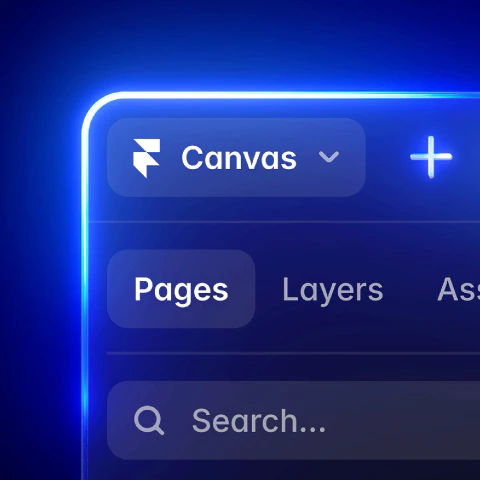
Agents bring AI to the canvas to help you design, write, analyze, and organize your sites. We’re also launching Branching, a new way for teams to explore ideas before they go live, and unveiling the new Framer Community, where creators can share and earn. Together, these launches change how teams create, maintain, and scale websites. We think you’ll love it.

Market Signal

Why It Has Market Pull

Framer 3.0 is a major, well-funded launch from an established no-code website builder now bringing AI agents directly onto the design canvas. It hit number-one Product of the Day with strong social volume, and Framer is a real business with 50M dollar ARR and a 2B dollar valuation — clearly worth tracking, though the canvas-agent value is more designer-facing.

  • Number-one Product of the Day on Product Hunt (June 17, 2026) with about 497 upvotes
  • Raised 163M dollars total, including a 100M dollar Series D at a 2B dollar valuation in 2025
  • 50M dollar ARR; 188,000+ companies, 4M+ published sites, roughly 364M monthly visitors
  • Launch thread drew about 2.4M views and 482 comments; demoed via official walkthroughs
  • Pricing free to 100 dollars per month; AI agent usage metered via credits

feedbacks

What People Are Saying

  • "AI features performed inconsistently in my use, outputs that didn't reflect what I'd asked for."Trustpilot review

  • "No more template reviews? This is the worst Marketplace update."X reply

  • "I don't think removing the Templates review and process is a good decision."X reply

  • "Why lock up the output in a walled garden like this? I don't get it."X reply

  • "Me who was hoping they'd add backend logic and native auth."X reply

  • "Framer silently charged me after I invited one additional user, no warning."Trustpilot review

  • "Very polished online event, well done all involved!"X reply

Sources

GitHub

An agentic skills framework & software development methodology that works.

🔥🔥🔥 Open-source Jira, Linear, Monday, and ClickUp alternative. Plane is a modern project management platform to manage tasks, sprints, docs, and triage.

TimesFM (Time Series Foundation Model) is a pretrained time-series foundation model developed by Google Research for time-series forecasting.

11.1K

A lightweight, lightning-fast, in-process vector database

Product Hunt

Write agent logic, and skip the plumbing. Give AI agents reliable access to 2,000+ APIs with retries, idempotency, policy enforcement, and durable state.

Charlie Labs gives engineering teams always-on AI daemons that keep work moving after coding agents create it. Define recurring roles in your repo, then let Daemons monitor PRs, issues, CI, docs, and Sentry errors over time. Instead of waiting for another human prompt, Daemons leave reviewable updates where your team already works: GitHub, Linear, Slack, and Sentry.

Quartz turns Gmail into a focused inbox. It sorts every message by importance, and learns what matters to you over time. When you reply, it drafts in your own voice. And the AI runs entirely on your own Mac, so your mail stays end-to-end encrypted and never shared with AI providers.

Android 17 brings AppFunctions, Android MCP, adaptive-first app requirements, App Bubbles, Continue On, stronger privacy controls, memory limits, performance improvements, and new media/camera APIs as Android starts shifting from an operating system into an intelligence system.

Deep Work Plan turns any repo into a harness with the context of your best engineer — so any AI agent codes like your smartest model and can't drift from the plan. Not a chat window it forgets, a spec written into the repo: atomic tasks, acceptance criteria, validation gates, resumable state. Long runs survive context resets; any agent picks up where the last left off. Point an agent at it, walk away, come back to work you can verify. Any agent, any repo, no lock-in. Open Source, MIT.

Dopami helps ADHD families, adults, and roommates handle household chores without mental load by suggesting small missions based on room, time, energy, and shared home context.

Hacker News

I'm the developer of Trace, a non-intrusive, shortcut-driven Mac app that records and transcribes your meetings on-device. I know, another meeting transcription app. Please bear with me though, I'm confident that this is at least a little novel. I primarily built Trace for myself. I'd been using MacWhisper, but there was enough fiddling before each call that I'd forget to start it and walk out of an hour-long meeting with nothing written down. So the things I cared about most were that it's quic... (204 points, 83 comments).

Hey HN, I'm Jay, co-creator of Mira. An open-source, self-hosted AI code reviewer where you BYOK (bring your own key). Local models are getting really good. Hosted frontier models are getting really expensive. So, we built Mira. Mira has some snazzy features too: - It's really fast at reviewing. Average is 77s compared with Greptile's 5 minutes. Your PRs aren't going into a queue on a cloud somewhere. - Mira performs a blast radius and see what damage will be done with code change. - Learns your... (15 points, 2 comments).

Hi HN, I'm the author of git-lrc, would appreciate some feedback from the community Last year my team started using AI coding tools more heavily, and we found ourselves generating tons of code, but spending less time looking at the stuff that's been generated. We felt like we were losing a bit of grip/understanding of what we were building. Regressions occasionally slipped through. Sometimes changes made it all the way to production only to be reverted later. We tried several AI code review tool... (9 points, 0 comments).

Rather than calling tools one by one, Orion 2 generates a program and runs it end to end, meaning fewer round-trips and lower latency. You can try it out at https://chat.vlm.run When orchestration is code, every workflow is composable, inspectable, and deterministic. We put together a short Orion 2 demo video: https://www.youtube.com/watch?v=rzhXcNAYQ-0 (8 points, 1 comments).

Selora AI Local is an open-source, Qwen-based model for Home Assistant. Specs: Qwen3 1.7B base model (Q6 quantized~1.6GB) Four Home Assistant-specific LoRA adapters: - Answers - Clarifications - Automations - Commands ~3.5 GB total download size Runs locally via llama.cpp We chose a Qwen-based architecture because of a paper on Arxiv (link below) which applied a Qwen based model for local LLM configuration, and showed promising results. We took it a step further in application by training LoRA a... (6 points, 4 comments).

Driving home from work one day, I wanted to know how many people we knew the names of who lived during the Roman era. Searching around, I found lists of Consuls and officials, but nothing that covered ordinary people or even most people like freedmen and slaves. So I ended up building a pipeline to process the more than 500k Latin inscriptions in the Epigraphic Database Clauss-Slaby https://edcs.hist.uzh.ch/en/ and extract the names of people (and attempt to cluster them, but this is a work in p... (210 points, 51 comments).

HF Spaces

11.1K likes

Create your own AI comic with a single prompt Last release: AI Comic Factory 1.2 The AI Comic Factory has an official website: aicomicfactory.app For more information about my other projects please check linktr.ee/FLNGR. If you like the AI Comic Factory, let me know! I am always creating new spaces and exploring new ideas for demos, meaning I don't have much time to take care of all of them (I wish I could clone myself or ask robots to do it). If you appreciate the AI Comic Factory and would like to leave a tip, that would be very kind 🫶 First, I would like to highlight that everything is open-source (see here, here, here, here). However the project isn't a monolithic Space that can be dupli...

Kolors Virtual Try-On is a Hugging Face Space tagged with gradio, region:us. It has 10106 likes on Hugging Face.

5.1K likes

Wan2.2 Animate is a Hugging Face Space tagged with gradio, region:us. It has 5115 likes on Hugging Face.

5.1K likes

AudioCraft is a PyTorch library for deep learning research on audio generation. AudioCraft contains inference and training code for two state-of-the-art AI generative models producing high-quality audio: AudioGen and MusicGen. Installation AudioCraft requires Python 3.9, PyTorch 2.0.0. To install AudioCraft, you can run the following: We also recommend having ffmpeg installed, either through your system or Anaconda: At the moment, AudioCraft contains the training code and inference code for: MusicGen: A state-of-the-art controllable text-to-music model. AudioGen: A state-of-the-art text-to-sound model. EnCodec: A state-of-the-art high fidelity neural audio codec. Multi Band Diffusion: An EnC...

Arena Leaderboard is a Hugging Face Space tagged with static, leaderboard, region:us. It has 4920 likes on Hugging Face.

The ultimate guide to training LLM on large GPU Clusters Instruction to install and run locally Loading HTML fragments: There are two way to load HTML fragments: Compile them into html during build time Fetch them and insert them during run-time When to use what Use compile time fragments only on parts which you want to ensure are seen by every user right after page load (e.g logo) Use run-time fragments for everything else so that the final HTML is of reasonable size (<1MB idealy) How to add a new fragment Add it to the src/fragments folder (e.g. src/fragments/banner.html) For run-time fragments, add {{{fragment-name}}} to appropriate place in src/index.html (e.g. {{{fragment-banner}}}) For...

AI Tools — June 18, 2026 Edition | Agentic Brew