Tools Bench.

Product launches and open-source repos with enough signal to earn a second look.

Last Brew Time: Jun 7, 2026, 7:25 AM PT

Insight

The loudest signal this run isn't smarter agents but builders routing around the frontier-API meter

Featured

Market Signal

Why It Has Market Pull

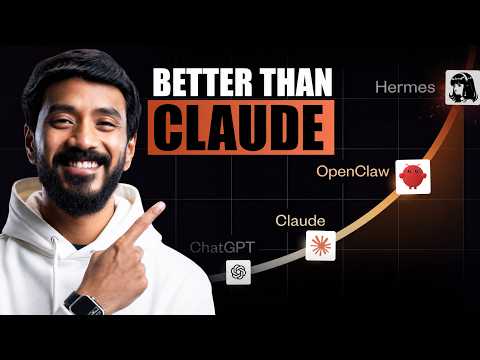
Hermes Agent is a self-improving, open-source AI agent from the AI lab Nous Research that runs anywhere from a $5 VPS to a GPU cluster, learns skills from experience, and talks to you across Telegram, Discord, Slack and CLI. It has become one of the fastest-growing open-source agent frameworks of 2026, positioned head-to-head against incumbents with a one-command migration path.

  • 185,501 GitHub stars and 31,881 forks, last pushed June 2026; launched v0.1.0 in late February 2026
  • Built by Nous Research, which raised a $50M Series A led by Paradigm at a roughly $1B valuation
  • Flagship Hermes models have surpassed 50M downloads, and the agent is reported atop OpenRouter's global usage rankings
  • Model-agnostic: works with Nous Portal (300+ models), OpenRouter, NVIDIA NIM, Kimi, OpenAI, or self-hosted endpoints with no lock-in
  • Dozens of third-party walkthroughs (WorldofAI, AICodeKing) ranging from 30K to 160K views

feedbacks

What People Are Saying

  • "I've been running it for the past couple of weeks... pleasantly surprised by its capability improvements through self-reinforcement learning"HN comment

  • "The incumbent's endless bugs have worn me down -- hoping this is a more stable choice"HN comment

  • "It's picking up steam on the OpenRouter leaderboard so it's just a matter of a few days"HN comment

  • "after three weeks of continuous use, token consumption on daily briefing tasks dropped by roughly 30%"Reddit r/LocalLLaMA

  • "Tool calling unstable / frequent hallucination and empty responses in v0.8.0"GitHub issue

  • "Self-evolving skills are a black box... no explainability interface"Reddit r/LocalLLaMA

  • "Surprised this flew under the radar. Was expecting thoughts from people who actually used it"HN comment

GitHub47.2K

an open source, extensible AI agent that goes beyond code suggestions - install, execute, edit, and test with any LLM

Market Signal

Why It Has Market Pull

Goose is an open-source, general-purpose AI agent that runs on your machine as a desktop app, CLI, and embeddable API, working with 15+ model providers and 70+ Model Context Protocol extensions to install, execute, edit, and test real tasks rather than just suggest code. Originally built by Block, it has since been donated to the Linux Foundation's new Agentic AI Foundation alongside MCP and AGENTS.md, marking it as a vendor-neutral cornerstone of the open agent ecosystem.

  • 47,244 GitHub stars and 4,981 forks, with pushes as recent as June 2026; grew from roughly 27K stars in about a year
  • Migrated to the Agentic AI Foundation under the Linux Foundation, a founding project alongside MCP and AGENTS.md (announced Dec 2025)
  • Internal adoption cited at Block: about 60% of 12,000 employees use it weekly, with reported 50-75% time savings on dev tasks
  • Built in Rust; ships native apps for macOS, Linux and Windows plus a full CLI and API, connecting to 70+ MCP extensions and 15+ providers
  • Mature release cadence past v1.37, with coverage from Fireship, InfoQ, TechCrunch, and The New Stack

feedbacks

What People Are Saying

  • "the results are quite good for small, additive features and even ones that are full stack"HN comment

  • "I've been using it a lot since it was announced... it's rough in some spots but the results have been good"HN comment

  • "I actually really like the approach they are taking, especially because I use emacs and not vscode"HN comment

  • "It feels a little buggy and like it's doing too much (in comparison to Aider)"HN comment

  • "Agent input prompt truncated by 4096 default limit... incredibly restrictive"GitHub issue

  • "ACP client provider discards token usage... cost reporting and context-window monitoring are broken for any ACP-based provider"GitHub issue

  • "with smaller open-source models running locally, output quality drops noticeably; recipes have a real learning curve"Reddit

GitHub26.9K

An Open Source implementation of Notebook LM with more flexibility and features

Market Signal

Why It Has Market Pull

Open Notebook is a self-hosted, privacy-first alternative to Google's NotebookLM that ingests PDFs, web pages, YouTube, audio and video into notebooks you can search, chat with, and turn into multi-speaker podcasts. It works across 18+ AI providers and ships a full REST API for automation, deployed via a two-minute Docker setup.

  • 26,978 GitHub stars and 3,069 forks, actively maintained (last push June 2026) and featured on Trendshift
  • Reached a v1 milestone with materially improved context handling over earlier alpha releases
  • Supports 18+ model and TTS providers out of the box, plus any OpenAI-compatible endpoint; MIT licensed
  • Differentiators vs NotebookLM: full REST API, editable transformation prompts, 1-4 custom podcast speakers, and fully local operation
  • Covered by multiple independent outlets including XDA Developers, KDnuggets and It's FOSS, with a public site and active Discord

feedbacks

What People Are Saying

  • "a genuinely solid alternative... the workflow customization is plentiful compared to NotebookLM"XDA Developers review

  • "An hour of setup taught me where my self-hosting patience ends... NotebookLM does the same work in seconds"XDA Developers review

  • "Output of lesser quality and fewer words than NotebookLM... I cannot see myself using this as a sufficient substitute"GitHub Discussion

  • "I've just upgraded to v1... I got it working and indeed the context is much better now"GitHub Discussion

  • "a viable, privacy-first alternative to proprietary solutions... up and running in under two minutes"KDnuggets review

  • "The setup is tiresome, with a dozen or so different AI provider APIs to handle and troubleshoot"It's FOSS writeup

  • "Cannot start up service with Docker using a reverse proxy"GitHub issue

GitHub6.4K

A vector index built on TurboQuant, written in Rust with Python bindings

Market Signal

Why It Has Market Pull

turbovec is a Rust vector-search index with Python bindings that compresses embeddings up to 16x and runs nearest-neighbor search faster than FAISS on ARM, with no training step or codebook rebuilds as data grows. It implements Google Research's TurboQuant algorithm and ships drop-in integrations for LangChain, LlamaIndex, Haystack, and Agno, targeting privacy-sensitive local retrieval.

  • 6,526 GitHub stars and 643 forks accumulated in roughly 10 weeks (created late March 2026); tracked on Trendshift
  • Reported 16x compression at 2-bit: a 10M-vector corpus that needs 31 GB as float32 fits in about 4 GB
  • Hand-written SIMD kernels beat FAISS by 12-20% on Apple Silicon and match or beat it on most x86 configs, per published benchmarks
  • Published on both PyPI and crates.io, with first-party adapters for four major retrieval frameworks
  • Independent coverage (MarkTechPost, Medium) plus a public nod from Redis creator antirez on the underlying math

feedbacks

What People Are Saying

  • "remarked on the mathematical elegance of using 4-bit centroids without min/max because the distribution is known"X reply

  • "When a batch receives multiple documents with the same ID, the second silently overwrites the mapping -- the first vector becomes an orphan"GitHub issue

  • "the TQ+ calibration work in v0.6.0 was really impressive, especially the periodic accumulator flush closing the x86/ARM recall gap"GitHub issue

  • "I've built a Swift/macOS binding via UniFFI and would like to propose contributing it upstream"GitHub issue

  • "i notice that the langchain integration doesn't return id with documents"GitHub issue

  • "The claim that it is 'always faster than FAISS' is false -- the README itself records some configs running 2-4% slower"Dev.to analysis

  • "All performance benchmarks are at 100K vectors; the headline 10M-scale claim remains unverified by third parties"Dev.to analysis

Product Hunt231

MAI-Image-2.5 is a text-to-image and image editing model that handles localized edits, identity preservation, and text rendering. Available via Foundry and OpenRouter for developers building production image workflows.

Market Signal

Why It Has Market Pull

MAI-Image-2.5 is Microsoft AI's in-house text-to-image and editing model, built for production workflows with localized edits, identity preservation, and strong in-image text rendering. It launched at No. 2 on Arena's image-editing leaderboard and No. 3 for text-to-image, and ships through Azure AI Foundry, OpenRouter, and fal.ai alongside integrations in PowerPoint and OneDrive.

  • Ranks No. 2 on Arena's image-editing leaderboard and No. 3 for text-to-image, on par with Google's Nano Banana 2
  • Delivers a +75 Elo improvement over the prior model, with the largest gains in text rendering (+107) and cartoon/anime (+90)
  • Distributed broadly via Azure AI Foundry ($5/1M text input, $47/1M image output), a lower-cost Flash variant, plus OpenRouter and fal.ai
  • Developed internally by Microsoft's MAI team rather than built on OpenAI, signaling an independent frontier-model push
  • Roughly 44.3M tokens/week reported on OpenRouter shortly after its June 2026 availability; Product Hunt launch hit ~231 upvotes at #3 day rank

feedbacks

What People Are Saying

  • "The localized edit approach is what actually matters here, most models treat the whole image as fair game when you change one thing"Product Hunt comment

  • "vs. Midjourney/DALL-E, does it maintain better consistency across a series of images?"Product Hunt comment

  • "Text rendering is the thing I check first with any new image model - most still mangle anything past a short headline"Product Hunt comment

  • "If you're already deep in Azure, this is a no-brainer to add to batch pipelines. The throughput is genuinely impressive"X reply

  • "Good for product shots. The moment you try anything creative, DALL-E 3 and Flux still win on quality"X reply

  • "pulls even with Google's Nano Banana 2 on benchmarks but is still a clear step behind OpenAI's Image 2"The Decoder article

  • "Short text strings - signs, labels, titles - come out legible and correctly spelled more often than competitors manage"MindStudio hands-on review

Sources

GitHub

Taste-Skill - gives your AI good taste. stops the AI from generating boring, generic slop

AI agent skill that researches any topic across Reddit, X, YouTube, HN, Polymarket, and the web - then synthesizes a grounded summary

Project N.O.M.A.D, is a self-contained, offline survival computer packed with critical tools, knowledge, and AI to keep you informed and empowered—anytime, anywhere.

Product Hunt

Google Search Profiles let publishers and creators claim a dedicated page on Search, link their social and video platforms, and get followed directly into Discover. Currently US-only, eligibility requires an existing following.

Manus builds Shopify storefronts, manages product catalogs, and generates campaigns from a single chat. Tell it what you sell and it handles copy, images, collections, and briefs. For Shopify merchants and new store founders on paid Manus plans.

Connect your wearable and health data sources to YOUR ChatGPT, Claude, Claude Code, or any AI that speaks MCP. Sleep, recovery, HRV, workouts, queryable in natural language.

Ejentum shapes how your AI agent reasons before it answers. One API call returns an engineered cognitive operation: the failure to avoid, a procedure, the shortcuts to suppress, a self-check it must pass. 679 across four harnesses (reasoning, code, anti-deception, memory), via a hosted MCP and 13 integrations. New in this launch: adaptive mode tailors the operation to your exact task, rewriting every reasoning step to fit the problem in front of you instead of a dynamic matched cognitive op.

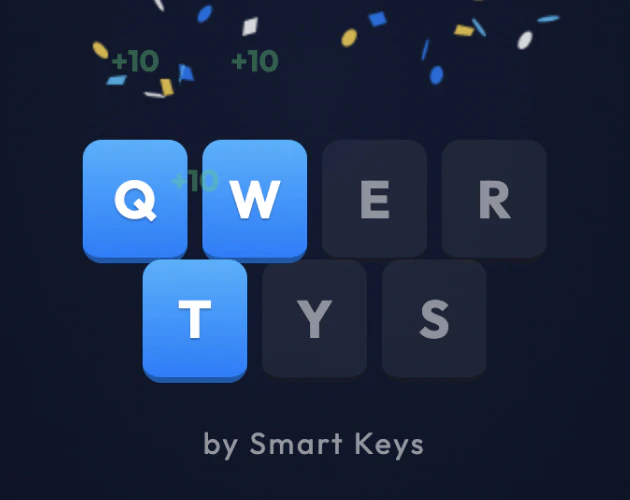
The keyboard fell apart, stack it back together. Tetris meets QWERTY.t's Tetris, except the blocks are keys and every single one has exactly one home. Drop the A on the A. The Z on the Z. You get it. Miss the spot, and that key turns into a useless gray brick that just sits there, bothering you until you explode it. Stack them right and the keyboard lights up blue, row by row, until the whole thing is whole again. Stack them wrong long enough and the junk piles to the top and it's over.

A whole new stack of gaming services just hit IFTTT. Connect Destiny 2, Diablo III, Hearthstone, World of Warcraft, StarCraft II, Dota 2, Team Fortress 2, Steam, and Stoat to automate the parts of gaming that eat up your time. Whether you're tracking Steam achievements, staying on top of Hearthstone releases, or making sure you never miss Xur, it all runs once connected. Even your Diablo III hardcore hero's death won't go undocumented. Hook it all up to Discord, Slack, Google Sheets, and more.

Hacker News

Hi! This is an infinite canvas note-taking tool where notes are laid out in a non-Euclidean, hyperbolic geometric space. As you drag and navigate through the view, you’ll experience a unique fluid distortion that naturally leverages your brain's spatial memory. I’ve been obsessed with the concept of space in HCI for years. Many modern UI patterns are essentially workarounds for the lack of screen real estate. While researching zoom-based UIs a while back, I stumbled upon old HCI papers that used... (172 points, 29 comments).

Hi HN, not sure if anyone would be interested, but just wanted to share that I've been maintaining my small tool called 'lowfat' that helps me filters some of my verbose CLI output. It's a single binary, works as an agent hook or a shell wrapper. It has a plugin system to customize filters per command. The idea is pretty simple: agents don't need the full kubectl get -o yaml or any 10k-line dump to make decisions. So that lowfat sits in between, strips the noise, and passes through what matters.... (150 points, 75 comments).

At my work they provided a single Claude subscription for everyone on the team. To be honest I like kiro better as it provides a way better SDD management. But the company can't provide it and I can't afford it yet. Turns out I had the skill creator skill in my claude instance so I made use of it to create this Skill. I made it fully by using Claude but I wanted to make it open source, so I asked it to help me make tests and preparations for it, even a CI to run python tests. Well, we got this r... (40 points, 17 comments).

We launched Infracost on HN five years ago ( https://news.ycombinator.com/item?id=26064588 ) where our CLI generated cost estimates for infra-as-code, e.g. "this Terraform PR adds $400/mo". The idea was to shift cloud costs (FinOps) left, so engineers get visibility of costs before deployment and make better decisions. Earlier this year we started seeing agent traffic in our logs and it looked like coding agents were calling our CLI. But that CLI wasn't designed with coding agents in mind. We we... (36 points, 22 comments).

I’ve spent the last seven months building a tool I wish I’d had in my previous roles. MimicScribe is a macOS menu bar app that fits the "AI notetaker" category. It has accurate on-device speaker identification (a first possibly?), real-time meeting talking points for discovery calls, and a fully keyboard- and voice-driven interface. I believe the accuracy of the speaker ID system is its biggest strength. I used fluid audio’s port of ( https://github.com/fluidInference/FluidAudio ) Pyannote's com... (29 points, 8 comments).

Tl;dr: I trained a classifier to route to the least expensive model and reasoning depth to complete the request. Coupling that with additional automated token efficiency techniques has yielded 3x usage for the same spend. For anyone interested in trying it themselves: https://nerfguard.com Various teammates and I switched over to Codex from Claude Code recently. We still bounce between the tools, but Codex’s speed and steerability coupled with performance gains were hard to ignore. One of the do... (26 points, 10 comments).

HF Spaces

Track, rank and evaluate open LLMs and chatbots Modern React interface for comparing Large Language Models (LLMs) in an open and reproducible way. 📊 Interactive table with advanced sorting and filtering 🔍 Semantic model search 📌 Pin models for comparison 📱 Responsive and modern interface 🎨 Dark/Light mode ⚡️ Optimized performance with virtualization The project is split into two main parts: React Material-UI TanStack Table & Virtual Express.js FastAPI Hugging Face API Docker The application is containerized using Docker and can be run using: Open LLM Leaderboard is a Hugging Face Space tagged with docker, leaderboard, modality:text, submission:automatic, test:public. It has 14005 likes on Hu...

11.1K likes

Create your own AI comic with a single prompt Last release: AI Comic Factory 1.2 The AI Comic Factory has an official website: aicomicfactory.app For more information about my other projects please check linktr.ee/FLNGR. If you like the AI Comic Factory, let me know! I am always creating new spaces and exploring new ideas for demos, meaning I don't have much time to take care of all of them (I wish I could clone myself or ask robots to do it). If you appreciate the AI Comic Factory and would like to leave a tip, that would be very kind 🫶 First, I would like to highlight that everything is open-source (see here, here, here, here). However the project isn't a monolithic Space that can be dupli...

Kolors Virtual Try-On is a Hugging Face Space tagged with gradio, region:us. It has 10101 likes on Hugging Face.

5.1K likes

Wan2.2 Animate is a Hugging Face Space tagged with gradio, region:us. It has 5118 likes on Hugging Face.

5.1K likes

AudioCraft is a PyTorch library for deep learning research on audio generation. AudioCraft contains inference and training code for two state-of-the-art AI generative models producing high-quality audio: AudioGen and MusicGen. Installation AudioCraft requires Python 3.9, PyTorch 2.0.0. To install AudioCraft, you can run the following: We also recommend having ffmpeg installed, either through your system or Anaconda: At the moment, AudioCraft contains the training code and inference code for: MusicGen: A state-of-the-art controllable text-to-music model. AudioGen: A state-of-the-art text-to-sound model. EnCodec: A state-of-the-art high fidelity neural audio codec. Multi Band Diffusion: An EnC...

Arena Leaderboard is a Hugging Face Space tagged with static, leaderboard, region:us. It has 4906 likes on Hugging Face.

AI Tools — June 7, 2026 Edition | Agentic Brew