Tools Bench.

Product launches and open-source repos with enough signal to earn a second look.

Last Brew Time: Sep 14, 2026, 11:31 AM PT

Insight

This run's builders keep skipping the 'train it yourself' step, wrapping other labs' released weights in a thinner interface instead of shipping original models

Featured

GitHub165.9K

🤗 Transformers: the model-definition framework for state-of-the-art machine learning models in text, vision, audio, and multimodal models, for both inference and training.

Market Signal

Why It Has Market Pull

The de facto standard open source library for state-of-the-art ML models, maintained by a well-resourced company (Hugging Face) with a massive, continuously active contributor base. This is established AI infrastructure, not an emerging candidate.

  • 165,921 GitHub stars and 34,577 forks, with commits pushed within the hour of this check
  • 2,428 open issues, reflecting an enormous, continuously engaged user base rather than a stagnant project
  • Maintained by Hugging Face, a company with a commercial platform built around this library
  • Created in October 2018 and under continuous, uninterrupted development for nearly 8 years
  • Functions as the model-definition backbone for a large share of published text, vision, audio, and multimodal research

feedbacks

What People Are Saying

  • "Thank you very much Hugging Face Team"Hugging Face forum thread title

  • "users dislike the oversimplification of examples, lack of backward compatibility, and duplicate code"community feedback summary

  • "Breaking change in v4.48.0 and Python 3.9"GitHub issue title

  • "simply star the repository to say thank you"CONTRIBUTING.md

  • "Transformers Huge Community feedback: 40k"Hugging Face forum thread title

  • "I'd like to thank all the contributors to this library... one of the most promising libraries"GitHub issue


GitHub37.3K

VoxCPM2: Tokenizer-Free TTS for Multilingual Speech Generation, Creative Voice Design, and True-to-Life Cloning

Market Signal

Why It Has Market Pull

An actively developed, tokenizer-free TTS model from OpenBMB (the MiniCPM lab), with sustained GitHub growth, real technical back-and-forth from users on Hugging Face, and a dedicated product site — genuine research-to-product momentum rather than a one-off hype drop.

  • 37,320 GitHub stars and 4,239 forks, built up since a June 2025 repo creation — sustained growth over about 12 months
  • 117 open issues and commits pushed as recently as September 2, 2026
  • Ships as a versioned model family on Hugging Face, with the newest version trained on 2M+ hours of multilingual speech data
  • Dedicated product homepage and Apache-2.0 licensing signal commercial-ready packaging, not just a research drop
  • Multiple specific, open Hugging Face discussion threads show real users debugging real generation behavior

feedbacks

What People Are Saying

  • "the generated speech is always 2-3 times faster than it should be, though with incredibly good quality"Hugging Face discussion

  • "TTS quality is good but the model narrates very fast and there should be a parameter to control the speed"Hugging Face discussion

  • "is it safe that the code tries to connect to modelscope.cn"Hugging Face discussion

  • "the code makes a connection every time it runs and questioned why it doesn't download and save to disk instead"Hugging Face discussion

  • "performance on other languages is not guaranteed and may result in unpredictable or low-quality audio"model card caveat

  • "ElevenLabs $99/mo vs Kokoro, VoxCPM: $0, better quality?"DEV Community post title

GitHub25.3K

Fast, efficient, battle-tested at Alibaba's scale. Hybrid architecture code review tool: deterministic pipelines + LLM Agent, precise line-level comments, built-in multi-language ruleset (NPE, thread-safety, XSS, SQL injection), OpenAI & Anthropic compatible.

Market Signal

Why It Has Market Pull

Open Code Review is a company-backed, extremely active AI code-review tool with daily releases, a real Hacker News technical debate about its precision/recall trade-offs, and mainstream tech-press coverage — the strongest evidence base among GitHub repos in this batch, tempered only by the fact that external users publicly confirming production adoption are still scarce.

  • 25,439 GitHub stars and 1,850 forks since a May 18, 2026 creation date, with 5 releases shipped in a single week alone
  • 100+ distinct GitHub contributors and commits landing multiple times per day, including same-day fixes to reported issues
  • Discussed on Hacker News with specific quantitative critique (recall/precision numbers) and covered independently by GIGAZINE
  • Alibaba states it runs on every internal pull request across the company and has flagged over a million code defects historically, though an open GitHub issue soliciting outside user testimonials had no public replies as of this check

feedbacks

What People Are Saying

  • "very good recall (~74%)... not so good precision (~12%)"Hacker News comment

  • "You still need to analyze them to understand they are false positives. It's time wasted."Hacker News comment

  • "flagging everything yields perfect recall but destroys credibility"Hacker News comment

  • "sees code review as a bottleneck and welcomed automation improvements"Hacker News comment

  • "rule files required translation assistance to understand"Hacker News comment

  • "Wanted: Who is using Open Code Review? Please leave a comment!"GitHub issue (no public replies as of this check)

Product Hunt187

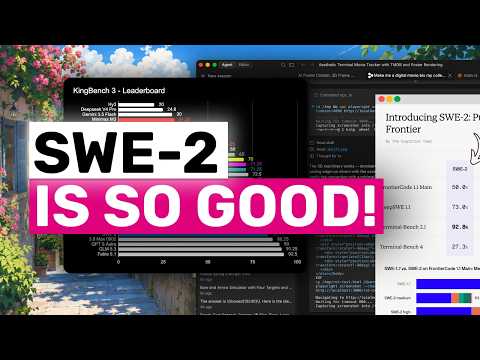
SWE-2 is Cognition's new coding model, post-trained from Kimi K3 with RL that optimizes for cost and capability at the same time. It hits 50.0% on FrontierCode 1.1 Main, within a point of Fable 5.1 at 64% less, and lands within a few points of GPT-6 Astra at a quarter of the cost. Compared to SWE-1.7 it takes 58% fewer turns and costs 81% less while scoring higher. Available now in Devin Desktop and CLI.

Market Signal

Why It Has Market Pull

SWE-2 is a real, well-documented release: Cognition (maker of the Devin coding agent) post-trained it with reinforcement learning from Kimi K3 and shipped it into Devin Desktop/CLI on September 10, 2026, with broad tech-press pickup and a large, split Hacker News debate. The description's benchmark names and comparison models are real and match independent coverage, and the parent company carries unusually strong market backing, though the model itself runs only inside Devin with no open weights or standalone API, and reviewers flagged benchmark-gaming concerns.

  • Hacker News launch thread drew 444 points and 192 comments, a large, active discussion by HN standards
  • Cognition raised over $1B in May 2026 at a $26B valuation (Lux Capital, General Catalyst, 8VC, Founders Fund among investors), reportedly in talks for a $40B round by August 2026
  • Company-reported revenue run rate grew from $37M to $492M year-over-year, with a stated $1B target
  • SWE-2 scores 50.0% on FrontierCode 1.1 Main (within ~1 point of a leading frontier model) at a claimed 64% lower cost, and 58% fewer turns / 81% lower cost than its predecessor SWE-1.7
  • Independent coverage from MarkTechPost and multiple AI newsletters within 48 hours of launch; also picked up across half a dozen smaller blogs
  • No open weights or standalone API — usable only inside Devin Desktop/CLI, a real adoption friction point raised repeatedly in discussion

feedbacks

What People Are Saying

  • "92.8% on TB2.1 dropping to 27.3% on TB4 is the only number that matters"HN comment

  • "DeepSeek v4.1 Flash outperforms SWE-2 on Terminal Bench 4 (31.2% vs 27.3%), despite being newer"HN comment

  • "I already have my own harnesses and workflows. The friction is too high"HN comment

  • "Remember Devin? It's good now"HN comment

  • "built on Kimi K3 (Chinese open-weight model), not original development"HN comment

  • "Cognition has spent years building Devin, an actual autonomous coding agent used in production"HN comment

  • "SWE-2 Is Free on Devin's $20 Plan: The Best AI Coding Deal in September 2026"press coverage headline

HF Spaces57 likes

Put the person from a still into a driving video, in 4 steps Upload a driving video and a character still. The clip's first frame is repainted with gpt-image-2 so it shows your character in that exact pose and framing, and that repainted frame is the only conditioning the model gets besides the clip itself — no pose estimation, no segmentation, no masks. Takes 4–10 s of driving video and renders it at 4 sampling steps; anything longer is cut to 10.1 s. The model itself only renders frame counts of the form 17k+5 and never fewer than 124 (5.17 s), so shorter clips are held out to 124 frames with a frozen last frame and the render is trimmed back — what comes out is exactly as long as what wen...

Market Signal

Why It Has Market Pull

A genuine, differentiated product from a funded company: Viggle-Animate is a real technical release (a 33.1B full finetune distilled to three forward passes, rendering over six times faster than a comparable Wan2.2 model) from Viggle AI, which raised a $19M Series A led by Andreessen Horowitz and built a 4.3M-member Discord community. Independent creators cite concrete growth from using the product, and Hugging Face staff have engaged directly with the Space.

  • Viggle AI raised a $19M Series A (led by Andreessen Horowitz, August 2024) and has grown a Discord community of over 4.3 million members
  • Viggle-Animate renders 124 frames in 26 seconds — 6.1x faster per clip than a comparable Wan2.2-Animate-14B model
  • A well-known AI tooling commentator publicly praised the underlying approach as 'a glimpse of the future' for unbundling pose detection and segmentation workflows
  • One creator using Viggle grew a YouTube channel from 5,000 to over 90,000 subscribers in under three months, with one clip reaching 2.5 million views
  • A Hugging Face staff account opened and merged a pull request modernizing the Space's interface, signaling platform-level attention rather than pure community duplication
  • 58 likes on Hugging Face — a modest number by itself, but consistent with a first-party demo rather than a viral re-share

feedbacks

What People Are Saying

  • "the insight here is very clever and might even be a glimpse of the future where all the usual workflows we took for granted become unbundled"X post

  • "Basically, the idea is to completely unbundle pose detection, segmentation, and all the usual heavy stuff"X post

  • "switch the Space to a newer gradio workflow API"HF Space discussion (Hugging Face staff)

  • "renders 124 frames in 26s, 6.1x faster per clip than a comparable model"Viggle research technical writeup

  • "grew from 5,000 to over 90,000 YouTube subscribers in under 3 months... most viral clip hitting 2.5 million views"industry coverage (creator case study)

  • "$19 million Series A led by Andreessen Horowitz"funding coverage

  • "a community of more than 4.3 million members on Discord"industry coverage

Sources

GitHub

Unofficial Bitwarden compatible server written in Rust, formerly known as bitwarden_rs

Extracted system prompts from Anthropic - Claude Fable 5.1, Opus 5, Claude Design, Claude Code. OpenAI - ChatGPT GPT-6-Astra, Codex. Google - Gemini 3.8 Flash, 3.1 Pro, Antigravity. xAI - Grok, Grok Bot, Cursor, Kimi and more! Updated regularly.

Project NOMAD is an offline-first knowledge and education server. Wikipedia, thousands of books, courses, maps, and optional local AI, all running on hardware you own with no internet required.

Run frontier MoE models on hardware you already own — pure C, zero deps, experts streamed from disk. Tiny engine, immense model. 🐦

Product Hunt

Resurf is a personal context app for things you like, care about, and work on. Save notes, links, images, PDFs, and ideas. Find them later or hand that context to AI through MCP and CLI. Native on Mac, iPhone, and iPad, with local storage and private iCloud sync.

Hybrid Compute is now live on Perplexity Computer, their Mac app. It splits a task between the cloud and your own Mac: research and reasoning happen in the cloud with their strongest AI, while anything touching your private files stays on your Mac with a local AI, so it never gets uploaded. Works on Apple silicon, 24GB RAM minimum, live now for Pro/Max/Enterprise.

Record your screen and get back a finished video with the camera moves already in place. Every click, drag and keystroke becomes a zoom. No editing, and nothing ever leaves your computer.

Every other AI writes what you tell it. Ghostwriter writes what you already know. Double-tap Left Ctrl in any text field, in any app, and the reply is there — drawn from the thread on screen, your calendar, your files and your past meetings, indexed in an encrypted vault on your PC. It won't double-book you, and it matches how you write to that person, down to the sign-off. Then it stops: it types into the box and never sends. Windows.

Epilude records meetings on your Mac with no bot in the call, then writes the transcript, summary, and action items. Notes save as Markdown files you own.

Visiby helps brands measure, understand, and improve their visibility across AI search platforms like ChatGPT, Perplexity, Gemini, and Google AI Overviews. Track brand mentions, recommendations, and citations, discover where competitors are winning, and identify opportunities to improve your presence in AI-generated answers.

YC Launch

Hacker News

Hey HN, we’re Nischal & Naman. We’re brothers, and together we’re building an open-source platform for simulation based testing of voice agents (try it out in 5 mins - https://docs.egma.ai/docs/get-started/quickstart , 2 min demo video - https://youtu.be/wgDWEe5UAUY ) Platforms that help you do simulation testing already exist. But they all charge a heavy premium on top of inference costs. We believe if the industry truly wants to scale simulation testing of voice agents, we need to stop chargin... (16 points, 6 comments).

Hey HN, Toby from Nari Labs here. We've been working on making OSS speech models super-fast. Last year, we built Dia, the first OSS text-to-speech model capable of doing natural dialogue. Since then, so many more great speech models have been released to the public. But the market is still dominated by closed source models. We think that's an inference problem. Existing systems such as vLLM / SGLang are not well suited for multimodal inference. To prove this, we built an inference engine special... (11 points, 3 comments).

Open-source agentic workspace enterprises can make their own. Connect the systems you already run — 100+ integrations, MCP, chat tools, apps, browser, local files — with shared memory. Any agent (Claude Code, Codex), any model, or BYOK. Set up in clicks, not months. Local-first: your data never leaves your machines. (4 points, 0 comments).

Even though everyone is talking about AI agents doing everything for them at work, many companies still aren't using autonomous agents to automate real operational work internally. Usually it's because of the complexity of bootstrapping an agent from scratch that’s production-safe (won’t spend all your company’s budget, burn through compute costs because it runs too often, or call a tool that breaks a customer). Even with today's agent-building frameworks, running agents reliably in production o... (4 points, 0 comments).

Firefox Extension/Userscript and API to get Pangram scores for all articles on the hackernews frontpage. The extension allows you to hide articles with a high score. This is about detecting posts written by LLMs, not posts about AI. Feel free to use the API to build your own tooling/readers. Big thanks to https://news.ycombinator.com/user?id=salahadawi for providing the data :). (16 points, 3 comments).

Hi everyone, Been working on Otis, an open-source ai agent that gives you one minimal experience across local and hosted open-weight models, privacy-focused by design. On setup it recommends a local model based on the hardware Otis is running on, downloads it and runs it through llama.cpp for you. Ollama, LM Studio and Nvidia PAIR are supported too. Excited for everyone to try it and all feedback is welcome! (12 points, 0 comments).

HF Spaces

Real trained RL policies for the Microduck robot, running fully in the browser: MuJoCo compiled to WebAssembly steps the physics, onnxruntime-web runs the policy network at 50 Hz. No server, no backend. Two locomotion variants of the same robot are included: legs (walking, the default) and rollers (the wheeled skating variant). Press M (or hold D-pad up ~1 s on a gamepad) to switch; the roller model, meshes and policies are lazy-loaded on the first switch. | Mode | Checkpoint | What it does | |--------|-----------|--------------| | Run (legs) | BESTalphawalking.onnx | Velocity-tracking locomotion (arrows / WASD to steer) | | Sit | BESTalphasitstand.onnx | Sits down on its hull, stands back u...

Video generation with a synchronized soundtrack MiniMax-H3 — unquantized, split across two Spaces Joint video and soundtrack out of a single denoising pass, at bfloat16 with no quantization anywhere. This Space is the denoising half: the 61.73 GiB transformer and the two autoencoders. The 62.14 GiB Qwen3-VL conditioner runs in qwen3vl-conditioner, which this Space calls over the gradio API for every request. The weights are the public MiniMaxAI/MiniMax-H3 diffusers checkpoint. MiniMax-H3 is 195.9 GiB in bfloat16 and a ZeroGPU Space is evicted at 150 GB of storage. An unquantized single Space is therefore impossible, which is why quantized demos of it run NVFP4 or float8 weights. Cut the Mini...

Blind A/B ranking of MiniMax-H3 acceleration variants Human-judged ranking of ~26 MiniMax-H3 acceleration variants over a 200-prompt corpus, from blind pairwise votes on pre-generated clips, with confidence intervals, cost and slice breakdowns. The design and its reasoning are in arena/DESIGN.md; the app's own notes are in arena/README.md. This Space is private and must stay private until deliberately flipped. It streams ~3,700 clips out of the private dataset multimodalart/h3-pre-gen-arena. See Going public below. hfoauth: true above creates the OAuth app and injects OAUTHCLIENTID, OAUTHCLIENTSECRET, OAUTHSCOPES and OPENIDPROVIDERURL. arena/space_auth.py implements the flow by hand (this is...

Simulate a fruit fly in your browser using WebGPU kernels A standalone fruit fly connectome demo: paint neurons, stimulate the network, and watch an articulated Three.js fly respond. Vanilla JavaScript, Vite, Three.js, and @huggingface/kernels. Simulated neural activity drives crafted walking, turning, and flight animations. The movements are illustrative, not validated predictions of fly behavior. Open the address printed by Vite, then click Download & start. All neural weights, fly meshes, fonts, and kernel templates are included in public/; setup loads them into the browser and caches verified weight chunks. No API key or external model service is required. Deploy the generated dist/ dire...

An interactive guide to 3D representations. A Hitchhiker’s Guide to the 3D Ecosystem An interactive article by Suvaditya Mukherjee, Merve Noyan, Aritra Roy Gosthipaty, and Pedro Cuenca for ML practitioners learning 3D: eight deep labs, four supporting figures and eight original lamp adaptations of the Manim sequences. Read the article or open the Space. Node 22.12+ is required. The project produces static files; it needs no server, inference provider, API key, training job or paid compute. The preview uses localhost. Rolldown is pinned to 1.2.7 because its platform binaries are complete; regenerate lockfiles in a clean directory and verify Linux bindings before updating that pin. Hugging Fac...

generate a video from an image with a text prompt Wan2.2 14B Fast Preview is a Hugging Face Space tagged with gradio, mcp-server, region:us. It has 2119 likes on Hugging Face.