Tools Bench.

Product launches and open-source repos with enough signal to earn a second look.

Last Brew Time: Aug 11, 2026, 11:06 AM PT

Insight

This run's builders keep skipping the flashy front-end and racing to own the plumbing underneath the coding agent

Featured

Market Signal

Why It Has Market Pull

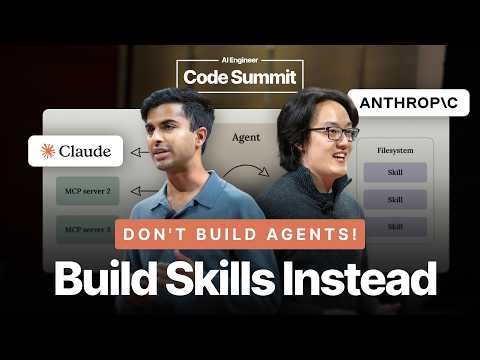
Agent Skills is Anthropic's own framework for packaging repeatable procedural knowledge into folders an agent can load on demand, and it has moved unusually fast from a Claude Code feature to a de facto cross-vendor standard: GitHub Copilot, Cursor, OpenAI Codex, Gemini CLI, VS Code, and roughly 40 other clients now support the agentskills.io format, with partners including Atlassian, Canva, Cloudflare, Figma, Notion, Ramp, and Sentry shipping their own skill packs against it. With 168,000+ GitHub stars, 20,000+ forks, continuous commits, and substantive developer debate about durability and portability, this is one of the strongest adoption signals in the current agent-tooling space.

  • 168,000+ GitHub stars and 20,000+ forks on the official Anthropic repo as of August 2026
  • agentskills.io open standard adopted by roughly 40 clients including GitHub Copilot, Cursor, OpenAI Codex, Gemini CLI, and VS Code
  • Partner skill packs shipped by Atlassian, Canva, Cloudflare, Figma, Notion, Ramp, and Sentry
  • Related Hacker News threads have drawn hundreds of points and over 250 comments of substantive technical discussion
  • Community members are already benchmarking whether individual skills still work across model updates

feedbacks

What People Are Saying

  • "In the last few months agent skills went from a niche Claude Code feature to something every major runtime supports"HN comment

  • "Anthropic just shipped a skill-creator that benchmarks whether a skill still works after model updates"HN comment

  • "The format works. Moving them between machines or handing one to someone else does not."HN comment

  • "Skills are repeatable workflows, that could be extracted as unit of work I guess"HN comment

  • "Agent Skills became an open standard (agentskills.io)... adopted well beyond Claude — including GitHub Copilot, VS Code, Cursor, OpenAI Codex, Gemini CLI, Goose, OpenCode, and ~40 other clients"Ry Walker Research writeup

  • "Anthropic's Next Bid to Define AI Standards"The New Stack article headline

  • "actual costs and token usage can be higher than expected during execution"independent blog review


GitHub163.7K

🤗 Transformers: the model-definition framework for state-of-the-art machine learning models in text, vision, audio, and multimodal models, for both inference and training.

Market Signal

Why It Has Market Pull

Transformers is the de facto model-definition library underpinning modern machine learning, with over 163,000 GitHub stars and continuous daily development. It is maintained by Hugging Face, a company valued at roughly $4.5 billion after raising about $395 million from investors including Sequoia and Salesforce Ventures, and it now serves as the shared backend that inference engines like vLLM, SGLang, and TGI, plus training frameworks like Axolotl and DeepSpeed, build directly on top of. Its scale, funding, and ecosystem-wide adoption make it one of the most foundational and durable pieces of AI infrastructure available today.

  • 163,700+ GitHub stars and 34,200+ forks, with commits still landing the same day this was checked
  • Hugging Face has raised about $395 million total, reaching a $4.5 billion valuation in its 2023 Series D led by Salesforce Ventures
  • Adopted as the shared model-definition backend by vLLM, SGLang, TGI, and training stacks like Axolotl, Unsloth, DeepSpeed, and PyTorch-Lightning
  • 1,233 GitHub subscribers and a broad external contributor base sustain a high release cadence
  • Long-running de facto standard for both research and production ML pipelines

feedbacks

What People Are Saying

  • "the model-definition framework for state-of-the-art machine learning models in text, vision, audio, and multimodal"GitHub repo description

  • "Running any Hugging Face model through the transformers modeling backend is a single flag"Hugging Face blog

  • "transformers serves as a pivot across frameworks... compatible with the majority of training frameworks... and inference engines"Hugging Face docs

  • "Hugging Face has raised a total of $395.2 million... post-money valuation of $4.5 billion"Tracxn company profile

  • "I'm worried about the version hell of relying on HuggingFace's transformers"HN comment

  • "Stay far away from HuggingFace if you can. Battle-hardened if you only do the abstractions it expects"HN comment

  • "Harnessing the Power of Hugging Face Transformers for Machine Learning"Dev.to article

GitHub13.9K

A self-improving RLM agent for coding workflows and long-running autonomous tasks.

Market Signal

Why It Has Market Pull

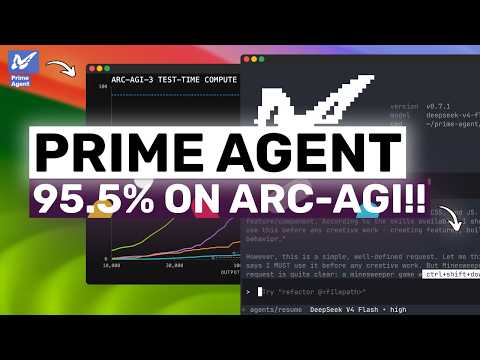
Prime Agent is Prime Intellect's open-source, self-improving coding harness that revises its own operating instructions as it works, and it posted a 95.5% score on the ARC-AGI-3 benchmark, edging past the human-expert baseline. The launch landed at #1 on GitHub Trending and drew a 253-point, 69-comment Hacker News thread, arriving weeks after the company closed a $130M Series A led by top-tier deep-tech investors.

  • 13,900+ GitHub stars and 1,442 forks within roughly three months of the repo's creation, with commits still landing the day of this review
  • 95.5% on ARC-AGI-3, surpassing the reported human-expert baseline of 95.4%
  • $130M Series A (July 2026) with Radical Ventures, NVIDIA Ventures, and Intel Capital, bringing total funding above $150M
  • 253-point Hacker News thread with 69 comments and MIT-licensed open release covering multiple frontier model backends (Opus 5, GPT-5.6, GLM-5.2)
  • 529 open issues signal active real-world usage and bug reporting, not an abandoned drop

feedbacks

What People Are Saying

  • "Prime Agent is a general-purpose coding harness. On ARC-AGI-3, it scores 95.5%, surpassing the human-expert baseline"X / Prime Intellect official account

  • "LLM-generated code that seemingly went without much review or design is always such an interesting dive into just how bloated you can make code"HN comment

  • "Installer might look pretty but it installs to the homebrew dir, despite not being a homebrew package. Very dirty. No uninstall method"HN comment

  • "Self improvement is not a new idea but at current economics it's not feasible"HN comment

  • "wasn't accepted yet [to the official ARC-AGI-3 leaderboard]"HN comment

  • "As models get stronger, huge harnesses may become less useful. An overly opinionated harness could even constrain the model's reasoning instead of improving it"HN comment

  • "Prime Intellect's Prime Agent Just Beat Humans on the ARC-AGI-3 Benchmark"Startup Fortune article

Hacker News484 pts

Hey HN, Henry from Cactus here! We previously released Cactus Needle, a 14MB agentic LLM for tool call, device use, and structured extraction for phones, wearables, smart homes, small robots and microcontrollers. We got really great feedback here, and have now incorporated the suggestions to release Needle 2. The whole model is a single 14MB binary that runs a full session in 28MB of RAM; 45m parameters at 2bit compression. Needle hits 500 tokens/sec decode speed on a Raspberry Pi 5, sits betwee... (484 points, 162 comments).

Market Signal

Why It Has Market Pull

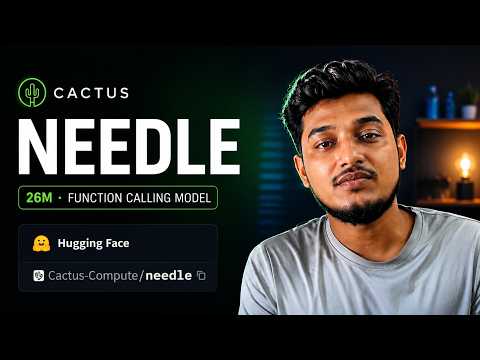
Needle 2 is a tiny, dependency-free agentic language model — a single 14MB binary running full sessions in 28MB of RAM — that turns natural-language commands into structured tool calls fast enough for a Raspberry Pi or a smartwatch, no cloud required. Built by Cactus Compute, a Y Combinator-backed on-device AI startup with real funding and a large, actively growing open-source following, this is a genuinely differentiated piece of edge-agent infrastructure with strong independent engagement to back it up.

  • Hacker News launch reached 497 points and 166 comments — a large, sustained front-page discussion
  • Underlying GitHub repo (cactus-compute/cactus) has 5,676 stars and 463 forks, actively updated daily
  • Cactus Compute is a Y Combinator (Summer 2025) company backed by Oxford Seed Fund and Google for Startups
  • Independent write-ups exist beyond the launch thread (e.g. a dedicated "Needle Review" technical blog post)
  • Concrete published benchmarks: 500 tokens/sec decode on a Raspberry Pi 5, 45M params at 2-bit compression

feedbacks

What People Are Saying

  • ""Make it warmer" incorrectly triggered cooling mode"HN comment

  • "Turning voice commands into tool calls should be self-evidently useful"HN comment

  • "around +60% confidence threshold is cool from experiments"HN comment (Cactus founder)

  • "Is this just a glorified parser?"HN comment

  • "No FFN, just attention, and it still works"HN comment / technical discussion

  • "requests emerged for Home Assistant integration, Ollama support, and ESP32 deployment guides"HN comment thread

  • "Needle Review: 26M Function-Calling Model for Edge Devices"independent blog (andrew.ooo)

Sources

GitHub

A complete AI agency at your fingertips - From frontend wizards to Reddit community ninjas, from whimsy injectors to reality checkers. Each agent is a specialized expert with personality, processes, and proven deliverables.

Orca is the ADE for working with a fleet of parallel agents. Run any coding agent with your own subscription. Available on desktop, mobile and VPS.

DeepTutor: Lifelong Personalized Tutoring. https://deeptutor.info/ .

The ultimate RAG for your monorepo. Query, understand, and edit multi-language codebases with the power of AI and knowledge graphs

Product Hunt

Run eval experiments at scale in realistic environments. Define custom task sets to build your private benchmarks, measure how well agents can use any product, and find best models for your use cases. Generate dynamic insights to detect frictions in product interfaces or token inefficiencies.

AI made building investment strategies easy. Telling a good one from a lucky one still takes expertise. Portfolio Lab is the responsible AI investing platform: every strategy is tested on unseen data and in live markets. Connect your agent to deploy only vetted strategies in your own brokerage account. SEC-registered.

Paritok compresses the tools, files, and history your coding agent sends. Save up to 85% on your token bill and run 3× longer sessions. Two commands, nothing lost, fully local.

Prime Agent is an open-source, self-improving coding harness built around two abstractions: the Recursive Language Model (RLM) and the Continual Harness. With Opus 5, it achieves 95.5% on ARC-AGI-3, surpassing the reported human expert baseline.

Your whole team, experimenting on the real product. Remix lets any team member spin up a variant of your actual product: a safe, sandboxed copy you shape by prompting. No setup, no risk to production. Explore ideas side by side as a team. Like where two variants are headed? Drag one into the other to merge them. When an idea is ready, open a PR straight to GitHub. Every prompt is recorded, so reviewers see exactly how it was built and a live link lets anyone test before a single line hits main.

Heym is a source-available platform for building and running agentic systems on your own infrastructure. Build multi-agent workflows visually, connect your data and tools, bring in coding agents like Codex and OpenCode, and add human approval where it matters. See exactly how every run performs with built-in traces, costs, latency, and evals. Self-host Heym, use your own models and credentials, and ship workflows as portals, APIs, or MCP tools.

YC Launch

Enact generates the data and evaluations needed to make robotics models reliable in the real world. Enact · Summer 2026 · Industrials Tags: Artificial Intelligence, Reinforcement Learning, Robotics. Website: https://enact.company

150K+ downloads across our HuggingFace datasets Markov · Summer 2026 · B2B Tags: Reinforcement Learning, Data Labeling, Data Engineering. Website: https://www.markovstudios.com/

Hacker News

This is a small library for giving an agent persistent memory without running any infrastructure. The whole store is one SQLite file, and the default install has no dependencies. I built it because whenever I wanted an agent to remember a handful of facts across sessions, the options were a hosted API, a vector database, or a framework, and that felt like too much for what is usually a few thousand short strings. The part I find most useful is that recall is deterministic, so you can write unit... (13 points, 0 comments).

Hey HN, we’re Robert and Sam. We’re building Alchemize, a code review platform that simplifies PRs to help you ship faster. Here’s a demo video: https://www.tella.tv/video/simplify-pr-reviews-with-alchemiz... Sample to try: https://app.tryalchemize.com/example Agentic coding has 10x’d code output. Teams are opening larger PRs more frequently, but the current tools don’t support this new coding paradigm. GitHub still presents files without structure. As engineers reviewing these massive diffs mor... (6 points, 0 comments).

Hi HN, I saw one friction point when working as part of a team that uses coding agents extensively - there is nothing to enable coordination between agent used by people in a team. Many times my agent would ask me to decide upon something with a fellow teammate, for which I have to serve as the network layer. So I built Parley where agents can connect to the hub over MCP with their own team-scoped token. An agent addresses a teammate's agent by name and ask questions/handover tasks. Agents can a... (6 points, 2 comments).

I built HQBase, an open-source email workspace that runs in your Cloudflare account. I originally built it for myself. I wanted multiple addresses and domains - support@, sales@, personal addresses, etc. - without paying for a separate mailbox for every address or running a mail server. It uses Cloudflare Workers, Email Routing/Sending, D1 and R2. HQBase gives you one inbox for multiple domains and addresses, team invites with granular inbox access, a PWA with push notifications (including iPhon... (4 points, 4 comments).

Semi inspired by the 3d Shinjuku station that was posted again recently, I noticed it was missing a large portion of the "complex" where "complex" is defined loosly has how far you can walk without stepping outside. So I asked Claude to make a 3d map of all Tokyo Trains, no libraries, and let you zoom into stations, and the first version with both map and the Shinjuku complex was ready in about 3 hours. It spent another 7 or so in various nit picky things I asked for to get to the current versio... (4 points, 0 comments).

HF Spaces

Demo of the Collection of Qwen Image Edit LoRAs Qwen-Image-Edit-2511-LoRAs-Fast is a Hugging Face Space tagged with gradio, mcp-server, region:us. It has 2444 likes on Hugging Face.

Wan2.2 14B Fast Preview [NEW] is a Hugging Face Space tagged with gradio, mcp-server, region:us. It has 847 likes on Hugging Face.

224 likes

Video generation with a synchronized soundtrack MiniMax-H3 — unquantized, split across two Spaces Joint video and soundtrack out of a single denoising pass, at bfloat16 with no quantization anywhere. This Space is the denoising half: the 61.73 GiB transformer and the two autoencoders. The 62.14 GiB Qwen3-VL conditioner runs in qwen3vl-conditioner, which this Space calls over the gradio API for every request. The weights are the public MiniMaxAI/MiniMax-H3 diffusers checkpoint. MiniMax-H3 is 195.9 GiB in bfloat16 and a ZeroGPU Space is evicted at 150 GB of storage. An unquantized single Space is therefore impossible, which is why quantized demos of it run NVFP4 or float8 weights. Cut the Mini...

Multi-view character sheet from one image (FLUX.2 LoRA) This Space demonstrates the CharacterSheet QuadView LoRA applied on top of FLUX.2 Klein 9B. Upload a clear, well-framed image of a character and the model produces a multi-view character sheet: a face close-up plus front, side, and back full-body views on a single 1536×1024 sheet. CharacterSheet LoRA Demo is a Hugging Face Space tagged with gradio, mcp-server, region:us. It has 119 likes on Hugging Face.

Unquantized MiniMax-H3 from image, audio, video refs MiniMax-H3 — omni-references, unquantized, split across two Spaces Joint video and soundtrack out of a single denoising pass, conditioned on an ordered list of image, video and audio references, at bfloat16 with no quantization anywhere. This Space is the denoising half of the ref2va task: the 61.73 GiB transformerref partition and the two autoencoders. The 62.14 GiB Qwen3-VL conditioner runs in qwen3vl-conditioner, which this Space calls over the gradio API for every request — the same conditioner Space, and the same resident weights, that the keyframe half minimax-h3 uses. MiniMax-H3 is 195.9 GiB in bfloat16 and a ZeroGPU Space is evicte...

Ultra-fast local NVFP4 video + synchronized audio generation MiniMax-H3 Ultra Fast — local conditioner + pruned NVFP4 on Blackwell Joint video and synchronized sound from MiniMax-H3, rebuilt for a single 96 GB Blackwell ZeroGPU worker. | layer | optimization | |---|---| | Weights | 12.5 GB pruned NVFP4 transformer: 20.1B effective parameters instead of 33.1B/61.7 GiB BF16. | | Compute | Native CUDA 13 NVFP4 tensor-core GEMMs through comfy-kitchen; higher-precision norms, embeddings and output heads. | | Residency | Transformer, conditioner and both VAEs remain GPU-resident during generation—no layerwise CPU offload. | | Conditioner | Local 15.7 GB Qwen3-VL NVFP4-AWQ checkpoint containing onl...