Tools Bench.

Product launches and open-source repos with enough signal to earn a second look.

Last Brew Time: Oct 7, 2026, 11:15 AM PT

Insight

The clearest pattern this run is builders packaging senior engineering judgment into installable agent skills rather than shipping new standalone AI products

Featured

GitHub102.6K

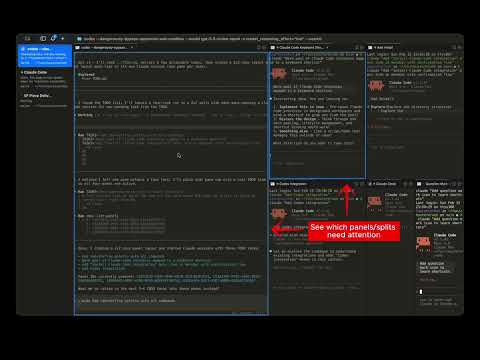
Production-grade engineering skills for AI coding agents.

Market Signal

Why It Has Market Pull

Real, verified, and massive organic momentum — the GitHub API confirms over 102,000 stars and 10,700+ forks on a repo that is only about eight months old, backed by a credible, widely-followed author and an active issue tracker with genuine day-to-day usage feedback.

  • Verified via GitHub API: 102,707 stars, 10,762 forks, repo created in February 2026, actively updated as of today
  • 135 open issues showing real, specific usage friction rather than silence or spam
  • Covered independently across multiple outlets tracking its star count climbing over months
  • Claims installation into 70+ agent tools via an open CLI, a differentiated distribution strategy versus a single-agent skill pack

feedbacks

What People Are Saying

  • "stemmer never matches clipped forms (docs, auth, config) to long forms"GitHub issue

  • "no new commands after install"GitHub issue

  • "Agent fails to invoke skills when files reference them as 'see X' or '(Use X skill)'"GitHub issue

  • "Missing .cursor folder and outdated documentation"GitHub issue

  • "Is [the author] cashing that reputation in to ride the LLM hype-cycle, or is this just the natural progression..."HN comment

  • "Request for new 'compound' skill to capture learnings into documentation"GitHub issue (feature request)

GitHub97.6K

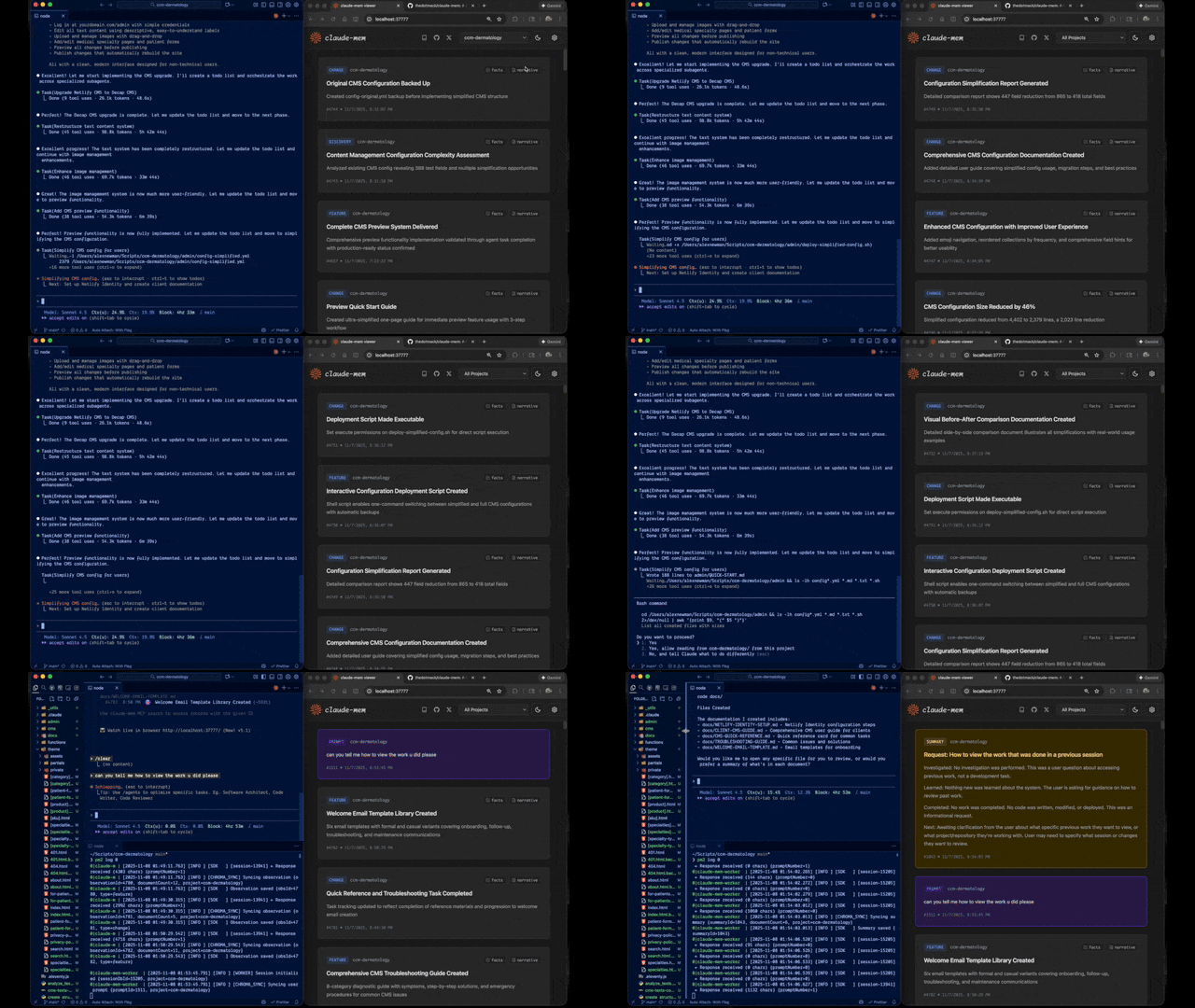
Persistent Context Across Sessions for Every Agent – Captures everything your agent does during sessions, compresses it with AI, and injects relevant context back into future sessions. Works with Claude Code, OpenClaw, Codex, Gemini, Hermes, Copilot, OpenCode + More

Market Signal

Why It Has Market Pull

An open-source persistent-memory plugin for Claude Code and other agent harnesses that has achieved extraordinary, independently verified organic growth, nearly 98,000 GitHub stars in roughly 14 months, tracked publicly by multiple third-party outlets through successive star-count milestones. The scale and continued near-daily release cadence make this one of the clearest signals worth hands-on inspection, tempered only by a steady stream of real bug reports suggesting some rough edges at this scale.

  • 97,636 GitHub stars and 8,597 forks, verified directly via the GitHub API
  • Extremely active development: multiple point releases shipped within hours of each other on the same day
  • Independent coverage tracked its growth through public milestones (46k, then 65.8k stars, then higher), confirming sustained organic adoption
  • Cross-compatible with Claude Code, Codex, Gemini, Copilot, OpenCode and more, broadening its addressable audience beyond one agent harness
  • Specific, recurring GitHub issues show a large, actively engaged user base rather than vanity stars

feedbacks

What People Are Saying

  • "why does this leave CLAUDE.md files literally all over?"GitHub issue

  • "Bug: Observation system creates CLAUDE.md files in project subdirectories and duplicate nested directories"GitHub issue

  • "Stop hook fails with 'Unknown event type: session-complete'"GitHub issue

  • "[Bug] 13.x worker fails with 'Cannot find module zod/v3'"GitHub issue

  • "Feature Request: Support custom API endpoint / LiteLLM proxy"GitHub issue

  • "If you use Claude Code on projects that span more than a single conversation, it's worth installing."Dev blog

GitHub28.7K

Scale computer-use 2.0 with open-source drivers, cross-OS fleets, and benchmarks for training, evaluation, and data generation.

Market Signal

Why It Has Market Pull

A mature, well-capitalized computer-use agent project — 28,700+ verified GitHub stars, Y Combinator-backed with a $500K seed round plus named venture investors, and a strong Hacker News launch that is still generating organic engagement from independent developers and academic papers citing it as a reference framework.

  • 28,701 verified GitHub stars, 2,038 forks, with same-day commits across multiple parallel release tracks
  • Backed by Y Combinator with a $500K seed round and investors including 468 Capital, Orange Collective, and Script Capital
  • Hacker News launch thread scored 172 points with 73 comments — strong reception for a developer-tool launch
  • Cited as a reference framework in multiple independent arXiv papers on computer-use agents
  • Referenced by other open-source projects' issue trackers as a dependency, showing real downstream adoption

feedbacks

What People Are Saying

  • "I tried this three times... it got ahead of itself and starting typing things in the wrong place."HN comment

  • "Would love to use this for TestDriver, but needs to support Windows :*("HN comment

  • "One-shot VM would be nice. ephemeral VM spins up, agent runs task, VM is deleted—perfect for CI pipelines."HN comment

  • "This is precisely what I am looking for but for Windows."HN comment

  • "Independent third-party coverage is still thin."evidence gap

GitHub27.8K

Open source Ghostty-based macOS terminal with vertical tabs and notifications for AI coding agents. Built for multitasking, organization, and programmability.

Market Signal

Why It Has Market Pull

cmux is a verified, fast-growing open-source product with real adoption signal, not just scraped star counts — a two-person Y Combinator startup built it and it has become a go-to terminal for people running multiple coding agents in parallel.

  • Live GitHub API check confirms 27,805 stars and 2,460 forks, with a commit pushed within the last 24 hours
  • First Show HN launch drew 198 points and 77 comments, with the founder personally fixing reported bugs within hours and shipping 18 releases in two days
  • Praised publicly by Mitchell Hashimoto, creator of Ghostty (the terminal engine cmux is built on)
  • Reported to have gained roughly 9,500-10,000 stars within its first two weeks of public availability
  • Has a paid 'Founders Edition' tier, suggesting an actual monetization path beyond pure open source

feedbacks

What People Are Saying

  • "Just took it for a spin, thought it was pretty nice. ... Nice work!"HN comment

  • "Looks like this could be really cool, but it's a buggy mess. Can't switch top tabs, can't close tabs."HN comment

  • "Gave this a run and it was pretty intuitive. Good work!"HN comment

  • "vertical tabs are a great idea for ghostty!"HN comment

  • "Very excited about cmux otherwise, great concept and it looks beautiful."GitHub issue

  • "I like it, ran it in the past day on three parallel projects each with several worktrees... feels more natural than tmux."HN comment

GitHub7.2K

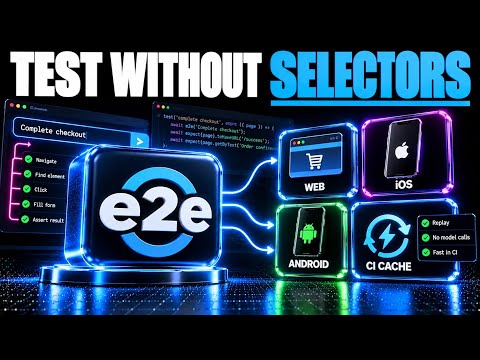
Next generation e2e testing framework for web and mobile apps.

Market Signal

Why It Has Market Pull

A genuinely AI-native end-to-end testing framework, built by a Y Combinator company, combining natural-language agent-driven steps with ordinary deterministic assertions and cached replay — real, fast-growing adoption and a substantive public launch debate.

  • Verified live stats: approximately 7,300 GitHub stars and 331 forks, reportedly gaining over 1,000 stars within 24 hours of launch and reaching #1 on GitHub's trending page
  • Y Combinator company with a live Hacker News launch thread (132 points, 69 comments) that included substantive founder back-and-forth on pricing and native mobile-app support
  • Clearly differentiated technical angle: natural-language agent steps run alongside ordinary locator-based assertions, with passing agent steps replayed from a cache to avoid repeat model calls
  • Positive independent reports across channels including a Dev.to walkthrough and a self-reported QA practitioner describing a 3x speedup
  • Some pushback exists: commenters questioned whether AI-authored tests beat hand-written ones at scale

feedbacks

What People Are Saying

  • "Love this. I've been doing the same thing in a vacuum."online comment

  • "I am so impressed with this tool. It has sped up process of automation by 3X. I love it."online review

  • "my first e2e test ran in under 2 minutes and just worked"Dev.to article

  • "Works out of the box with Expo EAS Simulator"online comment

  • "'Traditional E2E tests are slow to set up and expensive to maintain.' I don't really understand this."HN comment

  • "Unfortunately from our experience tests don't scale as well as code. First of all static tests are very brittle."HN comment (founder)

  • "Change it now to .com or get stuck there for years, suffering anti spam filters, potential renewal problems"HN comment

Sources

GitHub

Skills for Real Engineers. Straight from my .agents directory.

A skill to stop your coding agent from burying the answer. ADHD-friendly output.

Editorial diagram design for Claude Code, Codex, GitHub Copilot, Factory Droid, and Pi. 42 diagram types. Self-contained HTML + SVG. No shadows. No Mermaid slop.

13.5K

Reverse engineer anything with agents, from app behavior down to native binaries.

Product Hunt

Rill is an AI-native browser built around the Claude Code and Codex you already use. Browse normally, then press ⌘E on any page to turn what you're looking at into a task for your agent. Rill finds the right project, passes along the context, and the agent works while you keep browsing. It also sorts your tabs into themes, turns your history into days you can search, and brings every project your agents are working on into one place. Free, on the plan you already have.

OpenBot is an open-source workspace for AI teammates. Connect Claude, ChatGPT, Grok, OpenCode, or custom agents on Mac, Windows, and iOS. Give agents clear roles, let them delegate work, and invite your team to collaborate live with the same agents.

AUDR (Agent Usage Detail Record) is an open standard, for capturing who initiated an agent run and what it cost across every system that run touches. Inspired by the telecom industry's Call Detail Record, AUDR defines a common JSON schema that any harness, router, or billing system can emit and ingest. Three core rules make it work: a shared run ID minted by the harness, clear field ownership, and strict merge rules where conflicts are rejected and corrections are new records.

Your GTM stack shouldn’t need a dozen tools, subscriptions, and APIs. Fuse gives developers and AI agents one SDK and MCP for the entire workflow. Think OpenRouter x Apollo x Clay x Zapier. Fuse takes care of web automations, data enrichment, multi-channel outreach, workflows, and AI agents. Build unlimited workflows and agents on top, without stitching together separate GTM products for every step.

Extrovert finds prospects, suggests who to comment on or DM today, and prepares drafts in your voice. Review in 20 minutes a day, or hand the whole job to your Claude.

Willow Knowledge lets you bring your writing style and personal context into Willow from ChatGPT, Claude, Gemini, or any AI you use. It's like giving superpowers to Willow Scribe. From now on, your email, slack msg, prompt, or wherever you write will sound exactly like you when you dictate.

YC Launch

Bryel helps your company to build an in-house AI lab, then gives you the software to train and continually improve your own models. Bryel · Fall 2026 · B2B Tags: Artificial Intelligence, B2B. Website: https://www.bryel.ai/

AI-native ECAD that allows engineers to design PCB chips faster and more reliably Resin Technologies · Fall 2026 · B2B Tags: Artificial Intelligence, Hardware, Electronics. Website: https://resineda.com/

Hacker News

Hi HN, I'm Justin. Breadcrumb records everything you do on your Mac (screen + meetings + AI transcripts + what you and your AI decided) and turns it into memory your AI can search. It's local and encrypted. You can also teach it rules by talking to it and it makes sure the right rules turn up in the right context. Works with Claude Code / Codex / Cursor / opencode. All of this is exposed to your AI as 30+ MCP tools (here's the definitions): https://innerloop.works/breadcrumb/mcp I started it in... (49 points, 9 comments).

Hello HN, I'm Ajo and I built Strata. I spent 4 years at Netflix solving self service for non-technical business users. I think I cracked it with my unique approach to semantic layer design. The key challenge is balancing expressiveness with ease of use for our non technical colleagues. It just so happens that focus made it work pretty well with LLMs too. Strata is a full stack solution. It includes a semantic layer, dashboards, subscriptions, and google sheets exports. All of it can be done vie... (25 points, 16 comments).

Hi HN, we're Thomas and Olivier from Terse ( https://www.useterse.ai/ ) We've built Durable Actors, an open-source alternative to Cloudflare's Durable Objects. A Durable Object/Actor is a tiny server that handles one request at a time and has its own SQLite database. There's exactly one of each in the world and it is addressed by name. This is the perfect primitive for deploying multiplayer agents. Each agent can have its own Durable Actor, and each user can connect to that Actor via websocket.... (20 points, 13 comments).

Hi HN, this is Yarik and Vlad from VOYGR - we are building the tools for agents and apps to engage with local businesses. It all started with our own pain point at VOYGR: calling businesses to verify if they are open. We are both from Google (Maps and Search) and even there, the merchants and venues don’t keep this info updated. So we built an API and started using it in-house. On July 4th, we were driving through Portland looking for a place to eat. Google Maps was saying “Holiday hours may var... (16 points, 4 comments).

Prathmesh, CEO of MCPJam here. Users now start in ChatGPT, Claude, Cursor, and other AI clients. They reach your product through your MCP server. That means your users often aren’t in your product anymore. You can’t see what they prompted for, how the agent interpreted it, or whether your server helped them get the result they wanted. I saw this firsthand leading MCP technical strategy at Asana, including our ChatGPT and Claude launches. We were building high-stakes enterprise integrations, but... (13 points, 9 comments).

HF Spaces

Benchmarks and news on various repros of TypeSafe's Jev Who is rebuilding TypeSafe's Jev (System One / RLCD) in the open? This static Space opens on the Decision Index leaderboard; the News tab tracks the artifacts in one combined grid, color-coded by kind: Decoding: parallel constrained decoding on stock models (inference technique, no new weights) Diffusion: text diffusion models run in a "Jev mode" Trained: Jev-like scoring heads and fine-tunes, weights often on the Hub, promised models listed last Prior art: "this already exists" claims Explainers: architecture speculation, explainers, benchmarks and roundups Cards sort by a trending score: ♥ likes on X + 5 × GitHub stars + 8 × Hub likes...

6-step Qwen-Image-2.1, T2I + editing, vs-base comparison Viggle Turbo v0.3 — 6-step Qwen-Image-2.1 A distilled Qwen-Image-2.1 that generates and edits images in 6 steps with no classifier-free guidance, about 5× faster than the 40-step base model. On most prompts it is hard to tell apart from the base model; small, dense text and complicated edits (multi-reference composition, face swaps, identity-preserving edits) can still fall short of it. v0.3 (2026-09-29): at 6 steps, less grain than v0.2.1 and a little softer on fine texture. We think 6 steps is close to its capacity: every further gain we found cost something elsewhere. The new 9-step setting runs 7 turbo steps and lets the base model...

Train open models with RL inside real agent harnesses A research article built with research-article-template. Source lives in FineEnvs under content/articles/multi-harness-rl/. | Path | What | | --- | --- | | app/src/content/article.mdx | Frontmatter and the chapter registry — the explicit import list is the running order | | app/src/content/chapters/ | One .mdx per section | | app/src/content/embeds/ | Standalone HTML/D3 visualizations, one file each | | app/src/content/assets/image/ | Images | | app/src/content/assets/data/ | Data files, served at /data/ | | app/src/content/bibliography.bib | References, cited as [@key] | From the repo root, over the Hub HTTP endpoint (no git remote, no n...

Play Mario, Rubik's Cube and Tetris with JEV-27B Launch a live JEV-27B game run in the game arena. Mario: original NES World 1-1, with movement and jump decisions. 3D Rubik's Cube: a 25-turn scramble; select a seed or create a new scramble. Tetris: smooth gravity acceleration, continuing at maximum speed until 20 lines. The right panel shows the selected action, option probabilities, and current / average individual model inference duration. Mario movement and jump are separate calls. Start and stop runs yourself; one run per game executes at a time, with a short queue. Recent runs reconnect when you reload the page. The game worker runs on AutoTrust's existing B300 deployment. Model inputs...

Calibrated typed decisions + System 2 reasoning JEV-9B — typed decisions in one forward pass An interactive demo for autotrust/JEV-9B — AutoTrust's first integrated System 1 + System 2 open model, built with the Blocks-of-Experts recipe on a frozen Qwen3.5-9B backbone (Apache-2.0). System 1 answers typed questions in a single prefill pass — nothing is generated — and returns a calibrated probability distribution: | kind | question | returns | |---|---|---| | noul | "Is this statement true?" | [P(false), P(true)] | | choice | "Which of these 2–16 options?" | one probability per option | | score | "Where on the ordered 0–5 scale?" | distribution over the six levels + expected score | System 2...

Video generation with a synchronized soundtrack MiniMax-H3 — unquantized, split across two Spaces Joint video and soundtrack out of a single denoising pass, at bfloat16 with no quantization anywhere. This Space is the denoising half: the 61.73 GiB transformer and the two autoencoders. The 62.14 GiB Qwen3-VL conditioner runs in qwen3vl-conditioner, which this Space calls over the gradio API for every request. The weights are the public MiniMaxAI/MiniMax-H3 diffusers checkpoint. MiniMax-H3 is 195.9 GiB in bfloat16 and a ZeroGPU Space is evicted at 150 GB of storage. An unquantized single Space is therefore impossible, which is why quantized demos of it run NVFP4 or float8 weights. Cut the Mini...