Huawei Kirin 9050 Pro Chip Powers New Mate XT2 Trifold Phone
TECH

Huawei Kirin 9050 Pro Chip Powers New Mate XT2 Trifold Phone

31+
Signals

Strategic Overview

  • 01.
    Huawei unveiled the Kirin 9050 Pro chip inside its new Mate XT2 trifold smartphone on September 7, 2026 in Guangzhou, marking the commercial debut of its LogicFolding stacked-logic architecture and Huawei's first genuinely new high-performance Kirin chip introduced at a flagship launch in six years, since the Mate 40 in 2020.
  • 02.
    The chip vertically stacks logic units in layers within a single die to shorten signal transmission paths, cut latency, and boost performance - the core mechanism behind what Huawei calls LogicFolding.
  • 03.
    Huawei claims a 42 percent overall performance improvement over the previous generation, with 24 percent higher single-core peak performance and 52 percent higher multi-core performance; its Ma Liang GPU reportedly renders 142 percent faster than its predecessor and adds hardware ray tracing for the first time.
  • 04.
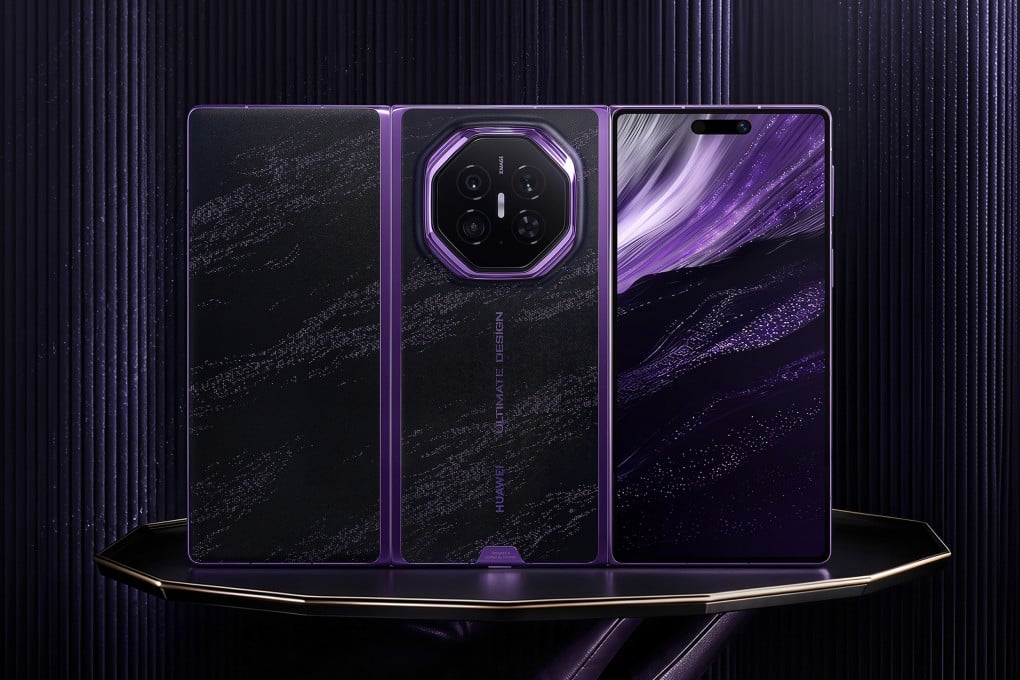
    The Mate XT2 starts at RMB 19,999 (about US$2,980) in China, features a redesigned inward-folding tri-fold mechanism, a 10.2-inch 3K OLED display with 1-120Hz LTPO refresh, HarmonyOS 7, a 5600mAh battery, and 66W wired / 50W wireless charging, going on sale September 12-13, 2026.

Deep Analysis

A New Architecture Debuts

Huawei's Kirin 9050 Pro marks the commercial debut of LogicFolding, a design that vertically stacks logic units in layers within a single chip to shorten signal transmission paths and cut latency [1][2]. Huawei claims a 42 percent overall performance gain versus the previous generation [3], with single-core peak performance up 24 percent and multi-core performance up 52 percent [1][5]. The Ma Liang GPU reportedly renders 142 percent faster than its predecessor and adds hardware ray tracing for the first time [4]. Under the hood, the chip pairs a nine-core, four-cluster LinxiCore CPU with a Da Vinci NPU built for on-device mixture-of-experts models around 20 billion parameters, feeding an on-device Celia AI assistant under HarmonyOS 7 [8]. Huawei also reports transistor density climbing from 155 million to 238 million transistors per square millimeter, a 55 percent gain it attributes to the stacked-layer design [7][8].
The Tau Scaling Law

The chip is built on what Huawei calls the Tau Scaling Law, a framework it presented at the 2026 IEEE ISCAS conference that proposes time-based signal scaling as a replacement optimization target for Moore's Law's transistor-count metric [6]. Huawei says it has designed and mass-produced 381 chips using Tau Scaling Law principles over six years, and projects its high-end chips will reach transistor density equivalent to 1.4nm-class (14 angstrom) processes by 2031 [6][7]. Unable to shrink transistor geometry through leading-edge process nodes because of export restrictions on EUV lithography and TSMC foundry access, Huawei is pursuing a 3D stacked-logic architecture as an alternative path to density gains - coverage has framed this as a possible route around continued US chip sanctions [7][9].

Betting Big on Foldables

The launch lands amid heavy, sustained R&D investment: Huawei's R&D spending reached 121.38 billion yuan (about $17.9 billion) in the first half of 2026, a record for the period and over 25 percent of revenue [2][8]. Huawei already leads China's foldable market, holding 68 percent of the country's foldable phone shipments and a 22.6 percent overall smartphone share (China's number one) with 19.4 percent year-over-year growth in the second quarter of 2026 [2][8]. The Mate XT2's launch also coincided with a new Xiaomi foldable announcement the same day and arrived just ahead of Apple's expected first foldable on September 9, 2026, as the global foldable market grows - up 18 percent last year, with 24 percent growth projected this year and 37 percent in 2027 [3]. Pricing remains a pressure point: Richard Yu acknowledged that rising memory costs are squeezing device pricing, with the Mate XT2 starting at a premium RMB 19,999 (about $2,980) [8].

Skepticism, Risk, and the Community Reaction

Skeptics caution that the real test of LogicFolding is whether it can match TSMC's leading-edge processes on power efficiency, yield, and manufacturing reliability, none of which Huawei has yet demonstrated publicly [9]. AEI commentary calls LogicFolding a genuine engineering innovation but warns that stacking logic tiers traps heat between layers and that defects compound across stacked layers, raising yield risk; it recommends the US extend export scrutiny to the advanced packaging tools and specialty chemicals that LogicFolding depends on, rather than lithography alone [10]. Reaction outside the trade press split along familiar lines. Huawei's own launch clip was celebratory, and commentary on X - including a note that CEO Richard Yu delivered the keynote in Chinese - framed the moment as part of a broader corporate survival story about Huawei outlasting the US chip cutoff and Android ban. YouTube hands-on coverage focused on the hardware itself, highlighting the tri-fold display, stylus support, and a new Privacy Display feature, with one video framing the chip as evidence Huawei might finally be back in the flagship chip game. On Reddit, a concept-render thread drew real debate: some commenters called the chip overpriced for its performance tier relative to Snapdragon and MediaTek, while others defended Huawei by citing software optimization and the company's lack of free-market access to competing modems and foundry nodes. A separate side-thread noted Huawei skipped naming a Kirin 9040, which commenters attributed to the common practice among Chinese manufacturers of avoiding the number 4 for its phonetic association with death in Mandarin.

Historical Context

2020
US sanctions cut Huawei off from critical chip design tools and leading-edge foundries like TSMC, forcing the company to rely on dwindling Kirin inventory and pivot temporarily to 4G devices while rebuilding domestic manufacturing with SMIC.
2020
The Mate 40 was the last Huawei flagship to debut a genuinely new high-performance Kirin chip before the Kirin 9050 Pro, six years later.
2026-05
Huawei presented the Tau Scaling Law at the 2026 IEEE ISCAS conference, laying out the framework later commercialized in the Kirin 9050 Pro.
2026-09-07
Huawei unveiled the Kirin 9050 Pro and Mate XT2 in Guangzhou, China, the commercial debut of LogicFolding.

Power Map

Key Players
Subject

Huawei Kirin 9050 Pro Chip Powers New Mate XT2 Trifold Phone

HU

Huawei / HiSilicon

Designer and manufacturer of the Kirin 9050 Pro chip and Mate XT2 device; presented the Tau Scaling Law framework underpinning LogicFolding.

RI

Richard Yu Chengdong

Chairman of Huawei's consumer business group; publicly presented the chip and phone, calling it Huawei's most powerful Kirin chip ever, while acknowledging pricing pressure from rising memory costs.

HE

He Tingbo

Huawei semiconductor executive who presented the Tau Scaling Law at IEEE ISCAS and called for industry-wide collaboration; separately described by AEI as acknowledging thermal management as the critical challenge for LogicFolding.

SM

SMIC

Huawei's domestic foundry partner, reportedly manufacturing the chip, hindered by lack of access to advanced EUV lithography equipment.

US

US government / export control regime

Source of semiconductor sanctions since 2020 that cut Huawei off from advanced design tools and TSMC foundry access, prompting the domestic LogicFolding development path.

WI

William Martin Keating (Semicon Alpha)

Semiconductor analyst who cautioned that closing the performance gap depends on whether LogicFolding can match TSMC's most advanced processes on power efficiency, yield, and manufacturing reliability.

Fact Check

10 cited
  1. [1] Xinhua: Huawei's Kirin 9050 Pro Marks First New Flagship Kirin Chip in Six Years
  2. [2] Xinhua: Huawei Unveils Kirin 9050 Pro-powered Mate XT2, Reports Record R&D Spending
  3. [3] Huawei Unveils New Trifold Smartphone Powered by Tau Scaling Law-based Kirin Chip
  4. [4] Huawei Launches Kirin 9050 Pro Processor, Its GPU Is 142% Faster Than Its Predecessor and Supports Ray Tracing
  5. [5] Huawei Mate XT2 Officially Launches With Kirin 9050 Pro and New Triple-Folding Design
  6. [6] Huawei Presents Tau Scaling Law at 2026 IEEE ISCAS Conference
  7. [7] Huawei Claims Sanctions-Busting Breakthrough With 1.4nm-Class Chips by 2031
  8. [8] Huawei Unveils Kirin 9050 Pro With Revolutionary 3D Chip Architecture Amid Intensifying Premium Smartphone Race
  9. [9] Huawei Kirin 9050 Breakthrough: 3D IC Design Beats A18 Pro
  10. [10] Huawei Can't Shrink Its Chips, So It's Folding Them

Source Articles

Top 4

THE SIGNAL.

Analysts

Says the real test of LogicFolding is whether it can match TSMC's leading-edge processes on power efficiency, yield, and manufacturing reliability - none of which had been demonstrated as of the launch.

William Martin Keating, Semicon Alpha
Cautious/skeptical analyst

Calls LogicFolding a genuine engineering innovation but stresses claims must be verified against heat, yield, and design-software barriers; notes stacking logic chips traps heat between tiers and defects compound across layers; recommends the US extend export scrutiny to advanced packaging tools and specialty chemicals LogicFolding depends on.

AEI commentary
Policy analysis, cautious

Publicly framed the Tau Scaling Law as requiring industry collaboration; separately, per AEI's characterization, acknowledged thermal management as the critical open challenge for LogicFolding.

He Tingbo, Huawei semiconductor chief
Huawei official
The Crowd

Huawei unveils tri-fold Mate XT 2 with Kirin 9050 Pro, the world's first chip with LogicFolding architecture. Executive Director, Chairman of the Investment Review Board & Chairman of the Board of Directors of the Consumer BG, Huawei, Mr. Yu Chengdong shared the chip's strengths.

@@Huawei5083

Huawei may be one of the strangest corporate survival stories in modern tech. It lost access to advanced U.S. chips. It was cut off from Google's Android services. For 3 years, its flagship phones were effectively pushed back to 4G. And yet Chinese consumers kept buying them.

@@OopsGuess402

Huawei just unveiled a new microchip that will help shape the future of the smartphone industry—but one of the most interesting moments from the launch had nothing to do with benchmarks or specifications. Richard Yu, CEO of Huawei Consumer BG, delivered his keynote in Chinese.

@@thecyrusjanssen216

Huawei HiSilicon Kirin 9050 Pro Concept:

@u/vantaratechnology47
Broadcast
Huawei Mate XT 2 TriFold: Privacy Display, Stylus and Massive Display!

Huawei Mate XT 2 TriFold: Privacy Display, Stylus and Massive Display!

Huawei Kirin 9050 LEAKED First Kirin Chip to Break 3GHz! And more!

Huawei Kirin 9050 LEAKED First Kirin Chip to Break 3GHz! And more!

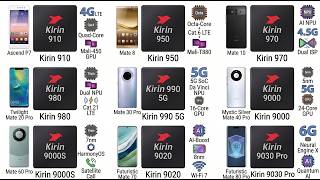
Every Kirin Processor Explained

Every Kirin Processor Explained