Situational Awareness hedge fund collapse and Citadel's rescue deal
TECH

Situational Awareness hedge fund collapse and Citadel's rescue deal

40+
Signals

Strategic Overview

  • 01.
    Situational Awareness LP, the AI-focused hedge fund founded by former OpenAI researcher Leopold Aschenbrenner, saw assets under management plunge from roughly $45 billion at its peak to about $10 billion after losing 67% of its value in July 2026.
  • 02.
    Ken Griffin's Citadel acquired roughly $16 billion of the fund's public equity portfolio at a discount on July 30, beating out rival bidders Millennium and Jane Street.
  • 03.
    The fund retained its private Anthropic stake, valued at roughly $5 billion, after withdrawing from a separate agreement to sell $3.5 billion of those shares to a Greenoaks- and Sequoia-led consortium.
  • 04.
    The fund's collapse followed reported leverage of roughly 3-4x on a strategy that was long AI infrastructure names and short enterprise software, which magnified losses when the two positions moved against it simultaneously in July.

Deep Analysis

The Trade That Broke: How Leverage Turned a Rotation Into a Collapse

Situational Awareness ran a long-AI-infrastructure, short-software thesis, betting that compute buildout would outpace enterprise software monetization, funded with reported leverage of roughly 3-4x, with some accounts citing leverage as high as 400% [1][2]. When AI infrastructure and semiconductor names fell more than 30% in a month and software shorts such as Adobe moved against the fund's position, the fund's prime broker - which had already placed it on a watch list - issued repeated margin calls in its final week, forcing it to unwind positions it could not otherwise afford to hold [3]. Assets under management collapsed from roughly $45 billion at the peak to about $10 billion, a 67% loss for July alone [1][4].
Citadel's Rescue Playbook: Griffin's Latest Distressed-Fund Save

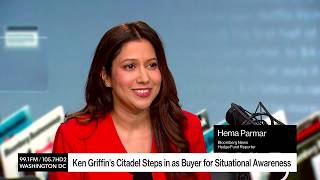
Ken Griffin, together with Citadel's co-Chief Investment Officer Pablo Salame, Chief Operating Officer Gerald Beeson, Perry Vais, and Chief Legal Officer Shawn Fagan, pulled an all-nighter to evaluate and then acquire roughly $16 billion of Situational Awareness's public stock book, beating out rival bidders Millennium and Jane Street [1][3]. Citadel bought the portfolio at more than 10% below market value just before markets opened [3]- and importantly, it bought the stock book, not the fund or Aschenbrenner himself. Some market commentary framed the off-market, block-purchase structure itself as a form of liquidity arbitrage: with the fund already overleveraged, dumping the $16 billion book directly into the open market risked triggering further panic and price damage, so an off-market sale let Citadel capture the discount while containing the fallout. The move continues a recognizable pattern for Griffin, who has stepped in on distressed rivals before: recruiting Enron's energy traders after its 2001 bankruptcy, absorbing part of Sowood Capital's book in 2007, and injecting capital into Melvin Capital alongside Point72 after its 2021 GameStop short squeeze [1].

The Anthropic Stake That Got Away - And Stayed

Hours before the Citadel deal, Situational Awareness had a different escape route lined up: on July 29 it agreed to sell $3.5 billion of its private Anthropic shares to a consortium led by Greenoaks and Sequoia Capital, only to withdraw from that sale the next morning [5]. The fund instead kept its private Anthropic stake, reportedly worth about $5 billion, along with other private holdings in chipmaker MatX and data-center startup Fluidstack [6]. That decision leaves Aschenbrenner's investors with continued exposure to Anthropic's trajectory even as the public equity book that generated the headlines is gone.

Right Call, Wrong Sizing: The Debate Over What Really Happened

Commentary split sharply on how to read the collapse. Former hedge fund manager Martin Shkreli argued the fund's leverage made a blowup inevitable, saying 'he sort of had to blow up. There was no other ending' [3], while CNN framed the episode as evidence of systemic risk from leveraged, crowded AI trades across the hedge fund industry [7]. Aschenbrenner himself compared the margin-call spiral to a bank run - 'vulnerability begetting more vulnerability' - and told investors directly, 'we let you down' [1][8]. Yet the fund reportedly remained up roughly 80% year-to-date even after the 67% July loss, since the underlying long-infrastructure, short-software thesis was largely directionally correct; the failure was leverage and risk sizing, not the trade itself [8]. That tension surfaced in online discussion too, where a widely-upvoted but unverified community theory speculated that Citadel may have manufactured or benefited from a rate-hike scare that pressured the fund before it bought the distressed book at a discount, while other commenters pushed back that the thesis remained directionally correct - the fund was still up roughly 80% year-to-date - and that the real failure was leverage and risk-sizing rather than market manipulation.

Historical Context

2001
After Enron's bankruptcy, Ken Griffin dispatched Citadel executives to recruit its energy traders, an early instance of Citadel capitalizing on a rival's distress.
2007
Citadel absorbed a portion of Sowood Capital's portfolio after Sowood became an early casualty of the subprime mortgage crisis.
2021
Citadel and Point72 injected $2.75 billion into Melvin Capital after its short bet against GameStop was squeezed by retail traders.
2024
Published a viral AI manifesto titled 'Situational Awareness' after leaving OpenAI's Superalignment team, later turning its thesis into the basis for his hedge fund.
2026-05
Anthropic was last valued at $965 billion in a Series H funding round.
2026-07-24
Aschenbrenner sent an investor letter touting 439% year-to-date returns through June and called the ongoing selloff a good buying opportunity, days before the fund's crisis peaked.
2026-07-29
The fund agreed to sell $3.5 billion in private Anthropic shares to a Greenoaks- and Sequoia-led consortium; the deal was withdrawn the next morning.
2026-07-30
Citadel acquired the bulk of the fund's public equity portfolio, roughly $16 billion, at a discount, beating out Millennium and Jane Street.

Power Map

Key Players
Subject

Situational Awareness hedge fund collapse and Citadel's rescue deal

LE

Leopold Aschenbrenner

Founder and CIO of Situational Awareness LP; former OpenAI Superalignment researcher whose leveraged AI-infrastructure trade nearly wiped out his fund

KE

Ken Griffin

Founder and CEO of Citadel; personally led an all-night effort to negotiate and execute the purchase of Situational Awareness's public equity book

CI

Citadel

Multi-strategy hedge fund that bought roughly $16 billion of Situational Awareness's public stock portfolio at more than a 10% discount to market

MI

Millennium Management / Jane Street

Rival bidders that Citadel outbid for the distressed public portfolio

GR

Greenoaks / Sequoia Capital

Investor consortium that briefly agreed to, then withdrew from, buying $3.5 billion of the fund's private Anthropic shares

AN

Anthropic

AI company in which Situational Awareness held a private stake, retained at roughly $5 billion even after the public-portfolio fire sale

Fact Check

8 cited
  1. [1] With Situational Awareness AI deal, Citadel's Griffin rides to the rescue again
  2. [2] Leopold Aschenbrenner's Situational Awareness fund forced into fire sale
  3. [3] Leopold Just Stopped Taking Calls: Inside The Week That Gutted Wall Street's Hottest AI Fund
  4. [4] Former OpenAI Researcher's Hedge Fund Lost 67 Percent in July
  5. [5] Aschenbrenner Tried to Sell Private Stakes Before Citadel Deal
  6. [6] AI hedge fund Situational Awareness may have sold its public portfolio, but it still has its Anthropic shares
  7. [7] Situational Awareness, Citadel and the AI Trade
  8. [8] Leopold Aschenbrenner's Wedding Collided With His Hedge Fund's Near-Collapse

Source Articles

Top 5

THE SIGNAL.

Analysts

Argued the fund's leveraged, concentrated strategy made its collapse unavoidable.

Martin Shkreli
Former hedge fund manager, critic of the fund's risk management

Compared the margin-call spiral to a bank run and directly acknowledged the fund's failure to limited partners.

Leopold Aschenbrenner
Fund founder, in his own account of the crisis to investors

Argues the episode exposes systemic risk from leveraged, crowded AI trades across the hedge fund industry, not just one fund's mistake.

CNN Business analysis
Broader market-risk framing
The Crowd

Citadel has bought most of the roughly $16 billion public-stock portfolio of Leopold Aschenbrenner's AI hedge fund, Situational Awareness, after its leveraged tech bets suffered heavy losses. Citadel did not buy Aschenbrenner or the entire fund. Situational Awareness is keeping...

@@Kenjatina_og533

Leopold Aschenbrenner before he blew up a $45 billion fund: "everyone's like gambling with Bitcoin and Robinhood - I think people are very bad at dealing with addictions" in the same conversation, on AI: "emergent AI is underrated by society at large, but probably overrated by..."

@@carm1nee248

A Lot of people are wondering why Citadel would buy Situational Awareness portfolio... Easy answer... Liquidity Arbitrage. Situational Awareness was overleveraged and selling into the open market would have been even more catastrophic and the panic would have caused even more...

@@KrisPatel99160

Citadel Buys Situational Awareness's Stock Portfolio After Big Losses in AI

@u/Capital-Row6633987
Broadcast
Situational Awareness: How a 25-Year-Old's Hedge Fund Exposed the Entire AI Bubble

Situational Awareness: How a 25-Year-Old's Hedge Fund Exposed the Entire AI Bubble

Leopold Aschenbrenner's Situational Awareness Hit by AI Selloff

Leopold Aschenbrenner's Situational Awareness Hit by AI Selloff

The Biggest Hedge Fund Blow-Up of 2026 EXPLAINED: Situational Awareness

The Biggest Hedge Fund Blow-Up of 2026 EXPLAINED: Situational Awareness

Situational Awareness hedge fund collapse and Citadel's rescue deal — AI News | Agentic Brew