Wall Street Doubts AI Spending Boom Can Pay Its Bills
TECH

Wall Street Doubts AI Spending Boom Can Pay Its Bills

27+
Signals

Strategic Overview

  • 01.
    The Nasdaq fell about 4.5% in the week ending October 16, 2026, closing at 26,140.03 after a single-day drop of 2.14%, its steepest weekly decline since June, as investors grew wary of debt-funded AI infrastructure spending.
  • 02.
    Global issuance of AI-related debt collapsed from $113 billion in June 2026 to just $23 billion in September, a sign that the capital markets funding roughly a third of AI capex are showing fatigue.
  • 03.
    AI capital expenditure has swollen to an estimated 93% of hyperscalers' operating cash flow in 2026, up from just 33% in 2023, leaving almost no cushion once the AI buildout is paid for.
  • 04.
    Five major hyperscalers - Meta, Alphabet, Microsoft, Oracle and Amazon - carry a combined $1.65 trillion in off-balance-sheet AI obligations through leases, take-or-pay GPU contracts and special-purpose-vehicle financing that investors cannot easily see.

Deep Analysis

The Shell Game: How $1.65 Trillion in AI Debt Disappeared From the Balance Sheet

The headline debt numbers investors see are not the real number. Across Meta, Alphabet, Microsoft, Oracle and Amazon, roughly $1.65 trillion in AI-related obligations sit outside the primary corporate balance sheet, routed through operating leases, take-or-pay GPU purchase contracts, and special-purpose-vehicle (SPV) joint ventures [1]. The mechanics matter because they change who actually eats a default: when debt is issued through an SPV, it sits on the SPV's books, not the hyperscaler's, which lets a company keep building AI capacity without its own credit rating absorbing the hit. Meta's roughly $30 billion financing for its Hyperion data center in Louisiana is a case in point - structured so the obligation doesn't show up as a direct liability on Meta's own balance sheet [3]. Oracle took the opposite path. Rather than routing its data-center buildout through off-balance-sheet vehicles, Oracle loaded the debt directly onto its own books, pushing its on-balance-sheet debt-to-equity ratio toward 500% - and over 10x once hidden obligations are counted - which is exactly why S&P cut its long-term rating to BBB-, just one notch above junk [2]. The contrast is instructive: hiding leverage in an SPV buys a company breathing room with rating agencies, but it also makes it much harder for investors to size up the sector's true risk, since the same $1.65 trillion simply isn't visible in the numbers Wall Street is used to scrutinizing.

CoreWeave Becomes Wall Street's Live Stress Test

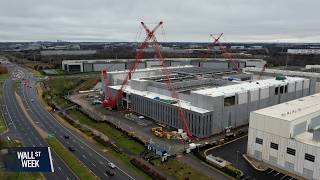
If the hidden-debt story is abstract, CoreWeave made it concrete. Its five-year credit default swap spread surged above 1,140 basis points before settling near 1,038 bps - a 164% jump year-over-year - with swap pricing implying more than a 60% market-priced probability the company could default within five years, an intraday credit-risk record [4]. Its 9.75% bond due 2031 now yields 15.78%, a level that reflects genuine distress pricing rather than routine volatility. The stock fell nearly 12% on a single Friday and about 24% for the week, against a debt and obligations pile exceeding $51 billion [5]. What makes CoreWeave the sector's test case rather than just one company's problem is the business model underneath it: unlike the diversified hyperscalers, a neocloud like CoreWeave is financing capex almost entirely through debt and equity issuance rather than operating cash flow, which is precisely the structure Wall Street is now pricing for risk. Online retail-investor discussion has split sharply on what this means - skeptic communities read the CDS spike as the first domino, while more technical threads push back that the same hyperscalers CoreWeave depends on for contracts have real operating revenue of their own and are unlikely to need a bailout even if CoreWeave itself does stumble.

The 7 Trillion Dollar Question: Why Revenue Can't Catch Up to Capex

Strip away the company-specific drama and the sector-wide math is the real source of anxiety. Gartner projects AI infrastructure spending will reach roughly $7 trillion through 2030, against AI-related revenue that tops out at no more than $3.6 trillion over the same stretch - a gap the firm says could translate into more than $4 trillion in asset write-downs by 2032, with as many as 80% of neoclouds potentially shutting down before the decade is out [6]. That forecast lands against a backdrop where AI capex has already climbed to an estimated 93% of hyperscalers' operating cash flow in 2026, up from just 33% in 2023 [8]. In other words, the companies funding this buildout are plowing nearly everything they generate back into infrastructure, with the shortfall increasingly covered by debt rather than cash on hand. Fortune's reporting frames this less as a single trigger event than a slow-building credit story - the kind of warning that has been sounded, and shrugged off, multiple times over the past three years without a crisis arriving [7]. The open question isn't whether the spending-revenue gap is real; the data says it is. It's whether AI monetization closes the gap before credit markets lose patience with the companies betting it will.

Not Really an AI Story - A Bond Market Story

The most contrarian framing circulating around this selloff argues that AI itself is almost beside the point. On this view, the real risk sits in the bond market: rising Treasury yields, driven by broader government debt-to-GDP dynamics rather than anything specific to AI, raise the cost of capital for every business model that depends on a financing spread - AI infrastructure simply happens to be the most leveraged, most visible example right now. Jamie Dimon's own warning fits this reading closely. Rather than calling AI a bubble, he frames the risk as a competition for capital: AI-driven corporate borrowing is competing directly with U.S. government borrowing for the same pool of money, and he expects that pressure to eventually feed into corporate credit spreads the way it normally does in credit cycles [9]. That reframing matters because it shifts the question investors should be asking. If this is fundamentally a capital-markets story, then AI revenue actually arriving on schedule doesn't fully solve the problem - rising rates would still squeeze every AI company's cost of debt regardless of how good its product is. The AI-specific debt data (the $23 billion September issuance, the CoreWeave CDS spike, the Oracle downgrade) may be the most visible symptom of a wider, less AI-specific credit tightening, rather than its sole cause.

Buy the Dip or Brace for a Bust: Wall Street Can't Agree

What makes this moment unusual is that the disagreement is still completely unresolved in real time. On October 16, the Nasdaq posted its worst week since June on AI debt fears. Three days later, Goldman Sachs was telling clients to buy the CoreWeave dip, arguing 'not all neoclouds are created equal' [10]- directly at odds with Gartner's $4 trillion write-down warning issued in the same news cycle. Banks, meanwhile, are reportedly already pulling back from AI-related lending to avoid concentration risk, even as equity desks recommend adding exposure to the same sector [11]. That split extends into public sentiment: some retail-investor communities are treating the credit stress as proof the AI boom is unwinding, with a recurring expectation that governments would ultimately treat AI infrastructure as too systemically important to let fail; others point out that this exact 'bubble popping' warning has resurfaced every few months for years without the crash materializing. Both camps are working from the same underlying numbers - the debt issuance collapse, the CoreWeave CDS spike, the spending-revenue gap - and reaching opposite conclusions about what happens next. That is itself the story: the facts on AI debt are no longer in serious dispute, but what they mean for the companies and investors exposed to it still is.

Historical Context

2026-06
AI-related debt issuance peaked at around $113 billion for the month before falling sharply over the following quarter.
2026-07
S&P cut Oracle's long-term credit rating to BBB-, one notch above junk, citing its balance-sheet debt load from data center financing.
2026-07-24
Growing bond-market anxiety over AI capex budgets was already being reported months before the October selloff.
2026-10-06
Dimon discussed the AI boom, a bond selloff, and competition for capital in a televised interview.
2026-10-14
Shares of Oracle and other neoclouds dropped as CoreWeave debt concerns first rattled the sector.
2026-10-16
The Nasdaq posted its worst week since June, falling about 4.5%, amid AI debt fears, semiconductor valuation worries, and inflation concerns from oil prices near $110 a barrel.
2026-10-19
Goldman Sachs said 'not all neoclouds are created equal' and recommended buying the CoreWeave dip just days after the worst weekly selloff since June.

Power Map

Key Players
Subject

Wall Street Doubts AI Spending Boom Can Pay Its Bills

CO

CoreWeave

Neocloud AI compute provider carrying over $51 billion in debt and obligations; the central case study for AI debt fears, with credit default swap spreads hitting distress levels

OR

Oracle

Hyperscaler financing AI data centers directly on its own balance sheet, pushing debt-to-equity toward 500% and triggering an S&P downgrade to one notch above junk

ME

Meta

Uses off-balance-sheet special-purpose-vehicle structures, including a $30 billion deal for its Hyperion data center in Louisiana, to fund AI buildout without adding to reported corporate debt

JP

JPMorgan Chase / Jamie Dimon

Bank CEO warning that AI-funded corporate borrowing is competing with government borrowing for capital and could eventually widen corporate credit spreads

GA

Gartner

Research firm forecasting a gap between $7 trillion in AI infrastructure spending through 2030 and no more than $3.6 trillion in related revenue, warning of over $4 trillion in potential write-downs by 2032

GO

Goldman Sachs

Bank advising on AI-related corporate bond pricing, calling neocloud debt 'the epicenter of the funding cost debate' while still recommending buying the CoreWeave dip

Fact Check

11 cited
  1. [1] Hidden AI debt raises new questions for hyperscaler credit
  2. [2] Oracle's debt and data centers
  3. [3] Oracle and Meta are selling AI data center debt to investors hungry for yield
  4. [4] CoreWeave credit default swaps hit distress levels as investors sour on AI debt
  5. [5] CoreWeave's $51 billion debt pile sparks fears of an AI bubble reckoning
  6. [6] Wall Street is hitting its limit on AI spending debt
  7. [7] AI boom vs bust: bubble warning grows as hyperscaler spending and debt pile up
  8. [8] AI capex boom tests whether hyperscalers can monetize the buildout
  9. [9] Jamie Dimon says AI boom borrowing could pressure corporate credit
  10. [10] Goldman Sachs says buy the CoreWeave dip
  11. [11] Banks are pulling back from AI's massive debt pile

Source Articles

Top 1

THE SIGNAL.

Analysts

“Dimon argues AI buildout is competing with U.S. Treasury borrowing for the same pool of capital, and that continued debt issuance will eventually spill into corporate credit markets: 'there will be a point where the market will ask for more and more and more, and yeah, at one point that'll feed into corporate debt, corporate credit spreads, and things like that, which is how it normally happens.'”

Jamie Dimon, CEO, JPMorgan Chase
Not calling AI a bubble outright, but warns of mounting credit risk from AI-driven borrowing

“Greenhaus questions how many prior stress warnings about AI credit have already come and gone without a crisis materializing, asking 'how many canaries have we killed in the coal mine over the last three years.'”

Dan Greenhaus, Solus Alternative Asset Management
Skeptical of recurring AI bubble warnings but acknowledges repeated stress signals

“Huang defends CoreWeave's creditworthiness, framing an improving cost of capital as evidence the business is strengthening rather than deteriorating: 'CoreWeave's strength is improving every day. I'm optimistic. Their cost of capital is actually decreasing.'”

Jensen Huang, CEO, Nvidia
Bullish on CoreWeave's financial trajectory despite debt concerns

“Crisafulli explains that firms like CoreWeave are financing much of their capital expenditures through debt and equity issuance rather than cash flow, raising investor concerns about mounting debt.”

Adam Crisafulli, head of Vital Knowledge
Flags neocloud debt financing structure as a core investor worry

“Intrator asserts that CoreWeave's contracted deal backlog is 'more than enough to sustain its debt obligations' despite market concerns over its credit metrics.”

Mike Intrator, CEO, CoreWeave
Defends the company's ability to service its debt
The Crowd

“THE AI BOOM IS FACING ITS BIGGEST TEST YET: DEBT. Wall Street is starting to ask the question investors can no longer ignore: What happens if AI's massive spending spree fails to generate enough cash to pay the bills? The Nasdaq just endured its worst week since June, AI-linked credit default swaps hit record levels, and Nvidia-backed Firmus scrapped a planned multibillion-dollar IPO. But the real warning signs go much deeper. $7 TRILLION IN AI INFRASTRUCTURE SPENDING? Estimates suggest AI providers could spend around $7 trillion on infrastructure through 2030, against just $3.6 trillion in related revenue. That gap raises serious questions about future returns, debt repayment and potential losses. CREDIT MARKETS ARE SOUNDING THE ALARM. CoreWeave's five-year credit default swap spreads reportedly surged above 1,100 basis points, while its bonds plunged into distressed territory. Oracle's credit risk also climbed sharply. Investors are no longer evaluating AI companies on growth stories alone. They're scrutinizing leverage, cash flow and the ability to service debt. FIRMUS' ABORTED IPO ADDS TO THE PRESSURE. The Nvidia-backed Australian data center operator shelved plans for a major IPO amid market volatility and concerns about its ambitious valuation, financing needs and unfinished infrastructure pipeline. The AI opportunity remains enormous. But building data centers is expensive, and expected future demand doesn't automatically guarantee future profits.”

@@BigGeorgeXL89

“Chamath Explains the AI Boom's Achilles Heel. If the bond market walks the 10-year up to 5.5 and 6%, which has nothing to do with AI, it has everything to do with debt to GDP and a bunch of other factors in broad-based Western economies, any business model that thrives on a financing spread gets hurt badly. As long as we can keep that from happening, we're going to be fine. These are like Achilles' heels, meaning all of the asset value that's getting built up, but just like the great warriors, you just slice the Achilles tendon and they just crumble to the knees.”

@@theallinpod954

“Debt of the biggest AI companies: Amazon $AMZN: $132B Oracle $ORCL: $125B Alphabet $GOOGL: $123B Meta $META: $84B Broadcom $AVGO: $65B Intel $INTC: $51B Microsoft $MSFT: $40B CoreWeave $CRWV: $36B Dell $DELL: $35B This is only bonds and loans. Data center leases that have not started yet add $329B for Microsoft, $288B for Oracle and $279B for Meta. Can the AI build keep running on debt?”

@@BullTheoryio868

“AI industry is about to default on debts”

@u/Ok_Commission7932340
Broadcast
AI’s Next Big Risk Is Hiding in the Debt Market

AI’s Next Big Risk Is Hiding in the Debt Market

Big Tech's AI Debt Will Crash the Economy

Big Tech's AI Debt Will Crash the Economy

AI Has A Hidden Debt Problem

AI Has A Hidden Debt Problem