Trump's Ratepayer Protection Pledge for AI Data Centers
TECH

Trump's Ratepayer Protection Pledge for AI Data Centers

33+
Signals

Strategic Overview

  • 01.
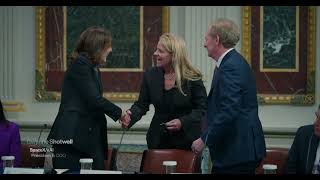
    President Trump's Ratepayer Protection Pledge, first announced in his February 2026 State of the Union address, was formally signed by seven hyperscalers - Amazon, Google, Meta, Microsoft, OpenAI, Oracle, and xAI - at the White House on March 4, 2026.
  • 02.
    By a July 23-24, 2026 event at EPA headquarters, the pledge had expanded to roughly 200 signatories, including 23 Republican governors, more than 150 utilities and cooperatives, and dozens of data center developers.
  • 03.
    The pledge asks signatories to build, bring, or buy new power generation, pay for the delivery infrastructure their data centers require, pay for that capacity whether it is used or not, invest in local jobs, and contribute to grid and community resilience - but it is voluntary and non-binding, with no penalty provisions.
  • 04.
    The administration says the pledge now covers 80% of all power delivered to U.S. homes and businesses, protecting an estimated 263 million Americans, roughly 75% of the population, when a data center is built nearby.

Deep Analysis

Why Washington Built This Pledge Now

The pledge did not emerge in a vacuum - it is Washington's answer to a demand problem that predates any of the individual company commitments. President Trump has said current U.S. power production needs to more than double to keep pace with AI and data center growth, and that framing is the throughline for why the administration pushed hyperscalers to commit to funding their own generation and grid upgrades rather than let those costs land on household bills [1]. Energy Secretary Chris Wright has cast the same push in geopolitical terms, arguing the pledge lets the U.S. build power infrastructure fast enough to keep its AI lead over China without saddling consumers with the bill [1]. Read that way, the Ratepayer Protection Pledge is less a standalone consumer-protection measure than a release valve for an administration racing to keep grid capacity ahead of AI buildout - the signatory count and coverage figures the White House touts are a byproduct of that urgency, not the goal itself.

The Enforcement Gap

Nowhere in the pledge is there a penalty clause or compliance audit. Brookings analysts warn that turning the five voluntary principles into real ratepayer protections requires state-by-state tariff and cost-allocation work still unfinished in major markets like Georgia, California, and Texas - and that existing rules, even in leading states like Virginia, may need further adjustment so data center rates fully reflect the costs they impose on the grid, according to Base Power Company policy chief Travis Kavulla [2]. Sen. Mark Kelly (D-Ariz.) has dismissed the approach outright: "A handshake agreement with Big Tech over data center costs isn't good enough" [3]. Latitude Intelligence analyst Nick Zenkin agrees that "real teeth could come from FERC or Congress" rather than a pledge with no enforcement mechanism [4]. Even inside the coalition, North Carolina state leaders are pressing Duke Energy to convert its version of the commitment into a legally binding one instead of an aspirational signature [5].

Bills Are Still Rising Despite the Pledge

The gap between rhetoric and rate filings is already visible. Utilities have requested $18.6 billion in rate hikes so far in 2026 even as many touted their pledge membership [4]. DTE Energy has raised rates by nearly $500 million since 2025 and has another $500 million request pending, while Georgia Power raised rates six times between 2022 and 2025 [4]. Johns Hopkins researcher Abe Silverman says the disconnect is structural: "I often see statements from utilities that there are cost savings attributable to data centers and then see filings to significantly increase rates. It's complicated" [4]. An ICF analysis cited by Brookings projects residential rates could still climb 15% to 40% by 2030 without new tariff structures, regardless of how many companies sign on [2]. Pledge supporters counter with success stories - American Electric Power cites $16 billion in cost offsets tied to data center deals, and a Meta project is projected to save Louisiana ratepayers $2.6 billion [1]- but University of Michigan researcher Ben Green cautions that "these are a bad deal for communities on the local level" [1].

The Other Cost: Fossil Fuels Fill the Gap

The pledge's cost-focused framing leaves out a parallel consequence of the same demand surge: how utilities are actually generating the extra power. As utilities scramble to meet new AI-driven load, demand for new natural gas generation has increased, and some aging coal plants that were slated for retirement are being kept online instead [6]. That shift toward fossil-fuel capacity sits awkwardly next to a pledge built around who pays for power, not what kind of power gets built - a tension visible in Michigan, where Governor Gretchen Whitmer has pushed the data center pledge while resisting calls for an outright moratorium on new fossil generation [6]. In other words, the pledge can succeed at keeping costs off ratepayers' bills while doing nothing to slow the return of generation sources the AI buildout was supposed to move past.

Official Confidence Meets Grassroots Skepticism

The starkest split isn't between competing experts, it's between official messaging and public reaction. Government-run accounts - the White House rapid-response team, the Department of Energy, the EPA - have driven overwhelmingly promotional coverage of the pledge, repeating the same headline figures Trump cited on stage. A Consumer Reports survey of 2,082 U.S. adults conducted in May 2026 found a very different picture: 75% of respondents were "not too confident" or "not at all confident" that companies would follow through, with majorities of both Democrats (83%) and Republicans (67%) doubting the pledge would be honored [7]. Consumer Reports' Chris Harto summed up the disconnect: "Promises alone do not appear sufficient to assuage American's very legitimate concerns about these large, energy intensive facilities" [7]. That distrust surfaces in organic discussion too: a widely-shared r/energy thread tied the pledge to a subsequent bipartisan bill, noting that Senators Josh Hawley (R-Mo.) and Richard Blumenthal (D-Conn.) introduced the GRID Act the same week the pledge expanded - legislation that would require data centers over 20 megawatts to source all their power outside the public grid. Commenters read the timing as tacit proof that even lawmakers who might otherwise cheer the pledge don't trust a voluntary promise to hold on its own.

Historical Context

2026-02-24
First announced the Ratepayer Protection Pledge concept during the State of the Union address.
2026-03-04
Amazon, Google, Meta, Microsoft, OpenAI, Oracle, and xAI signed the original pledge at the White House.
2026-05-01
Fielded a nationally representative survey of 2,082 U.S. adults finding 75% skeptical companies would honor pledge commitments.
2026-07-23
Trump held an event at EPA headquarters expanding the pledge to 23 governors, over 150 utilities and cooperatives, and dozens of data center developers.

Power Map

Key Players
Subject

Trump's Ratepayer Protection Pledge for AI Data Centers

WH

White House / Trump Administration

Author and chief promoter of the pledge; expanded it in July 2026 to add governors and utilities, framing it as protecting families while advancing U.S. AI leadership.

AM

Amazon, Google, Meta, Microsoft, OpenAI, Oracle, xAI

Original March 2026 signatories; committed to fund their own power generation and infrastructure costs rather than passing them to ratepayers.

NE

NextEra Energy, Duke Energy, American Electric Power, Southern Co., Pacific Gas & Electric

Utility signatories negotiating separate rate structures with data center operators; Duke Energy is being pressed by North Carolina state leaders to make its commitment legally enforceable.

23

23 Republican governors (e.g., Brian Kemp-GA, Jim Pillen-NE, Brad Little-ID, Jeff Landry-LA)

State-level backers added in the July 2026 expansion; state legislatures and utility commissions must still translate the pledge into enforceable tariff rules.

SE

Sen. Mark Kelly (D-Ariz.)

Congressional critic arguing the voluntary pledge needs legal force to actually protect ratepayers.

EN

Environmental and consumer advocacy groups (Food & Water Watch, Consumer Reports)

Critics arguing the pledge lacks enforcement and accountability, citing polling that shows broad public skepticism it will be honored.

Fact Check

7 cited
  1. [1] How Taxpayers Residing Near Data Centers May Be Impacted by Trump's Policy
  2. [2] The Pledge to Protect Ratepayers From AI Data Center Costs Needs Enforcement
  3. [3] Executing Trump's Ratepayer Protection Pledge
  4. [4] Why Energy Bills Keep Rising Even as Utilities Join Trump's AI Ratepayer Pledge
  5. [5] State Leaders Urge Duke Energy to Commit Legally to Federal Data Center Pledge
  6. [6] Whitmer Pushes Data Center Pledge, Not a Moratorium
  7. [7] Consumer Reports: New Survey Finds Americans Are Skeptical of Big Tech's Pledge to Pay for All AI Data Center Energy Costs

Source Articles

Top 5

THE SIGNAL.

Analysts

"A handshake agreement with Big Tech over data center costs isn't good enough; voluntary pledges are not a substitute for binding legal protection for ratepayers."

Sen. Mark Kelly
D-Ariz., U.S. Senator

"Utility rhetoric about data-center-driven savings often doesn't match the rate-hike filings utilities actually submit, and no state can fully shield itself from higher market costs without bold state-level leadership."

Abe Silverman
Research Scholar, Johns Hopkins University

"Real enforcement power would have to come from FERC or Congress, not from the voluntary pledge itself."

Nick Zenkin
Latitude Intelligence Analyst

"Promises alone do not appear sufficient to assuage Americans' legitimate concerns about large, energy-intensive AI facilities."

Chris Harto
Manager, Sustainability Advocacy, Consumer Reports

"Research shows data center deals are often a bad deal for local communities on the ground, despite pledges of cost coverage."

Ben Green
University of Michigan researcher
The Crowd

".@POTUS: "Since I introduced this plan just a few months ago, more than 220 utilities, tech companies, state governments and other partners have signed our Ratepayer Protection Pledge. Electricity rates for 80% of the power distributed in America are now being kept in check by...""

@@RapidResponse47980

"President Trump's Ratepayer Protection Pledge is helping the U.S. lead the world in the AI race while delivering affordable energy to the American people!"

@@ENERGY649

"NOW: President Trump is OFFICIALLY ensuring that American citizens do NOT pay for higher electricity costs for new AI data centers 47 is accomplishing this by working with the states, utility companies and developers: Covering 80% OF ALL POWER nationwide This is common..."

@@EricLDaugh551

"Trump got Big Tech to pledge they'll pay for their own electricity, then Congress filed a bill requiring it by law"

@u/peachforbreakfast1100
Broadcast
President Trump Makes an Announcement on the Ratepayer Protection Pledge

President Trump Makes an Announcement on the Ratepayer Protection Pledge

LIVE REPLAY: President Trump Makes an Announcement on the Ratepayer Protection Pledge - 07/23/26

LIVE REPLAY: President Trump Makes an Announcement on the Ratepayer Protection Pledge - 07/23/26

America's largest tech companies officially signed the Ratepayer Protection Pledge

America's largest tech companies officially signed the Ratepayer Protection Pledge