How the Last Three Weeks of June Broke IBM's Quarter
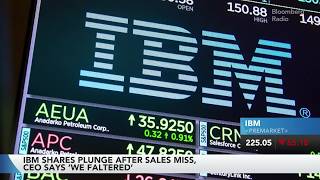
The most important detail in IBM's Q2 miss is not the revenue shortfall itself but the timing. CEO Arvind Krishna disclosed that the damage was concentrated in the final weeks of June 2026, when enterprise clients abruptly redirected their quarterly capital expenditure budgets away from mainframe systems and software contracts toward AI servers, storage, and memory. The driving force was a procurement panic: customers were racing to secure supply-constrained AI infrastructure ahead of anticipated price increases, and they drew from whatever budget was available - which, in many cases, meant cutting planned mainframe and software purchases [1].
Krishna's shareholder letter was blunt about what this meant for IBM's execution: 'While we anticipated some supply chain-related impact in our expectations, we did not anticipate the magnitude of the capex reprioritization.' He added that the company 'did not adapt and move quickly enough, and numerous large deals failed to close on the timelines we expected' [2]. This isn't just a demand-destruction story. IBM's z17 mainframe was actually performing at approximately 130% of its predecessor on a cumulative basis - the underlying product was strong. The problem was a sudden, concentrated budget reallocation that hit in the final stretch of the quarter, when IBM had the least runway to recover [3].
The cascade was brutal: Infrastructure revenue fell 7%, and Transaction Processing - which represents roughly 30% of IBM's software segment - declined mid-double digits year-over-year. Software overall grew just 5%, against an expectation of 11%. IBM missed revenue consensus by approximately $700 million and came in at $2.93 adjusted EPS versus the $3.02 expected. Gross margin compressed 100 basis points to 57.7% [4].