Why Memory Became the Bottleneck of Bottlenecks
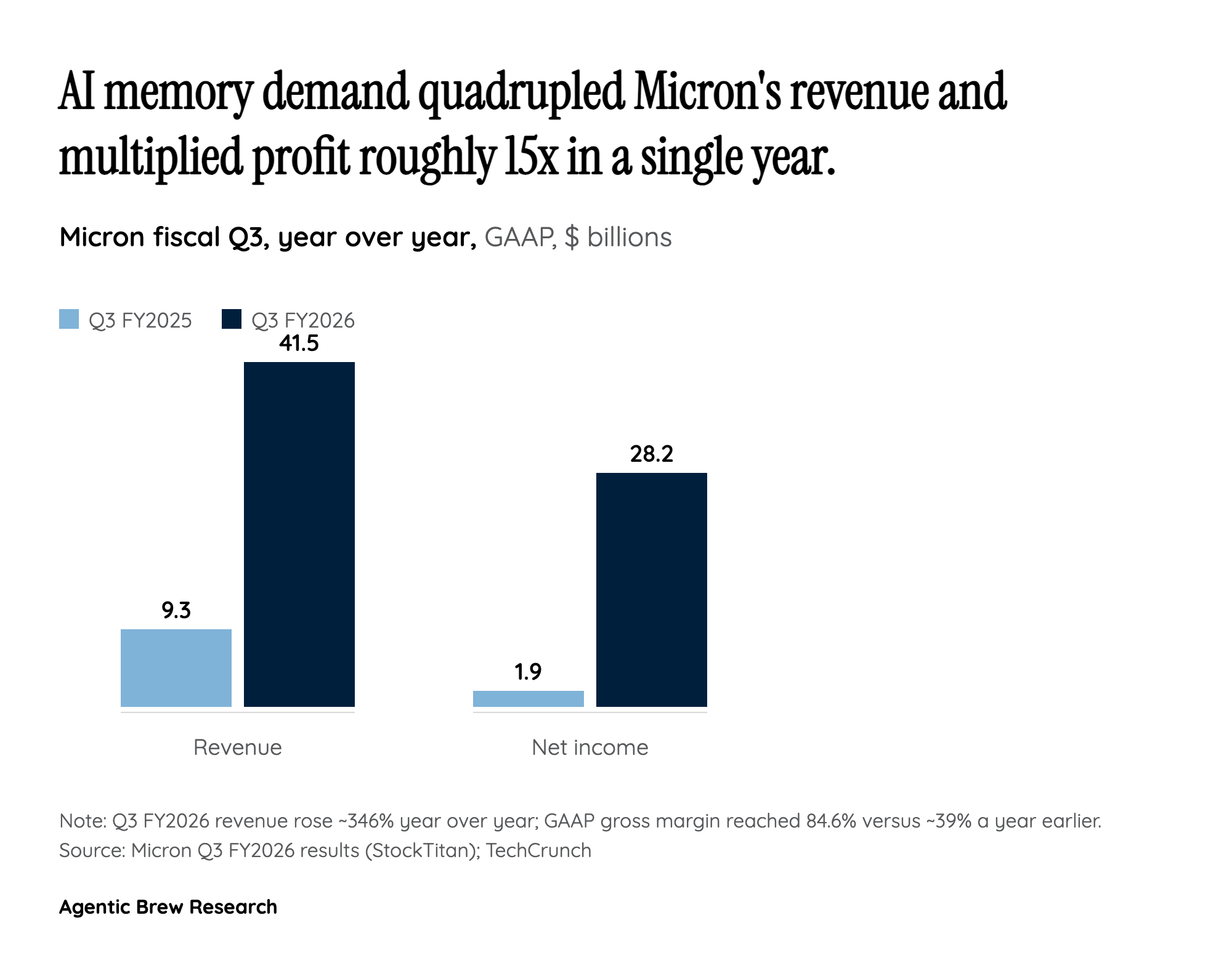
Every Nvidia AI processor needs High-Bandwidth Memory mounted beside it, and the AI data center buildout has turned that requirement into the critical choke point of the entire compute stack [1]. HBM is not a commodity chip: it is a specialized component manufactured by only three companies globally - Micron, Samsung, and SK Hynix - which makes the supply base structurally narrow [2]. The shortage is a supply problem as much as a demand one, because new fabrication capacity cannot be conjured quickly. One William Blair analyst captured the dynamic bluntly, noting that demand growth continues to outpace the rate that new cleanroom space can come online [1]. The transition that put Micron at this choke point was deliberate. According to reporting on the company's pivot, Nvidia CEO Jensen Huang met Micron CEO Sanjay Mehrotra roughly three years ago and pushed Micron to abandon low-margin commodity memory in favor of HBM tailored to specific processors, with Huang crediting the fact that the two companies lined up their roadmaps [3]. On social channels, one widely-shared post framed the outcome as AI having turned memory into the bottleneck of bottlenecks, while semiconductor commentators tied the same dynamic to the three-supplier DRAM oligopoly.