Three Encoders, One Vector Space: The Mechanics Behind EmbeddingGemma 2
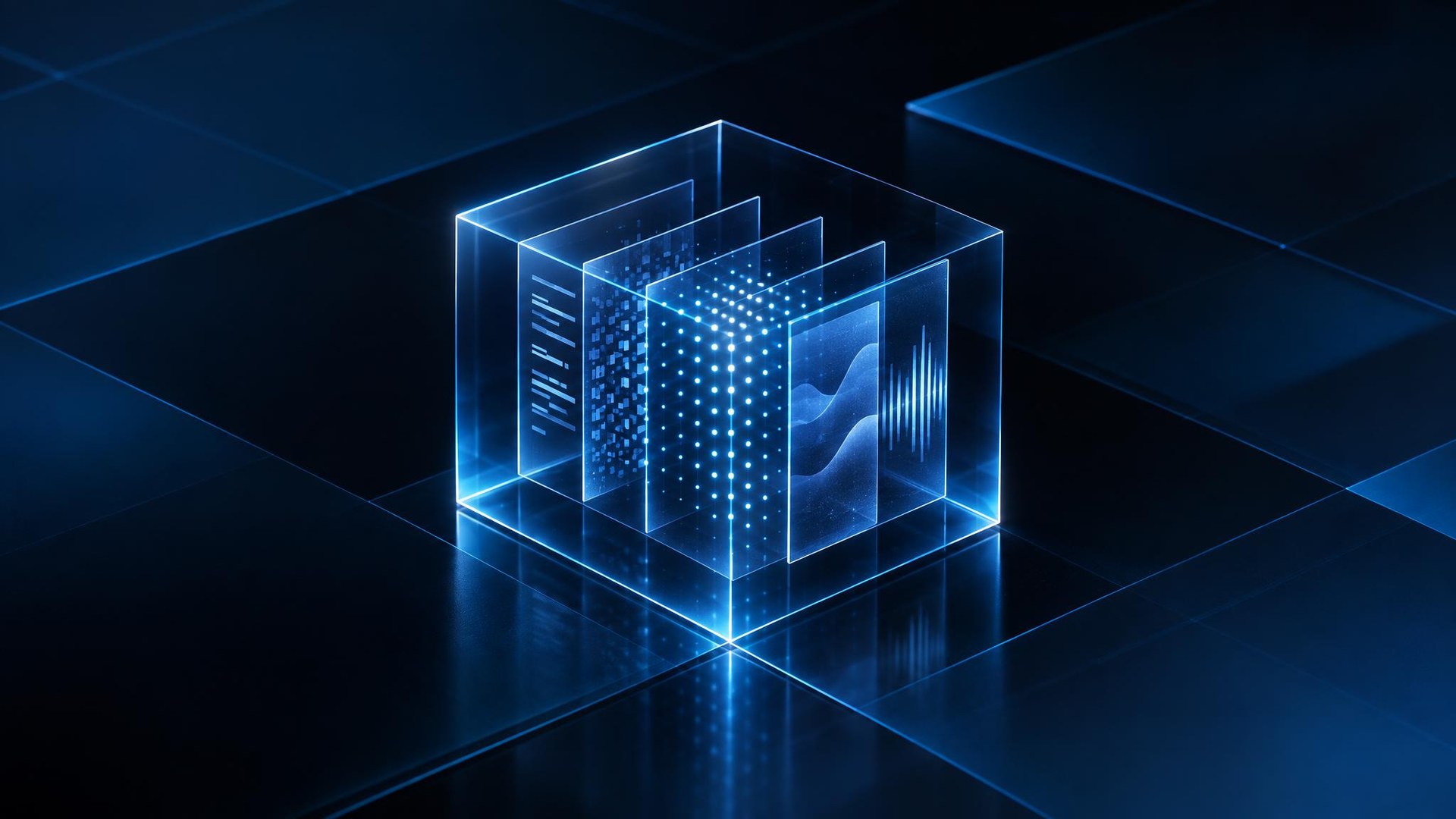
EmbeddingGemma 2's headline trick isn't a single bigger model - it's three separate encoders trained to land in the same coordinate system. The 740 million total parameters split into a 270-million-parameter text model (a 130-million transformer backbone plus a 140-million embedder), a 170-million-parameter vision encoder, and a 300-million-parameter audio encoder, each projecting its modality into the identical 768-dimensional space [1]. That shared geometry is what lets a text query, a photo, and a video clip be compared with a simple dot product, instead of needing separate retrieval systems bolted together after the fact.
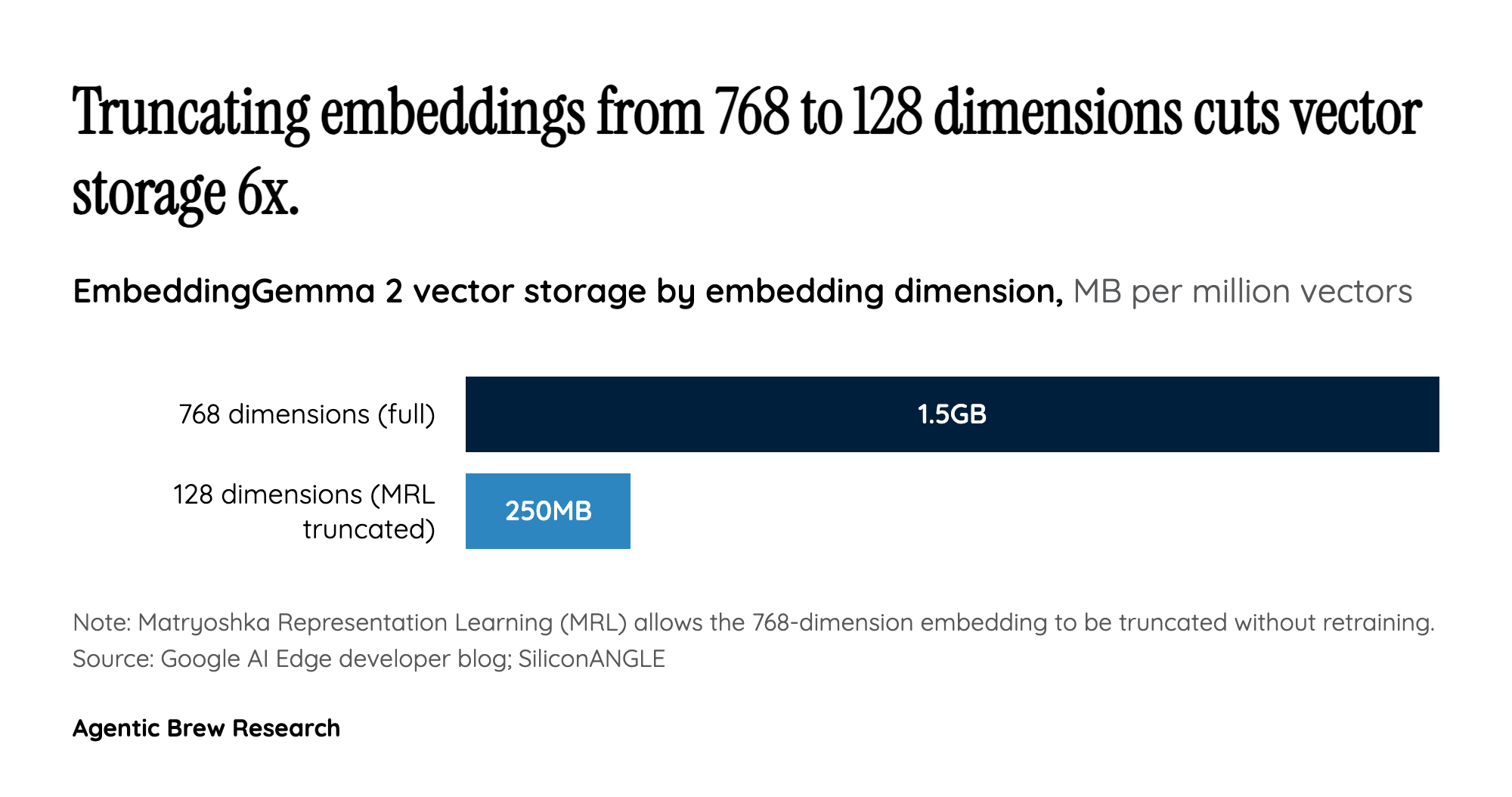
The second mechanism worth understanding is Matryoshka Representation Learning (MRL), which trains the embedding so its first 512, 256, or 128 dimensions remain useful on their own - not just the full 768. Combined with an 8,000-8,192 token context window (four times the original EmbeddingGemma's), this is what lets the same model index a short code snippet or a document chunk long enough to need real retrieval [2]. On a MacBook M5 Pro GPU, vision encoding runs at 37.3 milliseconds per image, and decision-routing tasks across 500 candidate options resolve in under 100 milliseconds - fast enough to use the embedder as a zero-shot intent router rather than only a search index [3].
The payoff shows up most clearly on code retrieval, where EmbeddingGemma 2 jumped from 68.76 to 78.68 on the MTEB Code benchmark - a 9.92-point gain that outpaces most of the model's other improvements and suggests the architecture change, not just more training, is doing real work [4].