Google's licensed-data moat vs. Suno and Udio's litigation crisis
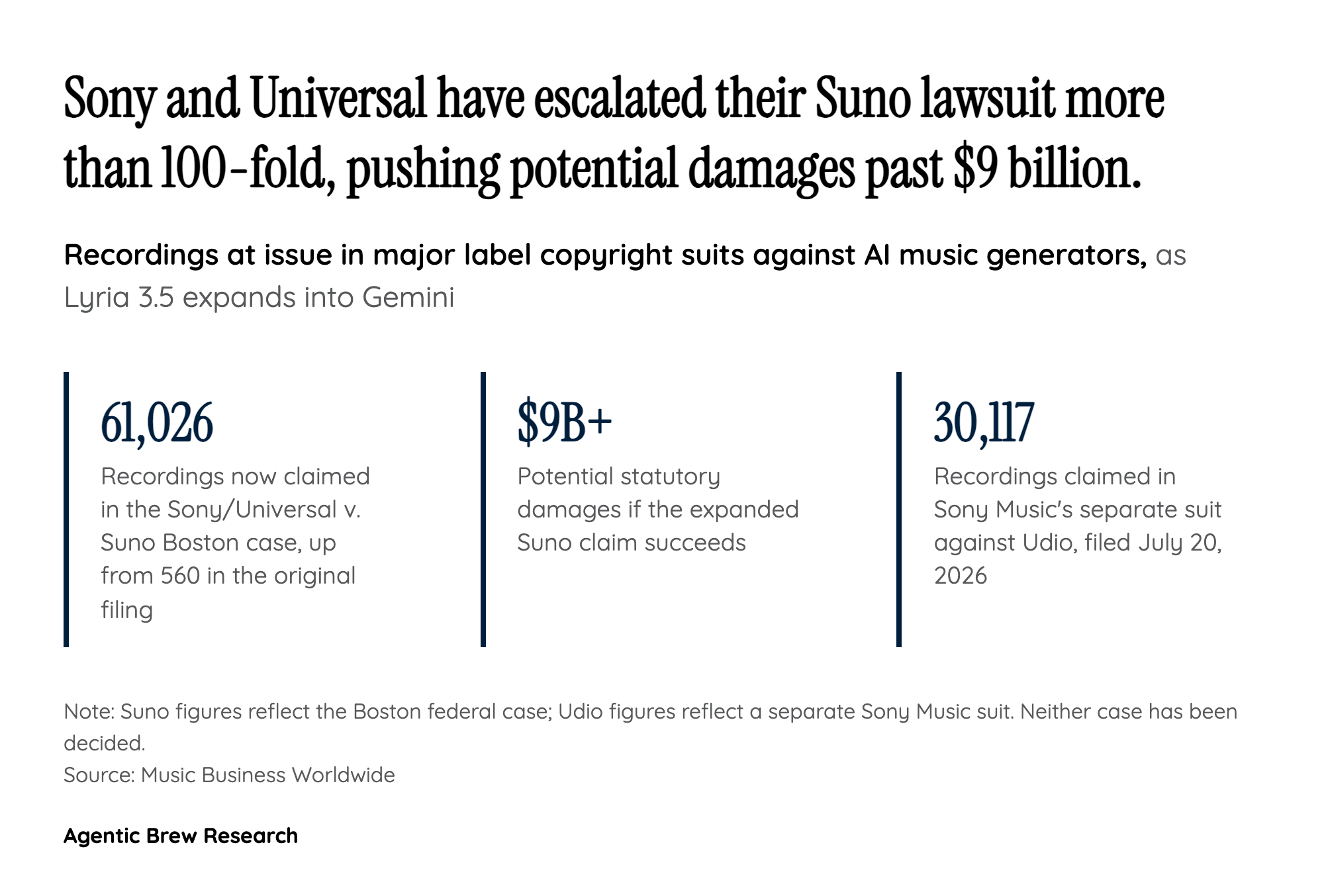
Lyria 3.5's expansion into the Gemini app and API[1]arrives amid the heaviest legal pressure yet on its two biggest rivals. A Munich court ruled on July 31, 2026 that Suno violated copyright, finding that works memorized inside the model's own parameters and stored on German servers fall outside text-and-data-mining exceptions - a theory that makes the company liable for what its model generates, not just what it was trained on[2]. Sony Music has not settled with either rival: it filed a second suit against Udio in July 2026 covering more than 30,000 sound recordings[3], while Sony and Universal moved in May 2026 to expand their Boston case against Suno from 560 to 61,026 recordings, a scope that could push statutory damages past $9 billion[4]. Google, by contrast, says Lyria is trained on data that YouTube and Google are contractually authorized to use, positioning licensed training data as a legal differentiator rather than just a technical one[5].