Google will invest at least €13 billion (~$15.1 billion) through 2028 to expand AI data center infrastructure in Finland - its largest single investment in Europe - across four sites (Hamina, Kajaani, Muhos, Vaala), backed by a 22-year nuclear power purchase agreement with Fortum, 629 MW of new onshore wind, and a 94 MW battery system.
TECH

Google will invest at least €13 billion (~$15.1 billion) through 2028 to expand AI data center infrastructure in Finland - its largest single investment in Europe - across four sites (Hamina, Kajaani, Muhos, Vaala), backed by a 22-year nuclear power purchase agreement with Fortum, 629 MW of new onshore wind, and a 94 MW battery system.

29+
Signals

Strategic Overview

  • 01.
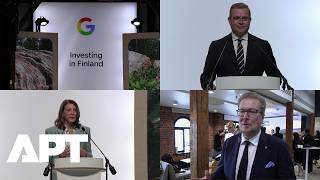
    Google will invest at least €13 billion (about $15.1 billion) in digital and AI infrastructure in Finland during 2027 and 2028, calling it its largest single investment in Europe to date.
  • 02.
    The buildout spans four municipalities: an expansion of the existing Hamina data center plus new facilities in Kajaani, Muhos and Vaala.
  • 03.
    To power the expansion, Google signed a 22-year power purchase agreement with Fortum covering up to 50% of the Loviisa nuclear plant's output through 2049, its first nuclear power deal outside the United States, alongside new onshore wind agreements totaling 629 MW and a 94 MW battery storage system near Kajaani.
  • 04.
    Google also committed €31 million over four years to community programs in the host municipalities, including €10 million for research and innovation and AI skills training for more than 4,400 workers.

Deep Analysis

A Nuclear Deal Unlike Any Other

At the center of Google's Finland package sits an unusual financial instrument: a 22-year power purchase agreement with the utility Fortum, covering up to 50 percent of the Loviisa nuclear plant's output from 2030 through 2049 [2]. That length of commitment is what makes the deal notable - most corporate clean-energy PPAs in Europe run 10 to 15 years, but Google is locking in Loviisa capacity for more than two decades, in what World Nuclear News describes as Google's first nuclear power agreement outside the United States [2].

The mechanism matters because it flips the usual funding logic for aging nuclear assets. Fortum CEO Markus Rauramo said long-term partnerships like this one are "a key enabler" for growth, and the revenue certainty from Google's contract is what lets Fortum commit roughly €1 billion to extend Loviisa's two reactors, which have operated since 1977-1981, out to 2050 [2]. Beyond the nuclear agreement, Google also signed new onshore wind power purchase agreements with Valorem and Suomen Hyötytuuli, lifting its total supported new-to-grid onshore wind capacity in Finland to 629 megawatts, and contracted a 94-megawatt battery storage system near its Kajaani site, expected to come online in late 2027 to help balance the grid during cold, windless periods [3]. In effect, a single hyperscaler's demand for round-the-clock, carbon-free electricity is now underwriting the lifespan of a national nuclear plant that supplies more than a tenth of Finland's power.
Follow the Money: Who Actually Benefits

Google's own figures frame the investment as a broad economic lift: an average of €3.6 billion added to Finland's GDP annually during the 2027-2028 construction phase, more than 37,000 jobs supported during construction (about 16,000 of them directly in construction), and roughly 7,000 jobs sustained annually once the four sites are operational, at wages the company says run 24 percent above Finland's median [4][5]. Google has also pledged €31 million over four years for community programs across the host municipalities, including €10 million for research and innovation and AI skills training aimed at more than 4,400 workers [4].

That framing lands very differently depending on the audience. On X, corporate and financial-press accounts, including Google Cloud's own leadership, presented the numbers as an unambiguous win for the Finnish economy. But the reception on Finnish-language community forums ran markedly more skeptical, with commenters challenging whether the construction and permanent job totals are inflated relative to how few people an automated data center actually employs, and raising a related concern: that Google's claim on roughly half of Loviisa's output for 22 years effectively earmarks a meaningful share of national nuclear generation for one company's compute needs rather than the broader consumer market. That gap between the official jobs-and-GDP narrative and the public's arithmetic skepticism is arguably the most contested part of the announcement.

Why Finland, Why Now

Finland's appeal to Google is not new. Google bought the disused Summa paper mill in Hamina back in March 2009 and brought the first phase of that data center online in September 2011, using seawater cooling to cut costs [6]. By the time of this announcement, Google's cumulative investment in Hamina alone had reached close to €800 million across multiple expansion phases, supporting more than 600 Finnish suppliers over 15 years of operation [1][6]- making the new €13 billion commitment roughly 16 times the size of everything Google has built in the country to date.

The pitch for building more there is straightforward: a cold climate that reduces the energy cost of cooling servers, plus relatively cheap, stable low-carbon electricity from nuclear, wind and hydro [5]. The new package spans four municipalities - an expanded Hamina site alongside new facilities in Kajaani, Muhos and Vaala [10]- and arrives as Alphabet has raised its own 2026 capital expenditure guidance to $205 billion, situating the Finland deal as one piece of a much larger global AI infrastructure buildout [7].

The Market's Muted Verdict

Investors treated the headline investment figure and the nuclear power deal very differently. Alphabet's stock barely moved on the announcement, edging just 0.03 percent to $338.36, with market commentary framing it as confirmation of an AI buildout that was already priced in rather than new information [8]. Fortum's stock told the opposite story, jumping roughly 10 to 11 percent on news of the 22-year nuclear agreement [9].

That gap is telling. For Alphabet, €13 billion is a rounding error against a $205 billion annual capex plan already flagged to investors [7]. For Fortum, by contrast, a two-decade revenue guarantee tied to a specific, previously uncertain asset - Loviisa's post-2030 economics - is the kind of concrete catalyst markets can price immediately. The muted Alphabet reaction versus the sharp Fortum rally suggests investors see this less as a new bet on AI demand and more as a de-risking event for Finland's nuclear fleet.

The Electricity Question Nobody's Answered

Beneath the celebratory headlines sits a question none of Google's, Fortum's, or the Finnish government's messaging addresses directly: what happens to consumer electricity access and pricing once a large share of a major nuclear plant's output is locked into a single 22-year corporate contract. Community discussion in Finland raised exactly this concern, pointing out that committing roughly half of Loviisa's generation to one company for more than two decades effectively removes that capacity from the pool available to ordinary households and businesses, regardless of how the deal is framed as a boost to the grid.

Comparisons raised in the discussion ranged from concerns echoing Utah's experience with data-center strain on local water and electricity supply, to worries that Finland could follow countries where a rapid data-center buildout has been followed by rising household electricity prices and a grid stretched thin at peak demand. Whether Finland follows either pattern is unknowable from the announcement alone, since the deal's public materials emphasize new generation added - wind, battery storage - without directly addressing how the Loviisa allocation interacts with domestic supply during periods of high demand or low wind output. That gap between what the deal promises for the grid overall and what it commits away from the consumer market is the part of the announcement most likely to resurface as a political and pricing issue long after the construction jobs are finished.

Historical Context

2009-03
Google purchased the disused Summa paper mill from Stora Enso in Hamina, Finland, to convert it into a data center.
2011-09
The first phase of the Hamina data center, costing roughly €200 million, went into operation using seawater cooling.
2009-2025
Google's cumulative Hamina investment across multiple expansion phases reached close to €800 million, making it the largest single foreign greenfield investment in Finland's recent history before this new announcement, supporting 600+ Finnish suppliers over 15 years.
2026-07
Alphabet raised its 2026 annual capital expenditure guidance to $205 billion, the broader AI infrastructure buildout context for the Finland announcement.

Power Map

Key Players
Subject

Google will invest at least €13 billion (~$15.1 billion) through 2028 to expand AI data center infrastructure in Finland - its largest single investment in Europe - across four sites (Hamina, Kajaani, Muhos, Vaala), backed by a 22-year nuclear power purchase agreement with Fortum, 629 MW of new onshore wind, and a 94 MW battery system.

GO

Google / Alphabet

Investor building and operating the four Finnish data center sites; funding the €13 billion infrastructure buildout plus clean-energy PPAs to power Gemini and other services.

FO

Fortum

Finnish state-linked energy utility that signed the 22-year nuclear PPA with Google, using the revenue certainty to fund a roughly €1 billion life-extension of the Loviisa plant to 2050; its shares jumped on the news.

VA

Valorem and Suomen Hyötytuuli

Renewable energy developers that signed new onshore wind PPAs with Google, contributing to the 629 MW total new-to-grid wind capacity supported by the deal.

FI

Fingrid and Business Finland

Grid operator and state investment agency that partnered with Google to identify infrastructure sites using existing grid capacity near carbon-free energy sources.

FI

Finnish Government (PM Petteri Orpo)

Publicly endorsed the deal as validation of Finland's competitiveness for data economy investment, amid record unemployment and weak growth ahead of April 2027 elections.

Fact Check

10 cited
  1. [1] Google's AI commitment to Finland
  2. [2] Google signs up for electricity from Finnish nuclear power plant
  3. [3] Google Signs Nuclear, Renewables Deals to Power New EUR13 Billion Digital Infrastructure Investment in Finland
  4. [4] Google to Invest at Least EUR13 Billion in Finland AI and Data Center Infrastructure Through 2028
  5. [5] Google to invest 13bn in Finnish AI data centres, its biggest European push yet
  6. [6] Google Hamina, Finland Data Center
  7. [7] Google Plans EUR13 Billion AI Data Center Build in Finland, Marking the Firm's Largest Single Investment in Europe
  8. [8] Google Makes Its Single Largest AI Investment in Europe, Bets $15 Billion on Finland AI Infrastructure
  9. [9] Fortum (FOJCY) Stock Surges 10% on Google's Historic 22-Year Nuclear Energy Agreement
  10. [10] Google invests 13bn in Finland and plans three new data centres

Source Articles

Top 5

THE SIGNAL.

Analysts

Frames the investment as pairing infrastructure growth with new energy capacity, grid enhancements and energy affordability initiatives, positioning it as responsible expansion.

Ruth Porat
President and Chief Investment Officer, Alphabet and Google

Says long-term partnerships like the Google PPA are a key enabler of Fortum's growth, giving the company predictability for low-carbon investment decisions such as the Loviisa life extension.

Markus Rauramo
CEO, Fortum

Frames the Loviisa PPA as Google contributing to preserving a critical low-carbon energy source in Finland by supporting the plant's extended lifespan.

Aris Karcanias
Google (energy and infrastructure lead)

Calls Google's decision proof of Finland's strengths, arguing the value of the data economy extends beyond direct investment into innovation and research and development that deliver lasting mutual benefits.

Petteri Orpo
Prime Minister of Finland
The Crowd

Today, @Google reinforced its long-term commitment to Finland through a major investment in AI infrastructure. Nokia is proud to support @googlecloud in this launch, which is a powerful step forward in building Finland's and Europe's digital infrastructure together. Our President...

@@nokia208

Today @Google announced it is investing €13B in Finland—our largest single investment in Europe to date—to scale local data center infrastructure. Together with our partners, we're driving long-term economic growth, clean energy resilience, and AI skills across the country. Read...

@@ThomasOrTK195

Google is planning its biggest investment in Europe, an artificial intelligence infrastructure build out worth at least €13 billion in Finland

@@business155

Google tekee Suomen historian suurimman investoinnin: arvo 13 miljardia euroa

@u/Zan-san370
Broadcast
Google's €13 Billion Finland Plan: New AI Data Centres, Clean Energy and Nuclear Power Deal

Google's €13 Billion Finland Plan: New AI Data Centres, Clean Energy and Nuclear Power Deal

Google to Invest 2.3 Trillion Yen in Finland [Morning Satellite]

Google to Invest 2.3 Trillion Yen in Finland [Morning Satellite]

Google to Invest in AI Infrastructure | Global Economy Brief, Sep 10, '26

Google to Invest in AI Infrastructure | Global Economy Brief, Sep 10, '26

Google will invest at least €13 billion (~$15.1 billion) through 2028 to expand AI data center infrastructure in Finland - its largest single investment in Europe - across four sites (Hamina, Kajaani, Muhos, Vaala), backed by a 22-year nuclear power purchase agreement with Fortum, 629 MW of new onshore wind, and a 94 MW battery system. — AI News | Agentic Brew