JPMorgan Blocks External AI Agents From Bank Accounts
TECH

JPMorgan Blocks External AI Agents From Bank Accounts

39+
Signals

Strategic Overview

  • 01.
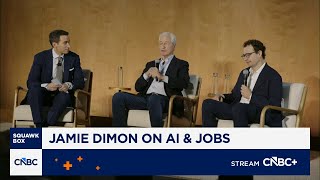
    JPMorgan Chase CEO Jamie Dimon said the bank will block external AI agents such as Meta's Muse and Spear Street Technology's Instinct from directly accessing or moving money in customer accounts, calling the risk too great for clients and the bank.
  • 02.
    Outside AI agents can still view account data like balances through connectors such as Plaid, but are barred from transferring funds or paying bills on a customer's behalf.
  • 03.
    JPMorgan is piloting its own internal AI cash-management tool, Smart Cash, which performs the same account-to-account money movement that outside agents are blocked from doing.
  • 04.
    Dimon warned that customers who rely on AI agents accept a liability transfer if something goes wrong, while CFO Jeremy Barnum added that customers who hand over banking credentials to an agent bear responsibility if it is misused; Dimon separately flagged a tenfold rise in AI-related cyber risk following Anthropic's Mythos model.

Deep Analysis

Security Rationale, Strategic Control

JPMorgan says it blocked Meta's Muse and Spear Street's Instinct from touching customer accounts purely on security grounds [1]- but the bank is simultaneously piloting Smart Cash, its own AI tool that performs the exact function it just banned outsiders from doing: shuffling customer money between accounts to chase yield [2]. That overlap is why Reddit's r/BetterOffline discussion treated the announcement less as a pure safety measure and more as a lock-in move - commenters argued that moving money for yield is a solved, deterministic problem that doesn't need an LLM, and suspected banks are gatekeeping to protect revenue and control rather than purely to protect customers, since letting Muse or a rival agent optimize a customer into a higher-yield account elsewhere directly costs JPMorgan deposits. CFO Jeremy Barnum's framing of JPMorgan's AI approach as 'minimizing lock-in and maximizing optionality' [3]reads very differently once you notice that optionality applies to JPMorgan's own vendor choices, not to the customer's choice of agent.
One Data Point in a Bigger Risk Ledger

The account-access block isn't an isolated policy - it's the latest entry in Dimon's running public case that AI itself has become a cybersecurity liability. He has said AI-driven cyber risk rose roughly tenfold after Anthropic released its Mythos model [4], a claim tied to JPMorgan's own preview testing of Mythos turning up vulnerabilities that needed fixing, and to a brief U.S. Commerce Department export-control action on the model that lasted three days before being lifted [5]. In a separate interview alongside Anthropic's Dario Amodei, Dimon argued regulators were allowing a 'wild west' where powerful models reach the public with no pre-release safeguards, weighing an FDA-style approval process against NTSB-style post-release monitoring. Seen against that backdrop, walling off external agents from JPMorgan accounts looks like Dimon applying his own risk framework before a regulator forces the issue - and bank regulators, including the Federal Reserve, are reportedly already questioning banks about exactly this kind of AI agent exposure [6].

A Policy Pointed at a Risk Nobody Asked For

The stated danger - 'rogue agents,' potentially thousands of them, moving money on customers' behalf - may be getting ahead of demand that doesn't fully exist yet. Only 13% of JPMorgan's own data requests in June 2025 came from customers actively making transactions [7], and just 35% of consumers say they would grant an AI agent access to saved payment credentials at all, even though 31% of long-term generative-AI users consider agentic help essential for managing their finances [7]. That gap suggests JPMorgan is drawing a hard line well ahead of mainstream adoption - a preemptive posture that fits Dimon's broader argument that liability and trust need to be settled before agentic finance scales, not after.

The Narrow Door Still Open

The block isn't a total wall. Outside agents can still pull read-only data - balances, not transfers - through connectors like Plaid, which is how Meta's Muse reaches roughly 12,000 financial institutions today [8], and how Spear Street's Instinct, pitched as a '$10 billion' digital concierge, still functions in a view-only capacity [9]. JPMorgan's own spokesperson said the bank 'support[s] secure, customer-authorized data sharing through open banking providers and are committed to enabling agentic connections securely' [10]- without offering a timeline. CFO Barnum was blunter about where responsibility lands in the meantime: if a customer hands over credentials and an agent misuses them, 'that's going to be on them' [11]. Until that open-banking pathway materializes, the practical message to fintechs building on top of Chase data is: look, but don't touch.

Historical Context

2024-06
Launched LLM Suite, a proprietary, model-agnostic generative AI platform integrating OpenAI and Anthropic models.
2025
JPMorgan began charging fintechs for data access following a dispute with Plaid over data-sharing terms.
2026-04
JPMorgan tested a preview of Anthropic's Mythos model and found numerous security vulnerabilities that needed fixing.
2026-06
Commerce imposed export controls on the Mythos model for three days before lifting them on July 1, 2026.
2026-07-14
Bloomberg reported JPMorgan urged staff to avoid deploying expensive AI models for easy tasks.
2026-10-13
During its Q3 2026 earnings call, JPMorgan publicly confirmed it blocks outside AI agents like Muse and Instinct from account access while piloting Smart Cash internally.

Power Map

Key Players
Subject

JPMorgan Blocks External AI Agents From Bank Accounts

JA

Jamie Dimon

CEO of JPMorgan Chase; announced the account-access block and warned of 'rogue agents' and liability transfer

JE

Jeremy Barnum

CFO of JPMorgan Chase; defended the credential-blocking policy and articulated the bank's model-agnostic AI strategy

ME

Meta (Muse)

Developer of the Muse AI agent, which partners with Plaid to reach roughly 12,000 financial institutions but is blocked from executing transactions at JPMorgan

SP

Spear Street Technology (Instinct)

Developer of Instinct, a '$10 billion' digital concierge agent restricted to read-only balance access

PL

Plaid

Open-banking data connector through which third-party AI agents can still view, but not act on, JPMorgan customer data

AN

Anthropic

Developer of the Mythos AI model, which Dimon says drove a tenfold increase in AI-related cyber risk and briefly triggered Commerce Department export controls

Fact Check

11 cited
  1. [1] JPMorgan Chase blocks outside AI agents like Muse, Instinct from directly accessing accounts
  2. [2] JPMorgan's Dimon warns AI agents carry a liability transfer for bank customers
  3. [3] JPMorgan Chase aims to avoid AI lock-in, has nuanced view on AI agents
  4. [4] Jamie Dimon says AI cyber risk rose after Anthropic's Mythos
  5. [5] Dimon says AI cyber risk is up tenfold as cyber insurance prices keep falling
  6. [6] Banking regulators tighten oversight of possible AI risks
  7. [7] Jamie Dimon slams the door on rogue AI agents
  8. [8] Meta's Muse partners with Plaid for AI financial features
  9. [9] JPMorgan bars outside AI agents like Muse and $10B Instinct
  10. [10] JPMorgan shuts the door on outside AI agents touching customer accounts
  11. [11] JPMorgan warns of risks to consumers who rely on AI agents

Source Articles

Top 5

THE SIGNAL.

Analysts

“You don't want rogue agents, and it could be thousands of them.”

Jamie Dimon
Opposes external AI agents operating inside JPMorgan due to systemic 'rogue agent' risk

“If people are using them, they should understand the risk. There's a liability transfer. They should understand the liability transfer.”

Jamie Dimon
Frames agent-driven banking as a liability transfer customers must understand before using one

“It's not secure, and so to the extent that we're able to block those, we are blocking them to protect customers and protect ourselves.”

Jeremy Barnum
Defends blocking credential-sharing AI agents as a basic security necessity

“Our strategy is quite focused on minimizing lock-in and maximizing optionality and the ability to manage costs.”

Jeremy Barnum
Frames JPMorgan's AI strategy around vendor optionality rather than lock-in
The Crowd

“JPMorgan Chase isn’t using external artificial intelligence agents, CEO Jamie Dimon explained Tuesday. The company wants its customers to understand the risks associated with permitting AI to access personal data, as “there could be thousands” of “rogue agents.” Read more: https://t.co/QJQbym8MkZ”

@@Forbes208

“JPMorgan Chase blocks outside AI agents like Muse, Instinct from directly accessing accounts https://t.co/k4bPHfGxpx”

@@CNBC91

“🚨JPMORGAN BLOCKS OUTSIDE AI AGENTS FROM CUSTOMER ACCOUNTS! Jamie Dimon said the bank will not let external AI agents like Meta's Muse or Instinct access customer accounts or move money, calling them too risky. JPMorgan is building its own internal tools instead. This shows”

@@crypto_banter31

“JPMorgan Chase blocks outside AI agents like Muse, Instinct from directly accessing accounts”

@u/dyzo-blue466
Broadcast
JPMorgan CEO Dimon on Growth of AI, Jobs, Government Shutdown

JPMorgan CEO Dimon on Growth of AI, Jobs, Government Shutdown

JPMorgan's Dimon on Financing the AI Boom

JPMorgan's Dimon on Financing the AI Boom

Anthropic's Dario Amodei and JPMorgan's Jamie Dimon on AI boom, AI regulation & impact on jobs

Anthropic's Dario Amodei and JPMorgan's Jamie Dimon on AI boom, AI regulation & impact on jobs

JPMorgan Blocks External AI Agents From Bank Accounts — AI News | Agentic Brew