The Delay Is the Tell
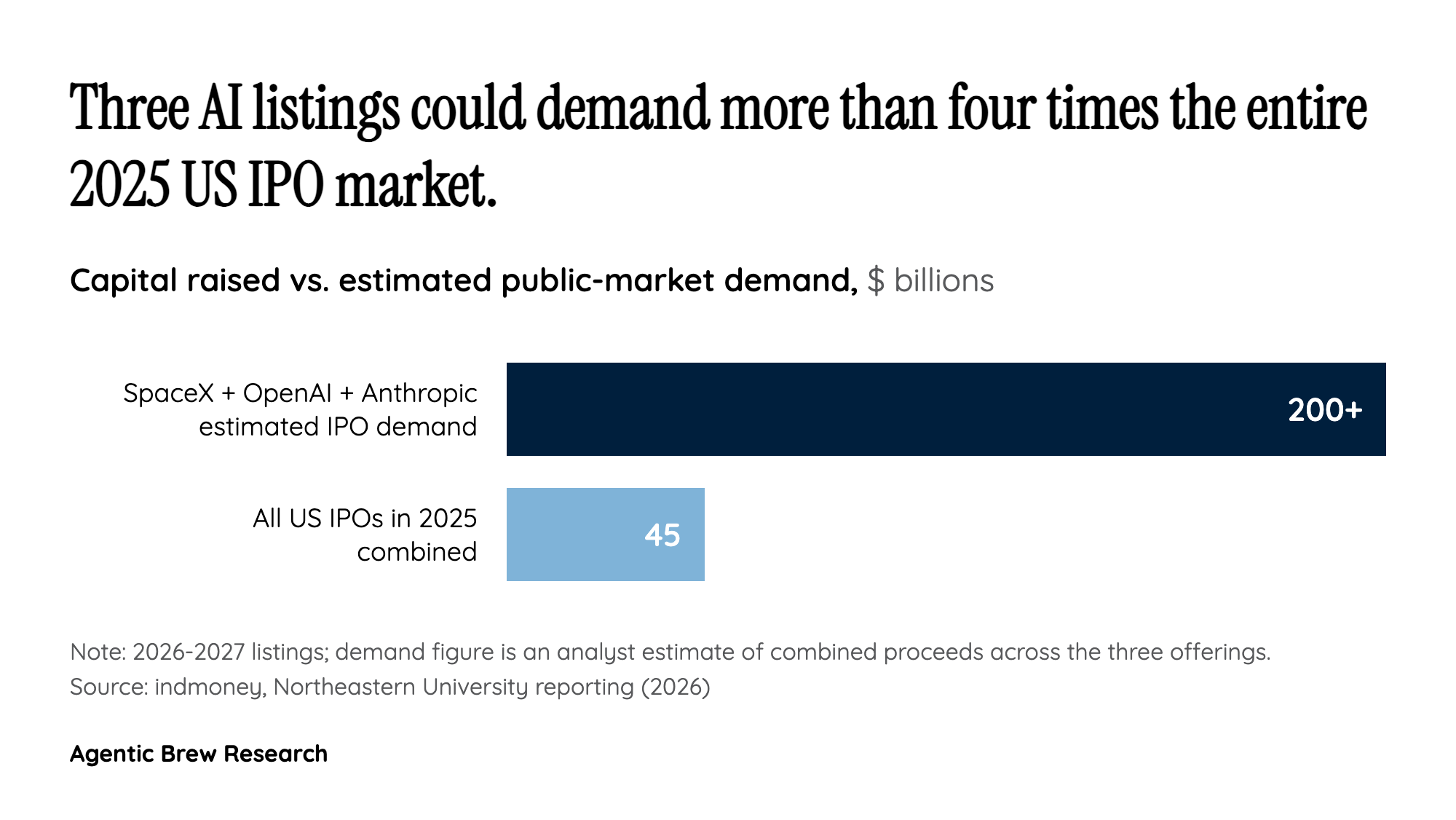
When OpenAI's advisers laid out the choice, they framed it cleanly: list sooner at a lower valuation, or wait until 2027 and hold out for $1 trillion [1]. Sam Altman picked door number two and called anything below a trillion a 'nonstarter' [2]. On paper that reads like confidence. To the market it read like the opposite.
The problem is what the choice implies. OpenAI's last private mark was $852 billion in a March 2026 round, and some reports peg the round closer to $730 billion [3]. Jumping straight to a $1 trillion public debut means demanding that the very first batch of public investors pay a premium to the most recent insiders. If that premium were easy to clear, you would just go public now and collect it. Choosing instead to wait two years tells the world the demand isn't there yet at the price the CEO refuses to drop below. As one finance professor put it, the price is simply set by whoever is willing to buy [4].
That is why the reaction has been so sharp. Across finance-Twitter, broadcast coverage on Bloomberg and CNBC, and the bearish corners of Reddit such as r/stocks, r/wallstreetbets, and r/BetterOffline, the dominant read treated the slip to 2027 not as patience but as a confession - evidence that the $1 trillion number can't yet survive contact with public order books. The shift showed up in betting markets too: reported Polymarket odds of a within-year IPO collapsed from roughly 73% to the high-20s in a matter of hours.