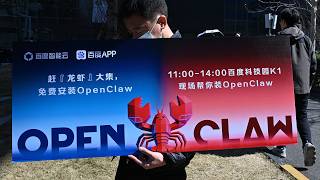
Tencent tests AI assistant in WeChat
TECH

Tencent tests AI assistant in WeChat

26+
Signals

Strategic Overview

  • 01.
    Tencent began a small-scale test of an AI assistant named Xiaowei inside WeChat (Weixin in China) on June 22, 2026, letting select users complete tasks via text or voice by tapping into the app's mini-programs.
  • 02.
    Rather than a chatbot you talk to, Xiaowei is an action-taking command layer that starts calls, drafts messages, navigates services, and operates mini-programs on the user's behalf.
  • 03.
    Xiaowei runs primarily on WeLM, Weixin's own large language model, while tapping DeepSeek to handle some queries, with a wider public rollout targeted for the third quarter of 2026.

Deep Analysis

From chatbot to actor: the strategic shift

Xiaowei marks a deliberate move away from the chatbot model Tencent already shipped with Yuanbao, its standalone conversational assistant inside WeChat. Where Yuanbao is a bot you talk to, Xiaowei is positioned as a layer that acts across the app on your behalf [5]. Ask it to start a call, draft a message, or navigate to a service, and it does the menu-digging for you, reaching into WeChat's vast catalogue of mini-programs to execute the task [1]. The mechanism was foreshadowed on June 8, 2026, when the WeChat Developer Platform announced that WeChat AI had entered internal testing specifically to let users invoke and operate mini-programs through natural language [5]. The assistant runs primarily on WeLM, Weixin's own large language model, while tapping DeepSeek for some queries, with a wider public rollout targeted for the third quarter of 2026 [1]. The bet underneath is that the hard part of a consumer AI agent is not the model but the reach: an action layer is only useful if the actions it can take are already where the user lives.

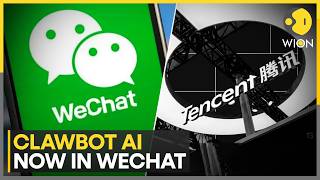
Why distribution, not model quality, is the moat

With roughly 1.4 billion users, WeChat gives Tencent a distribution surface no rival can replicate, and that is exactly the argument experts are making. Howard Yu of IMD frames putting an assistant inside Weixin as the first time Tencent uses the advantage it has held all along, adding that an assistant which completes tasks within the app is a second advantage no rival can copy [2]. The competitive context sharpens the point: Tencent trails on AI adoption, while Alibaba leads China's AI cloud market with a 35.8% share against ByteDance's Volcano Engine at 14.8% [6]. Alibaba and ByteDance compete on standalone apps and model performance; Tencent is instead converting an installed base into an execution channel. Investors appear to buy the thesis, sending Tencent shares up as much as 10.5% on June 2, 2026 on reports of an imminent agent, the biggest single-day gain since January 2021 [3].

Follow the money: the $10.3B service-execution thesis

The reason Tencent is willing to absorb what internal estimates call a very costly full rollout is the monetization ceiling that an action layer unlocks [4]. JPMorgan projects that AI agents could upgrade WeChat from a social and payment tool into an AI-driven service execution hub, with related e-commerce commission revenue potentially reaching CNY 69.9 billion (about $10.3 billion) by 2030 [2]. The logic is that every booked ride, ordered meal, or paid bill routed through Xiaowei into a mini-program becomes a transaction Tencent can take a cut of, turning an assistant from a cost centre into a commission engine. That is why the company has reportedly made the rollout its highest strategic priority despite the price tag [4], and why the market reaction to mere reports of the agent was so strong [3].

The skeptic's read: privacy, regulation, and the 'what does it add?' question

Beyond the institutional optimism, community reception is markedly more mixed. Observers broadly accept the distribution-moat thesis but split on user value and trust: a recurring contrarian question is what an agent actually adds for people who already do everything inside WeChat, alongside persistent privacy and surveillance distrust about routing more behaviour through Tencent's stack. Some commentary also flags the cybersecurity and regulatory exposure of running autonomous agents at billion-user scale, where an action layer that can transact and message on a user's behalf raises the stakes of any failure or misuse. The tension is real: the same depth of integration that makes the moat uncopyable also concentrates more sensitive activity in one place, and the rollout's reported high cost [4]meets a public that is enthusiastic about the engineering yet cautious about the implications.

Historical Context

2023-09-08
Tencent launched its self-developed Hunyuan large language model with over 100 billion parameters.
2026-06-02
Reports that Tencent was close to launching a WeChat AI agent sent shares up as much as 10.5%, the biggest single-day gain since January 2021.
2026-06-08
The WeChat Developer Platform announced WeChat AI had entered internal testing, allowing users to invoke and operate mini-programs through natural language.
2026-06-22
Tencent began a small-scale public test of Xiaowei inside WeChat, available to a limited number of users via text or voice.

Power Map

Key Players
Subject

Tencent tests AI assistant in WeChat

TE

Tencent Holdings

Owner of WeChat/Weixin and developer of Xiaowei and the WeLM model; has made the AI agent rollout its highest strategic priority despite a costly full deployment.

DE

DeepSeek

Third-party Chinese model provider whose model handles some of Xiaowei's queries alongside the in-house WeLM.

AL

Alibaba

Rival leading China's AI cloud market with a 35.8% share, offering the Qwen/Tongyi Qianwen AI app.

BY

ByteDance

Rival with the Doubao chatbot and agentic functions; its Volcano Engine holds 14.8% of China's AI cloud market.

IN

Investors and shareholders

Drove Tencent shares up sharply on June 2 reports of an imminent WeChat AI agent, signalling market conviction in the strategy.

Fact Check

6 cited
  1. [1] Tencent tests WeChat AI assistant Xiaowei
  2. [2] WeChat to take commands as AI assistants mark major shift for Tencent
  3. [3] Tencent shares jump on expectations of AI agent within WeChat super app
  4. [4] Tencent tests new AI agent Xiaowei on WeChat
  5. [5] WeChat AI enters internal testing with Xiaowei agent
  6. [6] Alibaba holds wide lead over rivals ByteDance, Huawei, Tencent in China's AI cloud market

Source Articles

Top 3

THE SIGNAL.

Analysts

"Embedding an assistant inside Weixin is the first time Tencent leverages the distribution advantage it has long held; an assistant that completes tasks within the app is a second advantage rivals cannot copy."

Howard Yu
LEGO professor of management and innovation, IMD

"AI agents could upgrade WeChat from a social and payment tool into an AI-driven service execution hub, with related e-commerce commission revenue potentially reaching CNY 69.9 billion (about $10.3 billion) by 2030."

JPMorgan
Investment bank
The Crowd

"China's Tencent is moving closer to launching an embedded AI agent for WeChat, with compliance testing set to begin as soon as this month, per FT."

@@Cointelegraph266

"Tencent moves closer to launching AI agent for WeChat's 1.4bn Chinese users"

@@FT87

"Tencent has started testing a new AI assistant for WeChat as part of its efforts to catch up with peers in China's white-hot artificial intelligence race"

@@business72

"By integrating the open-source AI Deepseek into the WeChat app used by 840 million people in China, Tencent may be about to pull ahead in the global AI race."

@u/lughnasadh94
Broadcast
Tencent's 'Top Secret' WeChat Project

Tencent's 'Top Secret' WeChat Project

Tencent Launches AI Agent in WeChat to Handle Files, Emails, Tasks | WION

Tencent Launches AI Agent in WeChat to Handle Files, Emails, Tasks | WION

China's Tencent Integrates AI Into WeChat Despite Cybersecurity Concerns

China's Tencent Integrates AI Into WeChat Despite Cybersecurity Concerns