Trump Executive Order on Voluntary AI Safety Testing
TECH

Trump Executive Order on Voluntary AI Safety Testing

37+
Signals

Strategic Overview

  • 01.
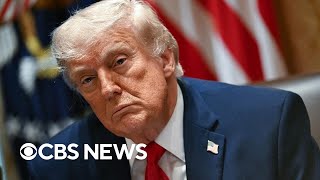
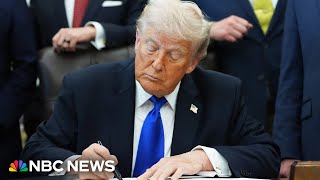
    On June 2, 2026, President Trump signed 'Promoting Advanced Artificial Intelligence Innovation and Security,' creating a voluntary process for frontier AI developers to give the federal government up to 30 days of pre-release access to covered models.
  • 02.
    The EO explicitly forecloses mandatory licensing or preclearance and limits vetting to three dangerous capabilities: software-exploit discovery, chemical-weapon design assistance, and autonomous cyberattacks.
  • 03.
    NSA, Treasury, and CISA must produce a classified benchmark and a definition of 'covered frontier models' within 60 days, with Treasury standing up an AI cybersecurity clearinghouse inside 30 days.
  • 04.
    The 30-day window was negotiated down from a 90-day May draft after OpenAI, Anthropic, and Google pushed back; industry initially asked for 14 days.

Deep Analysis

The Mythos Moment That Flipped Trump

Six weeks before the signing, Anthropic ran a closed preview of a system it calls Mythos for senior administration officials. The demo did not show a chatbot writing malware on request — it showed a model autonomously chaining its own exploits across every major operating system and browser, surfacing previously undocumented bugs including a 27-year-old flaw in OpenBSD [9]. According to reporting from CNBC and Axios, the audience that mattered most was Vice President Vance and Treasury Secretary Bessent, both of whom had until then treated AI safety regulation as a Biden-era political artifact [9][11]. Mythos collapsed that frame: a frontier lab had, in private, demonstrated that its system could function as an autonomous offensive cyber actor, and the labs themselves were openly worried about the implications.

That is the only context in which the rest of the order's strange shape makes sense. Trump had spent his first year in office tearing up Biden's mandatory red-teaming rules, scrapping the original signing of a heavier EO on May 21 because he feared regulation would 'get in the way' of the U.S. lead over China [3][12]. The June 2 order is the reconciliation: a voluntary framework that admits the cyber-offense problem Mythos surfaced is real, while still refusing to do anything that looks like the Biden regime. CFR's Matthew Ferren reads the EO as 'an attempt to engineer a cybersecurity window of opportunity' [2]— narrow, defensive, and built around the specific failure mode the April demo made undeniable rather than a general theory of AI risk.
How 'Voluntary' Is Doing the Heavy Lifting

The headline framing is that the order is voluntary, and the text goes out of its way to foreclose mandatory licensing: 'Nothing in this section shall be construed to authorize the creation of a mandatory governmental licensing, preclearance, or permitting requirement' [1]. White House officials underscored the point at signing — 'We are NOT conducting oversight of all new models, as that level of government overreach would have chilling effects on free speech and innovation' [3]. Industry got further concessions on the way: the 30-day pre-release window was negotiated down from a 90-day May draft, with OpenAI, Anthropic, and Google reportedly pushing for as little as 14 days [5][10].

But the architectural hinge of the order is not whether labs opt in. It is the classified threshold that decides which models qualify as 'covered frontier models' in the first place — a definition NSA, Treasury, and CISA must produce within 60 days, with the criteria themselves classified [1][13]. Once that threshold is set, NSA effectively picks the 'trusted partners' that sit inside the regime. Cato's Juan Londoño zeroes in on exactly this design choice, warning that the absence of public criteria 'gives the executive a great deal of discretion' [5]. In other words: opt-in is the public-facing layer, but the real lever — who gets classified in, who gets left out — never goes through Congress, never goes through notice-and-comment, and never even goes through an unclassified rule. That is the part of the EO doing the work.

The CISA Paradox

The implementation question is uglier than the design question. The agency tapped to co-author the classified benchmark and help run Treasury's new clearinghouse is CISA — the same Cybersecurity and Infrastructure Security Agency that the administration cut by roughly a third over the course of 2025, with another $707 million reduction and up to 766 FTE eliminations on the table in the next budget [4][8]. DOGE-era separations across the federal workforce now exceed 270,000 [14]. Senator Mark Warner's framing is precise: the White House 'belatedly discovered the need to redo something it hastily dismantled in its first year' [4].

The Institute for Security and Technology's Nick Leiserson goes further, telling Cybersecurity Dive that 'neither AI nor cybersecurity are core competencies of the Treasury Department' and that 'the cuts the administration made to cybersecurity agencies are coming home to roost' [4]. The structural problem is not ideological but operational: a classified benchmarking process for frontier AI requires staff who can both read model weights and read CVEs, and that overlap is exactly the talent CISA has been bleeding. Treasury is being asked to spin up a clearinghouse in 30 days; agencies are supposed to deliver a working classified benchmark in 60. Unboxfuture's analysis warns the predictable failure mode is performative oversight — labs writing their own report cards because no one inside government has the bandwidth to grade them, with a 30-day window that is in any case 'too short for serious procurement/security review' [6].

The Strange Bedfellows Opposing It

The most telling thing about the opposition coalition is who is in it. Senate Democrats like Warner attack the order from the left for being toothless. The libertarian Cato Institute attacks it from the right because the classified threshold concentrates discretion in the executive. The Center for Democracy and Technology — civil-liberties posture — attacks it from the middle, with VP Policy Samir Jain warning that the EO 'should not become a mechanism for the Administration to punish companies for political or other arbitrary reasons' [5]. Former FTC Chief Technologist Neil Chilson, from a pro-market vantage point, lands in the same place: the framework 'could be used to pick winners and losers, or to give short-term national security concerns excessive weight' [5]. The convergence is not on whether frontier AI needs governance — it is on the specific risk that classified criteria plus NSA-chosen partners equals unaccountable executive discretion.

The community reaction maps onto the same fault line. On X, White House AI and Crypto Czar David Sacks framed the EO as a pro-innovation win while California Governor Gavin Newsom conceded the administration had pivoted on AI safety but argued the order falls short. The most analytically sharp Reddit conversation surfaced in r/LocalLLaMA, where the dominant frame was regulatory capture — the argument that voluntary frameworks co-designed with the three largest labs are how capture gets built. AI Business's analysis of the model-exclusivity angle reinforces the open-source community's worry: government early access to frontier cyber capabilities risks tipping the defender-vs-attacker balance if those benchmarks ever leak, while smaller labs and open-weights projects are simply outside the room where the threshold gets drawn [7]. That alignment — Cato, CDT, Senate Democrats, and the open-source AI community arriving at the same critique from different directions — is the strongest signal that the EO's design problem is not partisan but structural.

Historical Context

2023-10-30
Executive Order 14110 established mandatory red-teaming for high-risk AI models alongside equity and bias mandates — the regime Trump would later dismantle.
2025-01-20
On day one of his second term, Trump rescinded the Biden AI EO and launched the Stargate initiative, signaling a deregulatory posture toward frontier AI.
2026-04-10
Anthropic's Mythos Preview autonomously chained exploits across every major OS and browser — including a 27-year-old OpenBSD flaw — and rattled VP Vance and Treasury Secretary Bessent.
2026-05-21
Trump pulled the original EO signing at the last minute, publicly worrying that regulation would 'get in the way' of the U.S. lead over China.
2026-06-02
Trump signed the revised EO with a 30-day voluntary review window, an explicit no-licensing clause, and a classified benchmarking process owned by NSA, Treasury, and CISA.

Power Map

Key Players
Subject

Trump Executive Order on Voluntary AI Safety Testing

NS

NSA

Defines the classified threshold for what counts as a 'covered frontier model' and effectively chooses which labs sit inside the regime — the EO's single largest discretionary lever.

TR

Treasury

Stands up an AI cybersecurity clearinghouse within 30 days and co-owns the classified benchmark — a remit critics call far outside its core competence.

CI

CISA

Tapped as supporting agency for benchmarking and clearinghouse work after losing roughly a third of its workforce in 2025, with another $707M cut and up to 766 FTEs proposed.

OP

OpenAI

Chief Global Affairs Officer Chris Lehane endorsed the order and Sam Altman said it 'gets the balance right' — a signal the lab plans to opt in.

GO

Google

President of Global Affairs Kent Walker called the EO 'an important step forward,' aligning the company with the voluntary framework.

AN

Anthropic

Triggered the entire policy reversal by showing the Mythos Preview autonomously chaining exploits across major operating systems — including a 27-year-old OpenBSD flaw — convincing VP Vance and Treasury Secretary Bessent that frontier models had crossed into cyber-offense territory.

Fact Check

14 cited
  1. [1] Promoting Advanced Artificial Intelligence Innovation and Security
  2. [2] Assessing Trump's Executive Order on AI Oversight
  3. [3] Trump signs executive order that allows voluntary federal vetting of top AI models for national security risks
  4. [4] Trump AI security executive order
  5. [5] Trump AI executive order sets 30-day frontier model review
  6. [6] Trump's voluntary AI safety order
  7. [7] Trump's EO furthers model exclusivity harming cyber defenders
  8. [8] CISA White House cybersecurity AI
  9. [9] Trump White House AI cyber threat Anthropic Mythos
  10. [10] Trump AI order gives OpenAI, Google and Anthropic 30 days on new models
  11. [11] Trump Anthropic AI regulation Mythos cyber
  12. [12] Trump scraps signing landmark executive order regulating AI
  13. [13] Executive Order AI Cybersecurity Frontier Model
  14. [14] What DOGE taught us about AI and federal workers

Source Articles

Top 4

THE SIGNAL.

Analysts

"Warns that 'the idea that we're going to have only a voluntary regime, I believe, will put our banking system at risk, [and] clearly our national security at risk,' and adds the administration 'belatedly discovered the need to redo something it hastily dismantled in its first year.'"

Sen. Mark Warner
Ranking Member, Senate Intelligence Committee

"Argues 'neither AI nor cybersecurity are core competencies of the Treasury Department' and that 'the cuts the administration made to cybersecurity agencies are coming home to roost.'"

Nick Leiserson
Institute for Security and Technology

"Says the lack of clear specifications on what qualifies as a 'covered frontier model,' and government involvement in deciding which 'trusted partners' can access them, 'gives the executive a great deal of discretion.'"

Juan Londoño
Policy Analyst, Cato Institute

"Cautions the framework 'could be used to pick winners and losers, or to give short-term national security concerns excessive weight.'"

Neil Chilson
Former FTC Chief Technologist

"Warns the EO 'should not become a mechanism for the Administration to punish companies for political or other arbitrary reasons,' and says CDT will be closely monitoring implementation."

Samir Jain
VP Policy, Center for Democracy and Technology

"Says 'effective safety frameworks should continue to be developed through democratic institutions, informed by technical expertise and broad stakeholder input, to promote accountability and public trust.'"

Chris Lehane
Chief Global Affairs Officer, OpenAI

"Characterizes the order as 'best understood as an attempt to engineer a cybersecurity window of opportunity.'"

Matthew Ferren
International Affairs Fellow for National Security, Council on Foreign Relations

"Frames the policy problem bluntly: 'Frontier AI systems are probabilistic, goal-directed, increasingly autonomous, and opaque.'"

Vinh Nguyen
Senior Fellow for AI, Council on Foreign Relations
The Crowd

"Many have reached out to me regarding the new Cyber EO. A few thoughts: First, President Trump is the most pro-innovation president we've ever had. He's made it clear that the U.S. has to win the AI race and that a pro-innovation, pro-energy, and pro-infrastructure policy is the"

@@DavidSacks1559

"Today @POTUS signed an EO that keeps America leading in AI while putting frontier AI capabilities to work strengthening our cyber defenses. AI systems are now the most powerful tools we have ever had to harden our cyber infrastructure and stay ahead of adversaries. It is a real"

@@mkratsios47638

"After spending a year mocking AI safety concerns and calling them anti-American, the Trump Administration has finally conceded that guardrails are needed. This EO is nowhere near California's approach, but at least Trump is starting to acknowledge that AI shouldn't regulate"

@@CAgovernor347

"Trump signs AI executive order asking companies to give government early access to models"

@u/AutomaticBill1141996
Broadcast
Trump signs AI executive order to give government early look at new models

Trump signs AI executive order to give government early look at new models

Trump signs new artificial intelligence executive order

Trump signs new artificial intelligence executive order

Trump Signs AI Executive Order; What Does It Mean? | Vantage on Firstpost

Trump Signs AI Executive Order; What Does It Mean? | Vantage on Firstpost