Amazon AWS Q2 2026 earnings and AI infrastructure capex
TECH

Amazon AWS Q2 2026 earnings and AI infrastructure capex

26+
Signals

Strategic Overview

  • 01.
    AWS revenue hit $42.2 billion in Q2 2026, up 37% year-over-year - the fastest growth pace since the quarter ending December 2021 - while Amazon's total Q2 net sales reached $200.6 billion, up about 20% year-over-year and ahead of Wall Street's roughly $196.5 billion estimate.
  • 02.
    Amazon raised its 2026 cash capital expenditure guidance to approximately $220 billion, up from a prior estimate of about $200 billion, citing higher memory costs, and CEO Andy Jassy said even that amount still won't cover all of AWS's 2026 demand.
  • 03.
    AWS's revenue backlog reached $496 billion, up roughly 2.5 times year-over-year, while AWS operating margin expanded to 39.4% from 32.9% a year earlier despite the record spending.
  • 04.
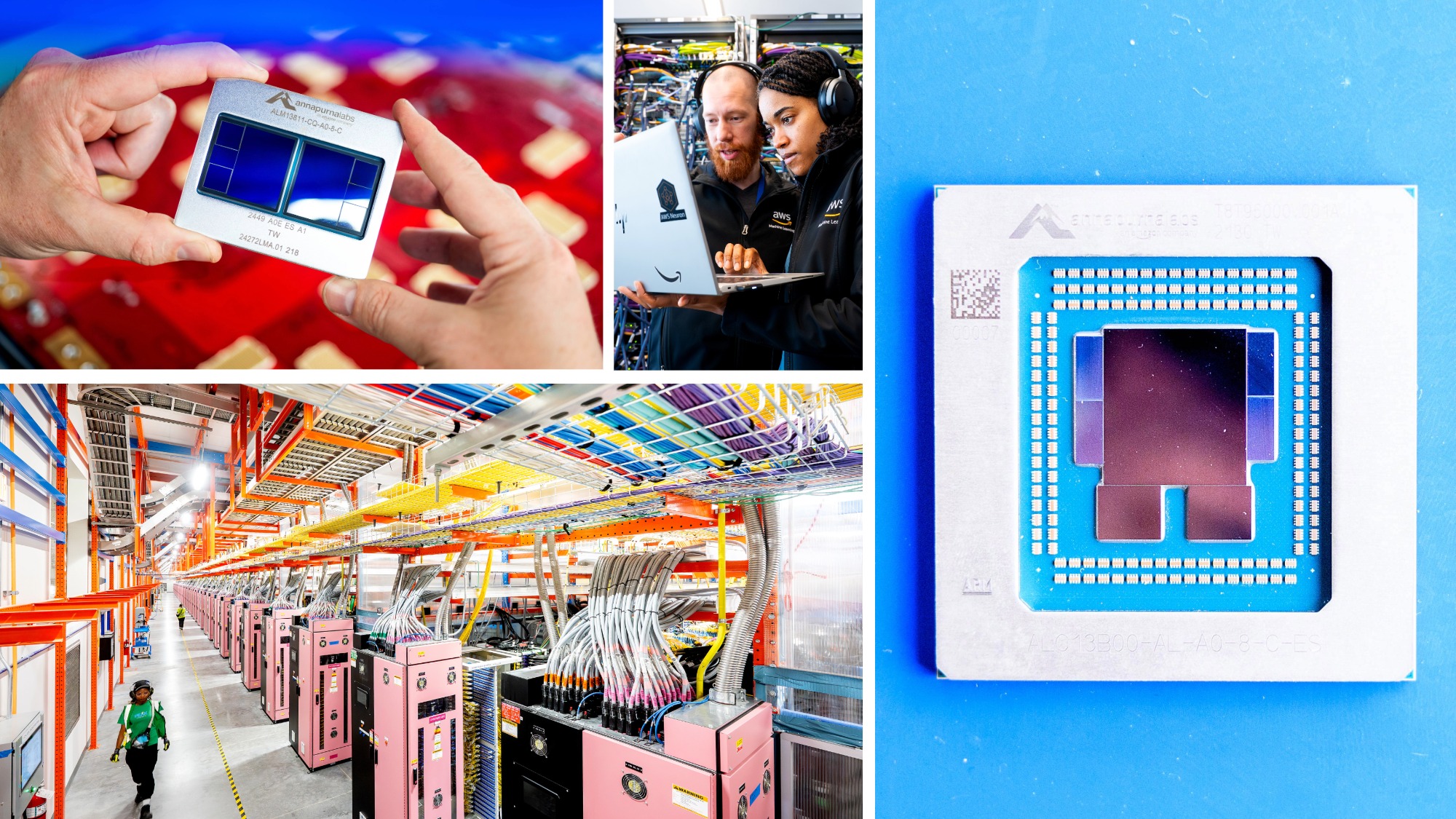
    AWS's custom silicon business, spanning the Trainium and Graviton chip lines, crossed a $25 billion annual revenue run rate and is growing at a triple-digit year-over-year pace.

Deep Analysis

The Three-Year Payback Pitch: Why Jassy Calls $220 Billion a Bargain, Not a Bet

Amazon's raised capex guidance came bundled with an unusually explicit defense of the math behind it. Jassy laid out a payback framework in which servers and networking equipment break even in a little under three years, then keep generating value for another two to three years on top of that before needing replacement, while the data centers that house them monetize for 30-plus years [1]. Run that timeline forward and a single data center can cycle through roughly five to six full generations of server hardware over its life [1]- a framing built specifically to counter the bear argument that AI infrastructure spending has outrun any realistic return.

What makes the pitch land differently than the usual hyperscaler capex justification is the second half of it: Jassy isn't describing a company racing to catch up with demand, he's describing one that structurally can't. Even after lifting 2026 capex guidance to roughly $220 billion, Jassy told investors AWS still won't have enough capacity to meet all of its 2026 demand, and expects the same shortfall to persist into 2027 [2]. That reframes the record spending less as a growth bet than as a rationing problem - Amazon is capacity-constrained rather than demand-constrained, which is the more bullish read that sent the stock sharply higher.


Memory Chips, Not GPUs, Are the New Bottleneck Behind the Capex Hike

The headline number - a roughly $20 billion jump in 2026 capex guidance, from about $200 billion to about $220 billion - wasn't attributed to GPU scarcity or data center construction delays. Amazon pointed instead to rising memory costs, specifically DRAM and HBM contract pricing, as the key driver of the increase [2]. That's a meaningful shift in the story: six months earlier, in February 2026, Amazon had guided to the original $200 billion figure with Jassy expressing confidence in that plan [3], and the jump since then reflects a supply-side cost shock in memory markets more than any change in Amazon's own ambitions.

Community discussion around the earnings framed this as a broader supply-chain story rather than an AWS-specific one. Memory fab capacity takes years to bring online, and the current DRAM/HBM pricing spike is being felt across every hyperscaler building AI infrastructure at once, not just Amazon. That context matters for reading the $220 billion figure: it is as much a statement about a tightening upstream chip market as it is about AWS's own growth trajectory, and it suggests further capex surprises could come from the memory supply chain rather than from AWS demand itself.

Trainium's $25 Billion Answer to Nvidia Dependency

Buried beneath the AWS revenue headline is a smaller but arguably more strategically important number: Amazon's custom silicon business, spanning the Trainium AI chip and Graviton CPU lines, crossed a $25 billion annual revenue run rate and is growing at a triple-digit year-over-year clip [4]. That run rate is being underwritten by genuinely large customer commitments - Anthropic has committed to up to five gigawatts of Trainium capacity over multiple years, and OpenAI has committed to two gigawatts [4]- which gives AWS forward visibility on its own chip roadmap that doesn't depend on Nvidia allocation.

The payoff shows up in the margin line. AWS operating margin expanded to 39.4% in Q2, up from 32.9% a year earlier [5], even as capital spending hit records - the opposite of what a simple story about spending pressuring margins would predict. Bloomberg Intelligence's Anurag Rana made the case that the chips run rate, not AWS's AI revenue figure, is the number worth watching: shifting inference and training workloads onto in-house Trainium and Graviton silicon lets AWS keep margin that would otherwise flow to Nvidia, and combined with AWS's enterprise-heavy customer base and its Anthropic partnership, gives it a durable structural edge over Azure that a pure GPU-reseller model wouldn't have.

From 'A Few Hundred Billion' to $1 Trillion: AWS's Total Addressable Market Reframe

Jassy used the earnings call to publicly revise upward what AWS's ceiling could look like: "We long believed AWS could become a few hundred billion-dollar revenue business and now believe it'll be at least double that, and very possibly be a trillion-dollar annual revenue business for us in time" [6]. That's not just rhetoric - it's backed by a backlog that reached $496 billion, up roughly 2.5 times year-over-year [5], and by concrete enterprise adoption stories like the PGA Tour, which migrated its ShotLink ball-tracking, media, and broadcast systems onto AWS and now runs agentic AI on Amazon Bedrock for automated content and betting-profile generation [7].

The market's reaction validated the reframe: Amazon shares jumped as much as 7 to 15% after the print, reportedly the stock's biggest move since 2012 [2], and at least 15 brokerages raised price targets, including Goldman Sachs to $375, JPMorgan to $365, and Barclays to $365 [5]. Market commentary picked up on a wider pattern beyond Amazon alone - AWS's roughly $169 billion annualized run rate and 37% growth sit alongside Microsoft Azure and Google Cloud posting their own accelerating run rates, suggesting the entire hyperscaler cloud market is compounding at once rather than AWS simply taking share from a shrinking pie.

The Skeptic's Case: Circular Financing and a Break-Even Story That May Be Too Clean

Not every reaction to the print was celebratory. A recurring thread in investor discussion questioned whether hyperscaler capex accounting is becoming partly circular - one company invests in an AI lab, the lab spends a meaningful share of that capital back on that same company's cloud infrastructure, and the arrangement inflates both sides' reported growth without necessarily reflecting new end demand. A related pushback challenged Jassy's own break-even framing directly, arguing that the tidy 'servers pay back in under three years' math glosses over how long it actually takes newly built capacity to reach full utilization - if utilization ramps slower than capacity comes online, the effective payback period stretches well past the headline number.

A related and higher-profile version of this skepticism came from market commentator Ed Elson, who argued that a large share of Amazon's and Google's net income is now coming from paper gains on their equity stakes in OpenAI, Anthropic, and SpaceX rather than from operating profit - and that this makes both companies' current price-to-earnings multiples look artificially cheap. It's a useful counterweight to the bullish capex-defense narrative: the payback framework explains why AWS keeps building, but it doesn't resolve the separate question of whether the AI-driven earnings underpinning today's stock reaction are as durable as they look.

Historical Context

2026-02-05
Amazon first guided to roughly $200 billion in 2026 capital expenditure, with Jassy expressing confidence in the spending plan.
2026-07-30
Amazon reported Q2 2026 earnings, raising 2026 capex guidance to about $220 billion and posting AWS revenue growth of 37% year-over-year, sending shares sharply higher.

Power Map

Key Players
Subject

Amazon AWS Q2 2026 earnings and AI infrastructure capex

AN

Andy Jassy, Amazon CEO

Publicly defended the raised AI capex using a payback-period framework, drove the decision to lift 2026 spending guidance to about $220 billion, and forecast AWS could eventually become a $1 trillion business.

AM

Amazon Web Services (AWS)

Cloud division whose accelerating growth (37% year-over-year) and $496 billion backlog is the primary driver behind Amazon's raised capex guidance and the sharp positive stock reaction.

AN

Anthropic

AI lab customer that made a multi-year, up-to-five-gigawatt capacity commitment on AWS's Trainium chips, underpinning demand for AWS custom silicon.

OP

OpenAI

AI lab customer that committed to two gigawatts of Trainium capacity through AWS, diversifying AWS's AI compute customer base beyond Nvidia-based instances.

GO

Goldman Sachs, JPMorgan, and Barclays

Among at least 15 brokerages that raised Amazon price targets after the earnings beat (Goldman Sachs to $375, JPMorgan to $365, Barclays to $365), signaling Wall Street confidence that the AI capex is paying off.

PG

PGA Tour

AWS enterprise customer cited by Jassy as evidence of AI-driven cloud demand - migrated its ShotLink ball-tracking, media, and broadcast systems onto AWS and now runs agentic AI on Amazon Bedrock for automated content and betting-profile generation.

Fact Check

7 cited
  1. [1] Growth accelerates at AWS - so does capex spend on AI, and there's lots more to come, warns CEO Andy Jassy
  2. [2] Amazon (AMZN) Stock Soars in After-Hours Trading as AWS Growth Accelerates
  3. [3] Why Amazon's CEO Is Confident With $200 Billion Spending Plan
  4. [4] Amazon's AI Chips Business: A Timeline
  5. [5] Goldman Sachs Raises Amazon Stock Price Target on AWS Growth
  6. [6] Amazon Says AWS Could Become A $1 Trillion Business
  7. [7] Amazon's Andy Jassy: AWS Could Become a Trillion-Dollar Cloud Business, Citing PGA Tour as Proof

Source Articles

Top 5

THE SIGNAL.

Analysts

Defended the raised capex by walking through infrastructure economics - near-term server payback, multi-decade data center life - and said demand still outstrips even $220 billion of planned 2026 spending: "For our data centers, which have 30-plus year useful lives, we should get at least five to six generations of server economics."

Andy Jassy
President and CEO, Amazon

Argued AWS's addressable market has been systematically underestimated, pointing to the long-run shift of enterprise IT spend from on-premise to cloud as the basis for AWS possibly becoming a trillion-dollar business: "We long believed AWS could become a few hundred billion-dollar revenue business and now believe it'll be at least double that, and very possibly be a trillion-dollar annual revenue business for us in time."

Andy Jassy
President and CEO, Amazon
The Crowd

$AMZN is up more than 15% after AWS delivered its fastest revenue growth in 18 quarters while operating margins expanded to 39% despite record AI infrastructure spending. AWS added more than $4.6B in quarterly revenue which was around 80% above its previous record.

@@StockSavvyShay265

AI may be the first major workload where better models create even more compute demand: • $AMZN AWS at a $169B run rate +37% YoY • $MSFT Azure at a $124B run rate +43% YoY • $GOOGL Cloud at a $99B run rate +82% YoY Cloud giants are getting bigger and faster at same time.

@@StockSavvyShay469

87% of Amazon and Google's net income came from paper gains in their OpenAI, Anthropic, and SpaceX investments. As a result, they're now trading at 19x and 17x earnings, falsely implying they're historically cheap. Valuation metrics have been compromised by AI.

@@edels0n916

Amazon hikes 2026 capex to $220 billion due to higher memory costs

@u/Logical_Welder3467531
Broadcast
Amazon's AWS Reignites the Cloud Trade as Apple Slips on a Weak Services Number | Stock Market Live

Amazon's AWS Reignites the Cloud Trade as Apple Slips on a Weak Services Number | Stock Market Live

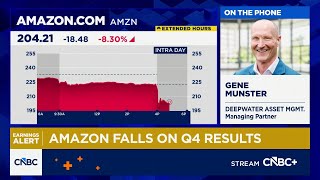
About 80% of Amazon's 2026 capex spending likely AI-related: Deepwater's Munster

About 80% of Amazon's 2026 capex spending likely AI-related: Deepwater's Munster

Amazon Gains in Postmarket After Earnings Report

Amazon Gains in Postmarket After Earnings Report

Amazon AWS Q2 2026 earnings and AI infrastructure capex — AI News | Agentic Brew