How the Flag Button Works, and the Numbers That Forced LinkedIn's Hand
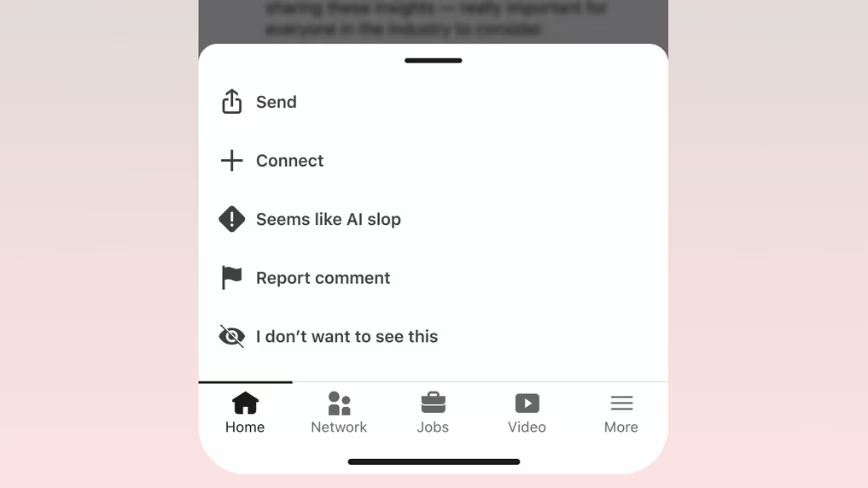
The mechanic itself is simple: a 'Seems like AI slop' option now sits in the three-dot menu on every post, and clicking it hides that post from the reporter's feed while the report is fed back into LinkedIn's AI-detection classifiers [1][2]. It is not a moderation action against the poster, more like a supercharged 'not interested' - flagged posts get reduced algorithmic distribution, and the original poster gets a private nudge in their analytics dashboard suggesting their writing may have read as inauthentic or AI-heavy [3][4]. LinkedIn paired the launch with a second, quieter change: retiring its 'enhance your post' AI rewrite tool and replacing it with a proofreading feature that fixes grammar without rewriting a user's voice [3].
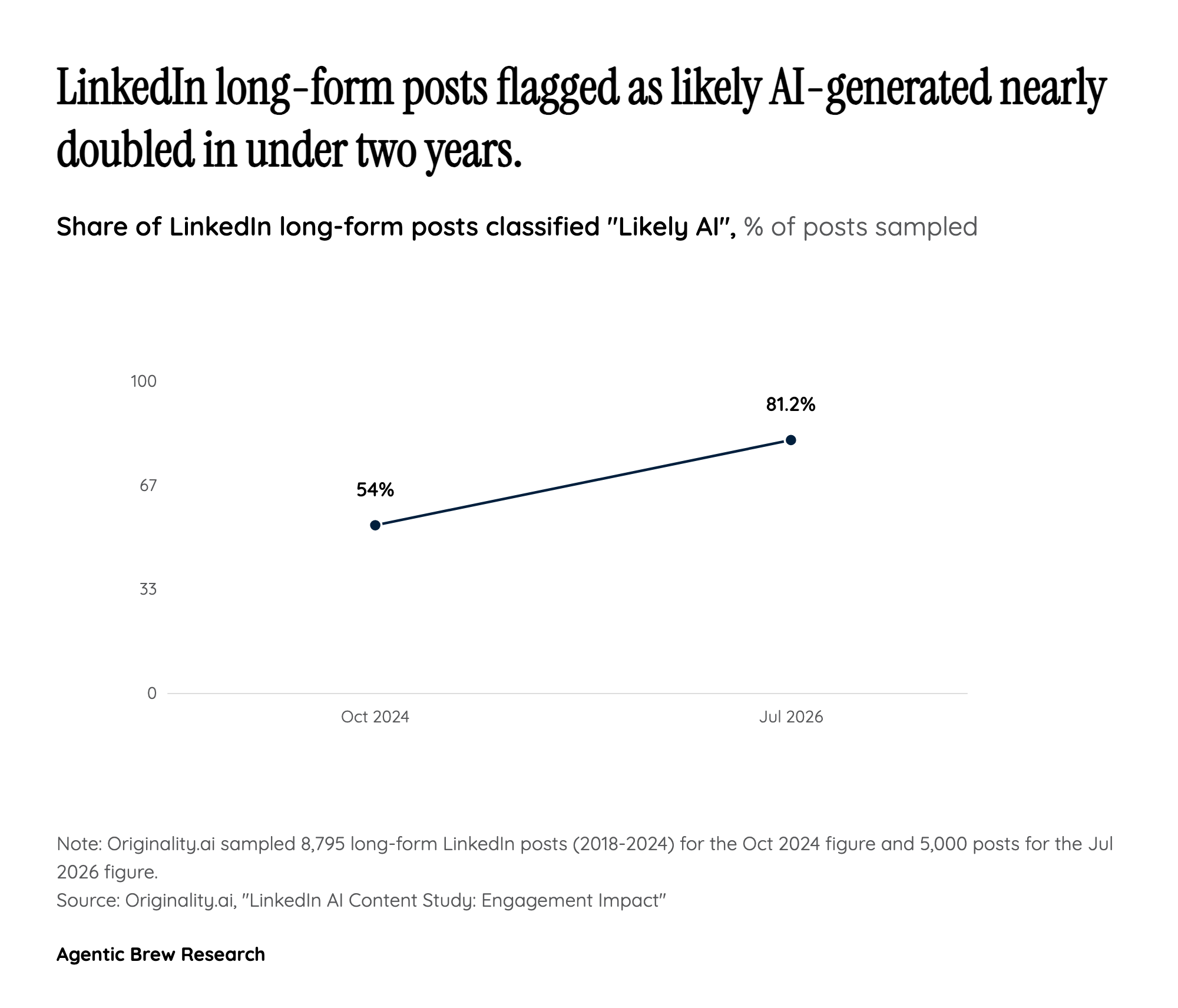
The timing is not a coincidence. Independent detection vendor Pangram scanned over a million posts across LinkedIn, X, Reddit, Substack and Medium and found LinkedIn accounted for roughly one-third of all posts scanned but 62% of all AI content flagged, with over 40% of its long-form posts fully AI-generated [5][6]. Originality.ai's tracking tells an even starker story: from a 2024 baseline of 54% likely-AI long-form posts, its most recent sample of 5,000 July 2026 posts found 81.2% likely-AI [7]. Trade press had already flagged LinkedIn and X as the worst offenders for AI slop weeks before the button shipped [8], which suggests LinkedIn built this feature reactively, under public pressure from detection-company research rather than as a proactive quality initiative.