Why 2.8 Trillion Parameters Actually Changes the Open-Source Math
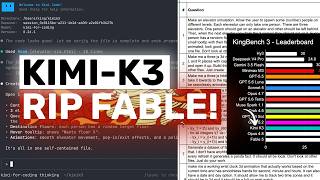
The scale of Kimi K3 matters not just as a headline number but as a structural threshold. Prior open-weight frontier models - DeepSeek's V4-Pro at 1.6 trillion parameters, Meta's Llama series - were capable but sat one tier below the very best closed models [1]. Kimi K3's 2.8 trillion total parameters, using a Mixture-of-Experts (MoE) architecture with 256 experts and 22 billion active parameters per token, is the first open-weight release that Moonshot itself claims can sit in the same benchmark tier as GPT-5.6 Sol and Claude Fable 5 [1].
What makes MoE critical here is inference economics. Despite having 2.8 trillion total parameters, K3 only activates 22 billion per token during inference - roughly comparable to the compute footprint of a much smaller dense model. This means the API cost of running K3 is not proportional to its headline parameter count. The pricing of $3 per million input tokens and $15 per million output tokens matches Anthropic's planned September 2026 pricing for comparable capability levels [1]. For enterprise buyers evaluating API providers, the question becomes: why pay the same price for less capability? That is the pricing trap Moonshot has set.