Microsoft swaps in in-house MAI models to cut Copilot's AI bill
TECH

Microsoft swaps in in-house MAI models to cut Copilot's AI bill

29+
Signals

Strategic Overview

  • 01.
    Microsoft has begun replacing OpenAI and Anthropic models with its own in-house MAI models for some Excel and Outlook AI features, part of a cost-cutting push to reduce Copilot's dependence on third-party AI providers.
  • 02.
    Tens of thousands of AI prompts in Excel and Outlook are now completed each week with Microsoft's MAI models, though this remains only a small share of overall AI usage in those apps.
  • 03.
    The MAI family also appears in GitHub Copilot, and a proprietary transcription model is expected to roll out in Teams in the coming months.
  • 04.
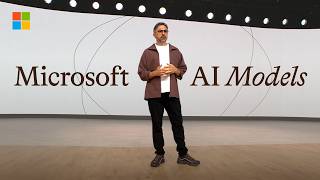
    Microsoft announced seven new in-house AI models under the MAI brand at its Build 2026 developer conference, spanning image, voice, transcription, coding and reasoning.

The Commodity Layer Is Where the Money Leaks

Microsoft's move is not an attack on frontier AI - it is a surgical strike on the commodity layer beneath it. The company is targeting high-volume, low-complexity work like drafting email replies, summarizing threads, and generating simple spreadsheet formulas, and routing those tasks to models it owns outright [1]. Frontier-grade reasoning can still route to OpenAI or Anthropic when a task genuinely demands it.

That split matters because commodity inference is exactly the traffic that scales a third-party API bill. Every routine Outlook summary that used to bill against an Anthropic or OpenAI meter is now a token Microsoft never has to pay for. Tens of thousands of Excel and Outlook prompts are already completed each week on MAI models [1], and while that is still a small share of total usage [2], it is the leading edge of a deliberate migration rather than an experiment.

Suleyman's Real Target Has a Name

Mustafa Suleyman has been unusually blunt about the goal. His framing is that Microsoft pays a lot of money to Anthropic and wants to reduce and ultimately eliminate that cost [1]. This is a rare case of a hyperscaler naming the specific vendor it intends to design out of its own product stack.

He pairs the cost argument with a provenance pitch: Microsoft says MAI-Thinking-1 was trained with no distillation from other companies' models, a claim aimed at enterprises that care about clean data lineage [3]. That pitch has a soft spot, though - technical documentation reportedly shows reliance on Common Crawl, whose use for AI training lacks a clear legal settlement [2]. The clean-lineage story is a selling point and a liability at the same time.

Parity Claim Meets the Benchmark Gap

The uncomfortable question is whether users notice a downgrade. On paper MAI-Thinking-1 is a serious model: 35 billion active parameters, a 128K context window, 97% on AIME 2025 and 53% on SWE-bench Pro [3]. But in coding evaluations it performs roughly on par with DeepSeek V3.2 and, despite Microsoft's parity claims, trails Sonnet 4.6 and Opus 4.6 by a wide margin [2].

Microsoft's own comparison point is telling: at Build it said one model can match the coding abilities of a prior-generation, still-popular Anthropic model, Opus 4.6, at reduced cost [1]. Matching a prior generation cheaply is a real achievement, but it is not the same as matching the frontier, and it defines the tradeoff regular Copilot users are being quietly opted into on commodity tasks.

Margin Story First, User Benefit Later

The market read the news for what it is. Microsoft shares rose about 2% after the report [4], and community reaction tracked that framing closely - the dominant take among developers and investors was that this is a margin play for Microsoft rather than a user benefit, with skeptics invoking Microsoft's long history of embracing and then absorbing a partner's turf. A smaller contingent read it more charitably as pro-competition, pointing out that a credible in-house challenger pressures every incumbent lab on price.

The most cynical version of the setup is a pricing one: make cheaper MAI models the default and offer OpenAI or Anthropic models as premium add-ons at extra cost [2], effectively converting Microsoft's third-party expense into a customer surcharge [4]. Whether that lands as savings passed on or costs passed through is the tension worth watching.

The Off-Ramp Through 2032

Zoom out and the near-term savings are the smaller prize. By standing up credible in-house models for commodity inference now, Microsoft is building a structural off-ramp that reduces its exposure to whatever OpenAI and Anthropic decide to charge in future years [4]. The timing is not incidental: the April 2026 restructuring that ended OpenAI's cloud exclusivity [5]loosened the ties that once made a full in-house stack awkward.

William Blair analyst Jason Ader frames the strategic core as securing IP rights through 2032 to protect the foundation of Microsoft's Copilot strategy while freeing Azure to compete more actively for OpenAI workloads [4]. In other words, the same move that trims today's bill also converts a dependency into optionality - Microsoft gets to keep buying frontier models when it wants to, not because it has to.

Historical Context

2026-04-27
Microsoft and OpenAI announced a restructured agreement ending years of exclusive cloud dependency, removing the exclusivity clause and letting OpenAI serve models on AWS, Google Cloud, Oracle and others.
2026-06
At Build 2026, Microsoft unveiled seven in-house MAI models spanning image, voice, transcription, coding and reasoning in a bid for long-term self-sufficiency, with Suleyman saying the company was trying to reduce Anthropic spending.
2026-07-07
Bloomberg reported Microsoft has begun routing tens of thousands of weekly Excel and Outlook prompts to MAI models, marking the operational start of the OpenAI and Anthropic replacement.

Power Map

Key Players
Subject

Microsoft swaps in in-house MAI models to cut Copilot's AI bill

MI

Microsoft

Deploying its in-house MAI models to displace third-party AI in Excel, Outlook, GitHub Copilot and Teams to cut inference costs.

AN

Anthropic

Third-party model provider Microsoft explicitly aims to reduce and eliminate spending on; MAI-Thinking-1 is benchmarked against its Claude Opus 4.6 and Sonnet 4.6.

OP

OpenAI

Longtime Microsoft partner being displaced from commodity inference in Office apps; the two restructured their partnership in April 2026 to end exclusivity.

MU

Mustafa Suleyman

Microsoft AI CEO driving the MAI self-sufficiency strategy and the push to reduce third-party model spending.

SA

Satya Nadella

Microsoft CEO who has gestured toward making MAI the default tier with OpenAI and Anthropic models as premium add-ons.

Fact Check

5 cited
  1. [1] Microsoft Replaces OpenAI, Anthropic With Own AI in Some Apps
  2. [2] Copilot goes cheap as Microsoft phases out OpenAI and Anthropic models to cut costs
  3. [3] Microsoft's MAI models at Build 2026
  4. [4] Microsoft's In-House AI Takes Over Excel, Outlook, Squeezing OpenAI, Anthropic
  5. [5] Microsoft and OpenAI Restructure Partnership

Source Articles

Top 5

THE SIGNAL.

Analysts

"We pay a lot of money to Anthropic - so our goal is to reduce and ultimately eliminate that cost."

Mustafa Suleyman
CEO, Microsoft AI

"Securing IP rights through 2032 protects the foundation of Microsoft's Copilot strategy while freeing Azure to compete more actively for OpenAI workloads."

Jason Ader
Analyst, William Blair
The Crowd

"$MSFT is replacing some OpenAI and Anthropic model usage in Excel and Outlook with its own in-house MAI models. The models are now handling tens of thousands of prompts each week as Microsoft starts moving more of its AI stack in-house."

@@StockSavvyShay829

"Bloomberg: Microsoft $MSFT is starting to use its own MAI models in some Excel and Outlook features, replacing OpenAI and Anthropic for certain tasks. Tens of thousands of AI prompts in those apps are now handled weekly by Microsoft's internal models."

@@wallstengine294

"The most underreported AI story of the year is happening inside Microsoft's own products. Microsoft has been building the MAI model family. Seven models, purpose-built for their product stack. MAI-Thinking-1 handles reasoning. MAI-Code-1-Flash handles code. Each tuned for a"

@@stretchcloud2

"Sources: Microsoft, looking to reduce AI costs, is starting to replace models from OpenAI and Anthropic with its MAI models in products like Excel and Outlook"

@u/aaronalligator110
Broadcast
Microsoft vs OpenAI Just Got REAL… New MAI Models and ChatGPT Dreaming

Microsoft vs OpenAI Just Got REAL… New MAI Models and ChatGPT Dreaming

Microsoft's New AI "MAI" Will Replace OpenAI Soon!

Microsoft's New AI "MAI" Will Replace OpenAI Soon!

Microsoft AI CEO unveils 7 new AI models | Mustafa Suleyman at Microsoft Build 2026

Microsoft AI CEO unveils 7 new AI models | Mustafa Suleyman at Microsoft Build 2026