The Mechanics of Executive Order 14434
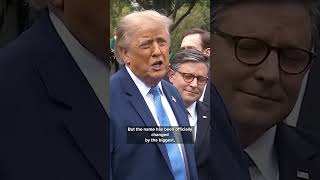
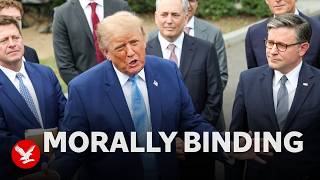
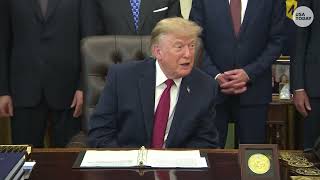
On September 29, 2026, Trump signed Executive Order 14434, 'Inaugurating the Era of Super Intelligence,' directing every executive branch agency to swap 'Artificial Intelligence' and 'AI' for 'Super Intelligence' and 'SI' across official correspondence, websites, reports, and policy documents [1][2]. The order explicitly tells agencies to 'no longer acknowledge' the old terminology [2]. It doesn't touch previously issued regulations or historical documents - the rewrite only governs future federal output [3]. More consequential than the renaming itself: Michael Kratsios, the Assistant to the President for Science and Technology, has 60 days - a deadline landing November 28, 2026 - to propose statutory language formally defining 'Super Intelligence' in federal law [2][3]. Legal analysts note that however that definition is written, it could reshape federal AI incentives, export controls, and oversight obligations [3]. Separately, several tech executives who met Trump at the White House appear to have signed a voluntary two-page accord on frontier-model development that Trump posted on Truth Social; it requires internal controls and external assessments but creates no legally enforceable obligations [3]. Asked directly by a reporter whether the order itself was binding, Trump offered a narrower answer than the sweeping language of the EO suggests - 'I think it's morally binding, yeah' - leaving open how, or whether, non-compliance would actually be enforced. He also framed the stakes in explicitly geopolitical terms, telling reporters the renaming was tied to the broader US-China race for advanced AI: 'whoever wins super intelligence, wins.'