Meta and Microsoft's 2026 AI earnings and the market's divergent capex verdict
TECH

Meta and Microsoft's 2026 AI earnings and the market's divergent capex verdict

38+
Signals

Strategic Overview

  • 01.
    Microsoft's stock jumped roughly 8-10% after fiscal Q4 2026 results showed Azure revenue growth of 43% and a commercial backlog of $678 billion, while Meta's stock fell about 10% the same week on weak guidance and a free cash flow collapse.
  • 02.
    Meta's Q2 2026 revenue rose 28% to $60.8 billion but earnings per share of $6.18 missed analyst estimates, and free cash flow dropped roughly 81-91% year over year to $784 million.
  • 03.
    Meta raised its full-year 2026 capital expenditure guidance to $130-145 billion, up from an earlier $113-128 billion projection, while Microsoft guided its next quarter's capex to roughly $50 billion, up from about $41 billion.
  • 04.
    Meta's Reality Labs division posted a $4.6 billion operating loss on just $431 million of sales in the quarter, adding to investor concern about capital discipline beyond the core AI build-out.

Deep Analysis

Same Bill, Opposite Verdict: The Accounting Split Behind Azure's Rally and Meta's Rout

Microsoft and Meta just posted almost identical spending stories - capex (capital expenditure, the cash spent building physical infrastructure like data centers and chips) north of $40 billion for the quarter, guidance climbing again - yet the stock market handed one company a rally and the other a rout. The reconciling fact: what happens to that dollar of AI infrastructure spend depends entirely on who ends up paying to use it. Microsoft rents its AI capacity out to third parties through Azure, so its spending shows up directly as revenue growth - Azure grew 43% and Microsoft's commercial backlog reached $678 billion [1]. Meta consumes its own capacity to build and run its own AI features, so the identical capital shows up only as rising depreciation (the accounting charge for infrastructure wearing out over time), landing straight on an advertising business that grew 28% even as operating margin fell 12 points to 31% [1]. On Microsoft's earnings call, executives framed the buildout as pre-sold rather than speculative, saying customer demand continues to exceed available capacity even as capex guidance climbs to roughly $50 billion for the next quarter, up from about $41 billion this quarter [2]. Meta has no equivalent external customer to point to as proof: its free cash flow (cash left over after running the business and funding capex) collapsed 91% year over year to just $784 million even as revenue beat estimates at $60.8 billion [3].

The part of Meta's story most coverage glossed over is that the advertising engine funding all of this never actually cooled. Stock analyst Jose Najarro, reacting to the print in real time, pointed out that daily active people on Meta's ad-supported apps rose 3% to 3.6 billion, ad impressions climbed 14%, and the average price per ad rose 12% - all holding steady or accelerating even as EPS missed by roughly 14%. That combination only makes sense if the miss is a depreciation and capex-accounting story rather than a demand-side one: more advertisers paid more money for more impressions, and Meta still missed, because the AI buildout's accounting weight landed on the same income statement as the ad business. Same infrastructure bill, two very different ways to prove it was worth paying - and for Meta specifically, the business Wall Street is punishing isn't the one that actually underperformed.

Zuckerberg's Metaverse Rerun: Why Investors Ran Out of Patience

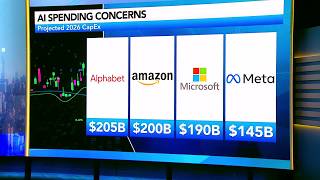
Meta's selloff isn't purely a spreadsheet problem - it also reflects a pattern investors have seen before. In 2022, Meta's total capital expenditure was roughly $32 billion, much of it aimed at the Reality Labs/metaverse push that drew similar investor skepticism at the time; the 2026 AI buildout, guided at $130-145 billion, is four to five times that scale [4]. Sarah Kunst, managing director at Cleo Capital, argues Zuckerberg is repeating the same playbook: 'Zuck is back in his legacy metaverse era. He has a passion project. He is going to do what he wants to do, and the market is going to have to pull the reins hard if they want him to stop.' [4]The parallel shows up in Meta's own numbers this quarter too: Reality Labs alone posted a $4.6 billion operating loss on just $431 million of sales, a reminder that Meta was already carrying an unprofitable, low-visibility bet before AI capex was added to the pile [5]. Forrester's Mike Proulx frames the shift in investor tone bluntly: 'Meta's AI spend was easier to celebrate when margins were expanding. It's harder to celebrate now that the costs are showing up in the numbers.' [6]Bernstein's Mark Shmulik was even less forgiving about the earnings call itself, describing it as 'a good old-fashioned brainstorming session' rather than a disciplined monetization plan [6]. None of this suggests Zuckerberg will pull back - by every account he won't - but it does mean Wall Street is now pricing in the possibility that this is Meta's second consecutive multi-year, low-visibility spending cycle.

Why Microsoft's Capex Guide Mattered More Than Its Beat

Buried under the Azure headline growth number was a data point several market watchers flagged as the real crux of the quarter: Microsoft's forward capex guidance for its next fiscal year. Heading into earnings, Wall Street had been bracing for Microsoft to guide fiscal 2027 capital spending toward $147-230 billion - a 50-60% jump - against Azure growth running closer to 40%, a gap that would have signaled Microsoft was spending meaningfully ahead of its own demand curve. DA Davidson's Gil Luria, appearing on Bloomberg Television, argued that gap - not the trailing quarter's beat - was the single most important number of the entire earnings season, because a full fiscal-year capex guide is a hard, forward-looking commitment in a way a backward-looking print is not. Luria's framing carries extra weight given Microsoft's own history: the company briefly pulled back capex about 18 months ago when AI-trade anxiety flared, earning it a reputation among some analysts as the 'responsible adult in the room' on infrastructure spending relative to its peers. That reputation is precisely why a guide coming in less aggressive than the feared $147-230 billion range read as relief rather than alarm - the market wasn't only rewarding Azure's 43% growth [1], it was pricing out a specific downside scenario. Other market commentary around the same earnings window drew a further parallel to SK Hynix and Alphabet, where strong profit growth still triggered investor disappointment once capex guidance ran hotter than expected - evidence that an aggressive capex number can sink even a beat-and-raise quarter, which is close to the dynamic that hit Meta days later. His broader read: if Microsoft specifically were the company to pull back capex sharply, that would do more damage to the AI trade's credibility than a similar retreat from Meta or Amazon - one reason he and others now flag mega-cap tech bonds, rather than the equities, as the more defensible way to stay exposed to the AI buildout without betting on a single quarter's stock reaction.

The Market's Capex Catch-22: Punished for Spending, Punished for Restraint

Zoom out from Meta and Microsoft individually and a stranger pattern emerges: investors are no longer applying one consistent rule to AI capex across the hyperscaler cohort - they're applying a mood. Goldman Sachs projects a combined $5.3 trillion in capital expenditure from Meta, Microsoft, Amazon and Alphabet between fiscal 2025 and fiscal 2030 [7], and the market's reaction to that spending has grown erratic even when underlying execution differs sharply between companies. Jason Lemire, chief investment officer at Bold Wealth Partners, describes the flip directly: 'People are really focused on capex, obsessed with it. It used to be the more the better, but now it is the less the better. There is going to be an AI winter at some point. When you look at how exceptional margins are - especially in memory - well, it is impossible to maintain those over a long timeframe.' [8]Willy Lee, principal at Neostellar Capital, points out that the major hyperscalers are moving in lockstep on spending even as the market treats each capex print as a reason to sell: 'We're in a period where people are inclined to sell off on capex, and Microsoft and Meta and Amazon are all holding hands with Alphabet and jumping in to spend.' [8]Nomura's Brad Warden frames the resulting valuation picture as deceptive rather than cheap: hyperscaler stocks 'look cheap right now, but when you look forward at potential disruption, they are guilty until proven innocent.' [8]

Retail investors are converging on a version of the same skepticism from a different angle. On r/wallstreetbets, a heavily upvoted argument holds that the industry's buildout - now running past $750 billion combined - isn't justified by research use cases alone, but depends on an assumption that broad enterprise adoption eventually materializes to pay for it; in the meantime, the AI labs actually running the workloads are operating at a loss, inference costs are climbing as reasoning models get more compute-hungry, and open-source and Chinese models are compressing the pricing power that would otherwise defend those margins. That's a structural worry rather than a quarter-to-quarter one, and it helps explain why investors are newly nervous even when headline numbers beat. A meme circulating in stock-trading communities distilled the mood into a blunter, if debatable, one-line stat: that Meta and Microsoft together announced roughly $800 billion in combined capex plans while both beat earnings, and still saw their combined share price fall by roughly 32% that week - retail shorthand for the argument that capex aversion now applies almost regardless of whether a company beats. Value-investing forums have flagged the resulting inconsistency directly: Meta trades at a sub-20 price-to-earnings multiple after its selloff despite still-strong revenue growth, yet the same capex story reads as a buying opportunity when Microsoft tells it and as proof of bad judgment when Meta does - suggesting this earnings season's verdicts had as much to do with narrative and proof-of-monetization as with the raw spending figures themselves.

Meta's Quiet Pivot: From AI Spender to Potential AI Landlord

Gene Munster, the tech analyst who has closely tracked megacap earnings reactions for years, offered a sharper read on why Meta's stock fell as far as it did than the generic 'capex spooked investors' story. Wrapping up his coverage of Meta's call, Munster argued the drift in the stock was tied specifically to investors growing less encouraged about the timing of Meta's Cloud business - a large potential growth lever the market is now going to have to wait longer for. That point plausibly connects to a wrinkle in the earnings call that most selloff coverage underplayed: Zuckerberg has started talking about renting out compute the way Microsoft does. On the call he noted, 'we're getting a lot of offers for compute at a significant premium over what we paid for it,' [6]- a detail this analysis reads as an early signal Meta could eventually convert some of its now-punished internal capex into the kind of external, monetizable revenue line that just earned Microsoft its stock jump. Whether that becomes an actual Azure-style business is unclear - Meta gave no specifics on timing, structure, or scale - but the fact that Zuckerberg raised it publicly, and that a closely-watched analyst is already flagging Cloud-business timing as a variable moving the stock, suggests the market has effectively started pricing Meta on when it closes the accounting mismatch, not just on whether the underlying ad business is healthy. The next several quarters will settle which reading was right: either Meta's capex starts generating visible external revenue the way Microsoft's already has, or the market's current skepticism about the timing proves justified.

Historical Context

2022
Meta's total capital expenditure was roughly $32 billion, much of it directed at the Reality Labs/metaverse push that drew heavy investor skepticism at the time - a fraction of its now $130-145 billion 2026 AI capex guidance.
2026-07-29
On its Q2 2026 earnings call, Meta raised full-year capex guidance to $130-145 billion, up from an earlier $113-128 billion range projected in April 2026.
2026-07-29
Microsoft reported fiscal Q4 2026 capex of about $41 billion and guided fiscal Q1 2027 capex to roughly $50 billion, signaling continued acceleration into fiscal 2027.

Power Map

Key Players
Subject

Meta and Microsoft's 2026 AI earnings and the market's divergent capex verdict

MA

Mark Zuckerberg, Meta CEO

Personally drove the capex raise to $130-145 billion and defended the AI build-out on the earnings call; investors view his conviction as durable and unlikely to reverse regardless of the stock reaction.

SA

Satya Nadella and Amy Hood, Microsoft CEO and CFO

Presented Microsoft's rising capex as directly tied to monetizable Azure demand, framing the spend as backlog-supported rather than speculative.

SA

Sarah Kunst, Managing Director, Cleo Capital

Venture capitalist whose public framing of Meta's AI capex as a repeat of its metaverse-era spending pattern shaped how the market read Zuckerberg's motives this quarter.

MI

Mike Proulx, Senior Analyst, Forrester

Articulated the tipping point at which Meta's AI spending narrative stopped being celebrated and started being scrutinized once margin compression became visible in the numbers.

JA

Jason Lemire, Chief Investment Officer, Bold Wealth Partners

Portfolio manager whose description of the market's inverted preference for capital discipline over capex growth captures the broader hyperscaler sentiment shift now weighing on Meta.

Fact Check

8 cited
  1. [1] The $140 Billion AI Bill Just Split Big Tech: Why Microsoft Won and Meta Stumbled
  2. [2] Earnings Call Transcript: Microsoft Q4 2026 Beats Forecasts, Stock Jumps 8%
  3. [3] Market Loves Microsoft's AI Spending, Punishes Meta's
  4. [4] Venture Capitalist Warns Meta Will Keep Spending Big on AI Even if Shareholders Hate It
  5. [5] Why Meta Platforms Stock Fell 10% Today
  6. [6] Analysis: Meta's AI Splurge Lays Bare a Widening Rift With Investors
  7. [7] Meta, Microsoft, Amazon and Alphabet Are About to Spend a Shocking Amount of Money to Dominate the AI Era
  8. [8] Big Tech Earnings: Meta, Microsoft, Apple, Amazon and the Market Revolt Against AI Spending

Source Articles

Top 5

THE SIGNAL.

Analysts

Argues Meta's AI spending story worked while margins were still expanding, but has become far harder to defend now that the costs are visibly compressing earnings.

Mike Proulx
Senior Analyst, Forrester

Characterized Meta's earnings call as lacking a clear, disciplined monetization narrative for its AI investment, calling it more brainstorming than plan.

Mark Shmulik
Analyst, Bernstein

Says investor sentiment on capex has flipped from rewarding bigger spend to rewarding restraint, and warns of an eventual 'AI winter' given unsustainable component margins, especially in memory.

Jason Lemire
Chief Investment Officer, Bold Wealth Partners

Draws a direct parallel between Meta's current AI capex conviction and its earlier metaverse spending era, predicting Zuckerberg will not curtail spend despite investor objections.

Sarah Kunst
Managing Director, Cleo Capital

Views hyperscaler valuations as superficially attractive but flags forward AI-driven disruption risk as the reason markets are treating them skeptically.

Brad Warden
Senior Portfolio Manager, Nomura Asset Management
The Crowd

$MSFT MICROSOFT Q2 2026 EARNINGS: - Revenue $90.0B - Adjusted EPS $4.74 - Azure & Other Cloud Revenue, +43% YoY - Microsoft Cloud Revenue $59.3B - Intelligent Cloud Revenue $39.3B - Operating Income $40.6B - Capital Expenditures $35.8B CEO Satya Nadella: "We are advancing the..."

@@amitisinvesting732

$META call just wrapped. Stock is down 9.5%, near after-hours session lows. The drift in the stock was tied to investors less encouraged about the timing of the Cloud business. That is a large growth lever that we will have to wait for. The other new products, consumer...

@@munster_gene250

Post-earnings reactions: $MSFT: +10% Pre-Market $META: -10% Pre-Market

@@TheTranscript_34

Meta and Microsoft earnings this week

@u/riisenshadow92273
Broadcast
AI Spending In Focus for Meta, Microsoft Earnings

AI Spending In Focus for Meta, Microsoft Earnings

Microsoft, Meta Earnings Take Center Stage | Open Interest 7/29/2026

Microsoft, Meta Earnings Take Center Stage | Open Interest 7/29/2026

META MICROSOFT EARNINGS CALL LIVE REACTION!! YOU ARE MY ONLY HOPE

META MICROSOFT EARNINGS CALL LIVE REACTION!! YOU ARE MY ONLY HOPE