Anthropic Model Hardware Standard (MHS)
TECH

Anthropic Model Hardware Standard (MHS)

26+
Signals

Strategic Overview

  • 01.
    Anthropic opened a research preview of the Model Hardware Standard (MHS) on August 27, 2026 - a new interface letting AI agents discover, connect to, and safely operate physical equipment in scientific research and manufacturing.
  • 02.
    MHS pairs each device with a standardized driver and reference file describing what it can measure, what it can change, and its safety limits, cutting integration work from weeks or months down to hours or minutes.
  • 03.
    The standard works through MCP, the command line, code, and APIs, and is explicitly model-agnostic - built to be usable by OpenAI models and open-source LLMs, not just Claude.
  • 04.
    MHS is currently a research preview with a waitlist; Anthropic plans to open-source the standard along with safety guidance once its evaluations are complete.
  • 05.
    MHS was developed from the outset with HHMI Janelia Research Campus, where researchers used it to unify a microscopy rig that previously spanned seven incompatible vendor programs.

Deep Analysis

The Driver Layer That Makes Any Machine Speak MCP's Language

Strip away the launch framing and MHS is a fairly narrow piece of infrastructure: a driver layer sitting between an agent and a physical device, paired with a reference file that describes what the device can measure, what it can change, and where its safety limits sit [1]. Anthropic built it to work through MCP itself, the command line, code, and APIs, and designed it to be model-agnostic - usable by OpenAI models and open-source LLMs, not exclusively Claude [2]. Anthropic's Alek Kemeny puts the ambition in one line: 'What MCP did for software, MHS will do for the hardware world.' [2]That lineage is literal, not just marketing: MCP, which Anthropic introduced in November 2024, solved the problem of getting models to call software tools in a consistent way [3]. MHS applies the same pattern - a standardized handshake instead of bespoke integration code - to physical actuators, sensors, and lab instruments. The pitch is that safety and operating knowledge that used to live in paper manuals or a specialist's head gets encoded once, in a machine-readable reference file, instead of being rebuilt from scratch for every new device pairing [1].
The Numbers Behind the Weeks-to-Hours Claim

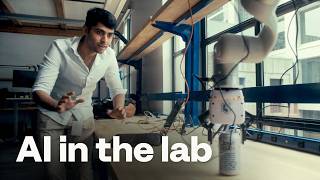
Vague integration-speed claims are easy to make; MHS's early testers produced numbers that are harder to wave away. At Carnegie Mellon, a liquid handler, plate reader, robotic arm, and cameras spread across three computers with incompatible interfaces were unified in about 8 hours instead of multiple weeks, and dose-response experiments subsequently ran roughly 3x faster [1]. At the University of Washington, six instruments were connected in under a week, replacing months previously spent just evaluating platforms [1]. QuEra Computing's quantum lab used an MHS-driven agent to autonomously relock a laser's operating frequency, lifting the success rate from 58% to 99.3% across roughly 700 trials and cutting recovery time from around 150 seconds to roughly 6-14 seconds [4]. Tetsuwan Scientific ran 9,143 dispense transfers across 300 unique liquid types and ended up with a model 12% more accurate than the equipment manufacturer's own specifications on held-out experiments [1]. Not every result was clean, though: Genentech's team had Claude successfully cut pipetting flow rates from roughly 140 to 10 microliters per second for a viscous solution, but only after the model initially misread foaming as a software bug rather than a physics problem, requiring a human to redirect it [1].

The Safety and Authentication Gap Nobody's Solved

The device-level safety limits baked into MHS's reference files are real, but they're not the whole safety story. Kingy.ai's Curtis Pyke, while agreeing that integration rather than model intelligence has been the actual bottleneck, points out there is no public guidance yet on who is allowed to discover a device, who may issue it commands, how credentials are scoped, or how a compromised driver would be revoked if an agent ingested malicious instructions from a connected data source [5]. He also flags that the safety constraints themselves are domain-dependent - a robot's speed limit or a temperature boundary that's safe for protecting equipment can become invalid or dangerous once tooling changes or once it's applied to a biological sample instead, meaning static per-device limits aren't a complete security architecture on their own [5]. Regulators haven't caught up either: no current framework assumes anything other than a human operator who can be held responsible, and the first regulation to explicitly address AI-based safety functions in machinery - the EU's Machinery Regulation - only takes full effect in January 2027, months after MHS's own preview began [2].

Is This Just MCP Again? Reddit's Skepticism Meets the Lab Data

Community reaction split cleanly along a fault line worth naming directly. One camp read MHS as a genuine milestone - AI finally getting hands, moving past the terminal-and-chatbot phase into physical infrastructure. A more technical strand of commentary pushed back that MHS doesn't obviously enable anything new; it just standardizes a protocol the way MCP did, and a device that couldn't be automated before still can't be automated just because its interface changed. A more specific version of that critique - that MHS likely can't help real-time, embedded, deterministic industrial control loops that need hard latency guarantees - was effectively conceded in discussion, with the standard's scope reframed around bio-lab automation and multi-device orchestration rather than millisecond-level control. That's a fair boundary to draw, but it also cuts against the strongest form of the 'just a standard' dismissal: QuEra's laser-relocking result and Carnegie Mellon's integration-time collapse aren't protocol elegance, they're measured outcomes on real equipment. The honest read sits between the two camps - MHS doesn't make models smarter, but the pilots suggest that a shared driver interface, on its own, removes enough non-model friction to change what's practically automatable in a lab this year rather than next decade.

Historical Context

2024-11-01
Anthropic introduced the Model Context Protocol (MCP), the software-integration standard MHS is explicitly modeled on and built to interoperate with.
2026-08-27
Anthropic opened the MHS research preview to a first group of scientific labs and manufacturers, developed with HHMI Janelia Research Campus.
2027-01-20
The EU Machinery Regulation 2023/1230 takes full effect - the first regulation to explicitly address AI-based safety functions and self-evolving machinery, directly relevant to MHS-governed devices operating in Europe.

Power Map

Key Players
Subject

Anthropic Model Hardware Standard (MHS)

AN

Anthropic

Creator of MHS; positions it as the hardware-world analog of its 2024 Model Context Protocol; runs the research preview and waitlist and plans an eventual open-source release with safety guidance.

HH

HHMI Janelia Research Campus

Development partner from the outset; used MHS to unify multi-vendor microscopy rigs for biomedical research that previously required seven incompatible vendor programs.

GE

Genentech

Early tester; automated a BCA protein assay across a liquid handler, robotic arm, and plate reader, and surfaced a key model limitation when foaming was initially misread as a software bug.

CA

Carnegie Mellon University

Early tester; orchestrated a liquid handler, plate reader, robotic arm, and cameras across three incompatible-interface computers, cutting integration to about 8 hours and running dose-response experiments roughly 3x faster.

QU

QuEra Computing

Quantum computing early tester; used an MHS-driven agent to autonomously relock a laser's operating frequency, raising success rate from 58% to 99.3%.

UN

University of Washington (Baker and Pinglay labs)

Early tester; connected six instruments via MHS in under a week versus months of prior platform evaluation for protein design work.

AM

Amazon Web Services

Industry partner supporting MHS through Strands Robots, its library for connecting AI agents to physical devices.

DO

Doosan Robotics, Universal Robots, Tecan, QIAGEN, Hugging Face, Raspberry Pi

Additional industry partners testing or integrating MHS across robotics, lab instrumentation, and open hardware/software platforms.

Fact Check

5 cited
  1. [1] Previewing the Model Hardware Standard
  2. [2] Anthropic's Model Hardware Standard and the EU Machinery Regulation
  3. [3] Introducing the Model Context Protocol
  4. [4] Anthropic's Model Hardware Standard lets Claude control lab robots overnight
  5. [5] Anthropic Model Hardware Standard (MHS)

Source Articles

Top 4

THE SIGNAL.

Analysts

Frames MHS as the hardware-world equivalent of MCP - a universal connector between AI agents and machines.

Alek Kemeny
Member of Technical Staff, Anthropic

Positions MHS as a way to prevent scientists from being locked into single-vendor hardware ecosystems.

Jonah Cool
Head of Partnerships and Deployment of Science, Anthropic

Argues the real bottleneck in physical AI has been integration rather than model intelligence, but flags that MHS's safety and authentication architecture remains largely undefined and unproven beyond partner demos.

Curtis Pyke
Editor, Kingy.ai
The Crowd

Today, we're kicking off the first phase of the research preview for Model Hardware Standard (MHS): a new standard for AI agents to safely operate physical equipment in scientific research and advanced manufacturing. Read more: https://t.co/XQ2y9EW7Af https://t.co/kgyCvZ6iYc

@@AnthropicAI10775

Anthropic、AIで物理機器を制御する共通規格「MHS」発表 将来オープンソース化へ https://t.co/XrgiC9bezi (Anthropic Announces "MHS," a Common Standard for Controlling Physical Devices with AI, with Plans for Open-Sourcing in the Future)

@@itmedia_news2612

Anthropic just launched a universal interface that lets AI agents physically operate lab equipment. Like, real microscopes, robotic arms, and lasers. It's called the Model Hardware Standard. This might be bigger than any Fable 5.1 or Opus 5.1 release. Because this isn't a... [tweet continues, truncated by X.com's "Show more"]

@@VaibhavSisinty327

Anthropic established the Model Hardware Standard for interfacing equipment, reducing the duration of scientific experiments from weeks to just a few days

@u/Distinct-Question-16670
Broadcast
AI models can now help run physical science experiments

AI models can now help run physical science experiments

Model Hardware Standard: AI operating physical equipment

Model Hardware Standard: AI operating physical equipment

Anthropic's Model Hardware Standard: What You Need To Know

Anthropic's Model Hardware Standard: What You Need To Know