FTC clears Musk's acquisition of Mesh Optical Technologies
TECH

FTC clears Musk's acquisition of Mesh Optical Technologies

26+
Signals

Strategic Overview

  • 01.
    The FTC granted early termination of its antitrust review on June 25, 2026, clearing Elon Musk to acquire Mesh Optical Technologies, a startup founded by former SpaceX engineers.
  • 02.
    Mesh builds optical transceivers that use light rather than electrical signals to move data between servers, pitched as more power-efficient and lower-latency for AI data centers.
  • 03.
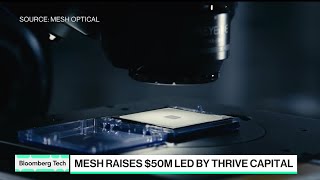
    The Los Angeles startup emerged from stealth in February 2026 with a $50 million Series A led by Thrive Capital, roughly four months before the deal cleared.
  • 04.
    The clearance came in about four days, was first reported by Bloomberg on June 26, 2026, and is tied to FTC filing reference 20261601.

Deep Analysis

Musk Is Buying Back the Brains That Walked Out of SpaceX

The most telling fact about this deal is who is on the other side of it. Mesh Optical Technologies was founded by Travis Brashears, Cameron Ramos, and Serena Grown-Haeberli - former SpaceX engineers who built the optical communication links that interconnect Starlink satellites before leaving to start their own company [1]. Acquiring Mesh is, in effect, Musk reabsorbing the laser-link expertise his own organization originally produced, now repackaged for ground-based and eventually space-based data centers.

That re-absorption matters because of where Musk wants to point it. The acquisition could improve efficiency of SpaceX data centers on Earth and, in future, in space, supporting his ambition to build orbital AI compute clusters [2]. It also slots into a vertical-integration story: SpaceX already holds compute agreements with Anthropic, Google, and Reflection AI, so owning the optical-transceiver layer brings a key piece of AI networking hardware in-house rather than buying it on the open market [1]. The strategic read is less about a single startup and more about Musk controlling the full stack from silicon interconnect to satellite.

The timing fits a wider pattern. The deal follows SpaceX's historic IPO earlier in the month and reads as part of a wave of capital deployment across Musk's companies [2]. When a newly public, cash-rich entity starts buying back the talent and IP it once spun out, it is usually consolidating for a longer campaign - here, the campaign is AI infrastructure.
Why The Plumbing Between GPUs Became The Choke Point

To understand why a four-month-old startup is worth Musk's attention, you have to look at how modern AI clusters are wired. Training and serving large models requires many GPUs to work in concert, and they only do that if data can move between them fast enough. The connective tissue is the optical transceiver, a component that converts electrical signals into light so information can travel between servers with less power loss and lower latency than copper-based electrical links [4].

The scary part is the math of scale. The number of transceivers in a cluster is roughly four to five times the GPU count, so as data centers pack in more accelerators, the demand for these optical links grows even faster than the demand for the chips themselves [4]. That makes the interconnect, not just the GPU, a genuine bottleneck - and a large, growing line item in data center capex. Mesh's pitch is built on that pressure: its Alpha C1 part converts electrical signals to light at 1.6 terabits per second [5], and the company has said it is targeting production of 1,000 Alpha C1 units per day within the year, with an eye on bulk orders in 2027 and 2028 [4].

The second-order point is power. As AI data centers strain against electricity limits, every watt spent shuffling data between chips is a watt not spent on computation. Light-based hardware is described as faster and more energy-efficient than traditional electrical-based systems [1], which reframes optical interconnects from a niche networking upgrade into a lever on the single hardest constraint in AI buildouts.

A Four-Day Clearance Says The Quiet Part Out Loud

The regulatory mechanics deserve their own look. The FTC did not merely approve the deal - it granted early termination of its antitrust review, an expedited path reserved for mergers the agency judges unlikely to raise competitive concerns [6]. By reporting, that clearance landed in about four days, roughly four months after Mesh emerged from stealth [6].

The speed is itself a signal. An early termination tells you the agency saw a vertically complementary acquisition - a large buyer absorbing a tiny upstream supplier in a market with plenty of other transceiver makers - rather than a horizontal merger that removes a competitor. For a figure as politically scrutinized as Musk, a clean four-day pass through the FTC also removes a variable that could have stalled the broader post-IPO M&A push that news outlets tied the deal to [3]. The friction-free clearance, in other words, is what makes the consolidation strategy in the first section practically executable on Musk's timeline.

The Investor Split: SpaceX Skeptics vs Optical Bulls

Community reaction broke along a revealing fault line, and the tension is more interesting than any single take. On SpaceX-focused investor forums, the dominant mood was skeptical: bears questioned whether the acquisition is a strategic move or a stock-pump, and even pressed on what SpaceX's core business is supposed to be once it starts buying networking startups. The bullish rebuttal in that camp leaned on provenance - that the Mesh founders built Starlink's inter-satellite laser links, so the deal brings optical IP back in-house.

The optical-semiconductor crowd read the same news in the opposite key. There, the framing was validation of the optical-interconnect thesis, with one breakdown tying the Alpha C1 to the Linear Pluggable Optics approach that strips out power-hungry DSP retimers - a sign that the deal confirms where high-speed data center networking is heading rather than questioning it. A separate strand debated whether the move helps merchant laser suppliers that sit upstream of a company like Mesh.

The gap between those two audiences is the story: generalist Musk-watchers are arguing about motive and hype, while specialists are arguing about which layer of the optical supply chain captures the value. When the people closest to the technology are this constructive while the people closest to the stock are this wary, it usually means the strategic logic is running ahead of the market narrative.

Historical Context

2026-02-17
Mesh emerged from stealth with a $50M Series A led by Thrive Capital to scale production of its Alpha C1 optical transceiver.
2026-06-25
The FTC granted early termination of its antitrust review, clearing Musk's acquisition of Mesh.
2026-06-26
News of the clearance was reported, framed as part of a broader Musk M&A push following SpaceX's IPO.

Power Map

Key Players
Subject

FTC clears Musk's acquisition of Mesh Optical Technologies

EL

Elon Musk / SpaceX

Acquirer. The deal could improve efficiency of SpaceX data centers on Earth and, in future, in space, feeding ambitions for orbital AI compute clusters.

ME

Mesh Optical Technologies

Target. The LA-based startup builds the Alpha C1 optical transceiver for AI and power-constrained data centers, the hardware layer being folded into Musk's infrastructure.

TR

Travis Brashears, Cameron Ramos, Serena Grown-Haeberli

Co-founders and former SpaceX engineers who built the optical links interconnecting Starlink satellites before leaving to start Mesh, carrying that IP with them.

TH

Thrive Capital

Lead investor in Mesh's $50M Series A; partner Philip Clark framed U.S.-based optical manufacturing as a national-security advantage.

FE

Federal Trade Commission (FTC)

Regulator. Granted early termination of antitrust review, signaling it saw no significant competition concerns in the deal.

Fact Check

6 cited
  1. [1] FTC gives Musk the OK to acquire SpaceX-alumni startup Mesh
  2. [2] FTC Clears Musk to Acquire Optical Networking Startup Mesh
  3. [3] Musk Cleared by FTC to Buy SpaceX Alumni Firm Mesh in M&A Push
  4. [4] SpaceX vets raise $50M Series A for data center links
  5. [5] Introducing Mesh
  6. [6] Elon Musk Secures FTC Clearance to Buy Mesh

Source Articles

Top 4

THE SIGNAL.

Analysts

"Argues that routing critical parts of AI data center capex through misaligned or competitive countries is a strategic problem, framing domestic optical manufacturing as a national-security advantage."

Philip Clark
Partner, Thrive Capital
The Crowd

"BREAKING: Elon Musk has been cleared by the FTC to acquire Mesh Optical Technologies. Mesh was founded by former SpaceX engineers who worked on Starlink laser-link communications. The company builds optical transceivers for AI data centers."

@@cb_doge5026

"Elon Musk received a regulatory greenlight to acquire startup Mesh, a company founded by former SpaceX engineers working on optical data center communication technology. Musk Cleared by FTC to Buy SpaceX Alumni Firm Mesh in M&A Push"

@@business890

"BREAKING: The FTC cleared SpaceX to acquire Mesh Optical Technologies, a SpaceX-alumni startup making 1.6 terabit per second optical transceivers for AI data centers, Bloomberg reported (Source: Bloomberg, June 26, 2026). The FTC granted early termination of its antitrust review"

@@muskonomy307

"SpaceX Just Got FTC Approval To Acquire Mesh Optical"

@u/Pure_Reference_437321
Broadcast
SpaceX's Starlink MOBILE Is Happening (Huge) / SpaceX Acquires Mesh Optical / SpaceX Stock (SPCX)

SpaceX's Starlink MOBILE Is Happening (Huge) / SpaceX Acquires Mesh Optical / SpaceX Stock (SPCX)

Thrive Backs Startup Building Optical Data Center Tech

Thrive Backs Startup Building Optical Data Center Tech

SpaceX/Elon Musk Acquires Optical Startup Mesh - Bullish for Optical Interconnects & SIVE

SpaceX/Elon Musk Acquires Optical Startup Mesh - Bullish for Optical Interconnects & SIVE