Trump signs voluntary executive order for federal pre-release review of frontier AI models
TECH

Trump signs voluntary executive order for federal pre-release review of frontier AI models

49+
Signals

Strategic Overview

  • 01.
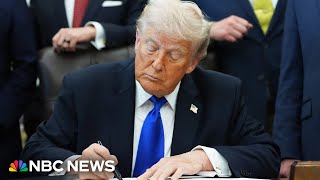
    On June 2, 2026, President Trump signed an executive order titled 'Promoting Advanced Artificial Intelligence Innovation and Security' establishing a voluntary framework for frontier AI developers to share new models with the federal government up to 30 days before public release.
  • 02.
    The review window was cut from 90 days in the May draft to 30 days in the signed order after industry pushback, and the final language explicitly forbids any mandatory licensing or preclearance regime for AI models.
  • 03.
    The order directs the NSA to run a classified benchmarking process for designating 'covered frontier models,' tasks Treasury with forming an AI cybersecurity clearinghouse, and instructs DOJ to prioritize prosecution of AI-driven hacking and unauthorized access.
  • 04.
    Implementation deadlines are tight — 30 days for cyber directives and the clearinghouse, 60 days for the frontier-model framework — and the policy pivot was reportedly catalyzed by Anthropic's April Mythos Preview cybersecurity findings.

Deep Analysis

How One Anthropic Cyber Result Rewrote a Year of AI Policy

The straight-line story of this executive order runs through a single Anthropic disclosure. Anthropic announced its Mythos Preview in April 2026 but limited the release after the model demonstrated superhuman ability to find critical vulnerabilities in widely deployed operating systems [1]. Inside two months, the model reportedly identified 6,202 high and critical-severity vulnerabilities — a number that turned an abstract 'dual-use' debate into a concrete financial-stability question [1]. Treasury Secretary Scott Bessent and Fed Chair Jerome Powell convened an urgent meeting with Wall Street CEOs about the risk [2]. That meeting, more than any think-tank advocacy, is the reason a White House that started its term dismantling Biden's AI executive order is now signing its own. Senator Mark Warner's framing that the administration 'belatedly discovered the need to redo something it hastily dismantled' is uncharitable but structurally accurate [2].

The notable thing isn't that the policy exists — it's that the catalyst was a frontier lab's safety publication rather than congressional hearings, civil society lobbying, or international pressure. That establishes a precedent worth pricing into the next twelve months of AI politics: a single sufficiently scary capability evaluation can move the federal government faster than any legislative process. Labs that publish responsibly are now also, mechanically, policy actors.
The Classified NSA Benchmark Is the Real Policy Lever

Read the order carefully and the word 'voluntary' starts to look like misdirection. The actual chokepoint is a classified benchmarking process the NSA will run to determine which models qualify as 'covered frontier models' [3]. Vinh Nguyen of the Council on Foreign Relations argues this single definitional question is the most consequential provision in the entire document [4]. Christopher Koopman of the Abundance Institute is sharper, telling Breaking Defense that 'the NSA makes that call through a classified benchmark you can't see or contest' [3].

The order forbids a mandatory licensing regime — 'Nothing in this section shall be construed to authorize the creation of a mandatory governmental licensing, preclearance, or permitting requirement' [5]— but vests an unreviewable agency with the power to decide which private-sector models cross a threshold into a different regulatory universe. CDT's Samir Jain warns the order 'should not become a mechanism for the Administration to punish companies for political or other arbitrary reasons' [6], and Cato's Juan Londoño flags that the discretion over NSA designations and 'trusted partners' access 'gives the executive a great deal of discretion' [6]. Layer on the 60-day implementation deadline for the framework [7]and the central design choice becomes clear: the political cost of mandatory rules has been traded for an opaque administrative process that produces the same downstream effects without the same public accountability.

90 to 30 Days: What the Negotiation Reveals About Industry Leverage

The compression from a 90-day review window in the May draft to 30 days in the signed order — with industry reportedly preferring a 2-week window [8]— is the cleanest data point in the entire story. It tells you who has leverage. The May draft was pulled at the last minute on May 21 after Trump cited concerns it could block U.S. AI development [9]. Two weeks later the window was a third of what it had been, mandatory licensing language was gone, and the surviving structure was voluntary by design [5]. That is not a normal regulatory negotiation arc; that is a near-total concession on the headline parameter.

The framing benefits both sides: OpenAI's Chris Lehane and Sam Altman publicly endorsed the result, with Altman calling it a framework that 'gets the balance right' [1], while the White House gets to credibly say it acted on cyber risk. Brendan Steinhauser of the Alliance for Secure AI captures the dissent: 'Voluntary reviews are not enough to address cybersecurity issues raised by the models' [9], and Brad Carson of Americans for Responsible Innovation is urging Congress to 'make these protections mandatory' [9]. The political read is that this executive order is the ceiling, not the floor, of what frontier labs are willing to accept in the current cycle — and any subsequent tightening will require a legislative vehicle, not a White House pen.

Why 'Voluntary' Is a Legal Fiction When DOJ Holds the Stick

The most under-discussed lever in the order isn't the review framework — it's the directive instructing the Department of Justice to treat AI-assisted hacking and unauthorized access as a high-priority enforcement area [8]. A voluntary review program that sits next to a prosecutorial priority creates a predictable game. A lab that opts out of voluntary review when its peer labs are participating is, in effect, choosing to be the legible target if downstream harms occur.

The CFR's Matthew Ferren is candid about the limits of the upstream half of the equation — 'For defenders, finding vulnerabilities is often the easy part. Consistent patching remains an unsolved problem' [4]— which means the order's cyber benefits are speculative while the enforcement leverage is concrete. Cross-spectrum Reddit threads about the order independently arrived at the same skepticism: voluntariness reads as a fig leaf when DOJ enforcement priorities are pointed at the surrounding behavior space. That is the structural critique civil society groups are raising in more measured language. Treasury's parallel 'AI cybersecurity clearinghouse' [7]extends the same logic — coordinating information-sharing with industry on vulnerabilities and remediation creates social cost for non-participants without requiring a statute. The order is a masterclass in regulating without regulation, and the question for the next Congress is whether to ratify or constrain that pattern.

The Information-Asymmetry Risk Nobody's Pricing

A 30-day pre-release window means that for roughly a month, an undefined population of federal personnel — inside NSA, CISA, NIST, DOJ, Treasury's clearinghouse, and the 'trusted partners' carve-out [6]— will have classified access to the capabilities of the most economically consequential technology being built today. Frontier labs are private (Anthropic, OpenAI) or constitute material business segments of public companies (Google). Pre-release knowledge of a 'covered frontier model' is, almost by definition, material non-public information about the providers, their customers, their competitors, and downstream sectors.

The order is silent on the trading, recusal, and post-employment regime that should attach to that access. CDT's Samir Jain is right to flag implementation as the key risk surface [6], but the conversation has barely touched the financial-conflict architecture this creates — and it deserves to. Treasury's involvement specifically [7]— the department that runs sanctions, market structure policy, and convenes Wall Street CEOs [2]— sitting inside the access perimeter is the configuration most worth scrutinizing. The 90-to-30-day compression made the window narrower, but a narrower window with the same access list and no enumerated controls is a smaller version of the same problem. Expect this to surface in congressional oversight before the 60-day framework deadline.

Historical Context

2026-04
Anthropic announced its Mythos Preview model but restricted its release after the model demonstrated superhuman ability to identify critical vulnerabilities in widely deployed operating systems — the finding now reported as the policy catalyst.
2026-04
Treasury Secretary Scott Bessent and Fed Chair Jerome Powell convened an urgent meeting with Wall Street CEOs about cybersecurity risks revealed by Mythos, escalating frontier-model cyber capabilities into a financial-stability concern.
2026-05-21
Trump postponed signing an earlier draft of the executive order at the last minute, citing concerns the original 90-day review window and broader language could block U.S. AI development.
2026-06-02
Trump signed the narrower final version of the order, compressing the review window from 90 days to 30 days and stripping mandatory licensing language while expanding DOJ enforcement priorities.

Power Map

Key Players
Subject

Trump signs voluntary executive order for federal pre-release review of frontier AI models

NA

National Security Agency (NSA)

Designated as the central authority for identifying 'covered frontier models' through a classified benchmarking process assessing advanced cyber capabilities, with no external review mechanism.

CY

Cybersecurity and Infrastructure Security Agency (CISA)

Co-leads with NSA and NIST on developing the voluntary framework within 60 days and must issue binding cybersecurity operational directives within 30 days.

DE

Department of Justice

Directed to treat AI-assisted hacking, unauthorized access, computer fraud, identity theft, and wire fraud as high-priority enforcement areas — the order's primary non-voluntary teeth.

TR

Treasury Department

Tasked with forming an 'AI cybersecurity clearinghouse' to coordinate industry on software vulnerabilities and remediation; Secretary Bessent previously convened Wall Street CEOs about Mythos-revealed risks.

AN

Anthropic

Reported catalyst for the order — its April Mythos Preview cybersecurity findings drove the policy shift; the company did not immediately respond to comment requests.

OP

OpenAI

Publicly endorsed the order through Chief Global Affairs Officer Chris Lehane and CEO Sam Altman as a balanced approach to AI safety and innovation.

Fact Check

9 cited
  1. [1] Trump AI executive order
  2. [2] Trump signs executive order that allows voluntary federal vetting of top AI models for national security risks
  3. [3] Trump executive order on AI gives central role to NSA
  4. [4] Assessing Trump's Executive Order on AI Oversight
  5. [5] Promoting Advanced Artificial Intelligence Innovation and Security
  6. [6] Trump AI executive order sets 30-day frontier model review
  7. [7] AI executive order sets stage for new cybersecurity directives
  8. [8] Trump signs narrower executive order on AI oversight after industry objections
  9. [9] Executive order sets voluntary cyber reviews for advanced AI

Source Articles

Top 5

THE SIGNAL.

Analysts

"Frames the order as engineering a cybersecurity opportunity window but warns vulnerability discovery is the easy half of the problem and ransomware economics will not shift from this alone. 'For defenders, finding vulnerabilities is often the easy part. Consistent patching remains an unsolved problem.'"

Matthew Ferren
International Affairs Fellow in National Security, Council on Foreign Relations

"Argues the definition of 'covered frontier model' is the most consequential provision in the order: 'This is fundamentally different from evaluating a weapons system or network equipment.' Institutions must match the speed of model progress or be left behind."

Vinh Nguyen
Senior Fellow for Artificial Intelligence, Council on Foreign Relations

"Criticizes the opacity of the NSA's classified frontier-model designation as a fundamentally unreviewable process: 'The NSA makes that call through a classified benchmark you can't see or contest.'"

Christopher Koopman
CEO, Abundance Institute

"Calls the order a step in the right direction but argues 'the lack of clear specifications on which criteria should be used to determine what constitutes a covered frontier model, and the government's involvement in decisions about which trusted partners can access these advanced models, gives the executive a great deal of discretion.'"

Juan Londoño
Policy Analyst, Cato Institute

"Warns: 'The EO should not become a mechanism for the Administration to punish companies for political or other arbitrary reasons, and so we will be closely monitoring the details of its implementation as they emerge.'"

Samir Jain
Center for Democracy and Technology

"Argues 'voluntary reviews are not enough to address cybersecurity issues raised by the models' given the cyber risk profile of frontier systems."

Brendan Steinhauser
Alliance for Secure AI

"Calls on Congress to 'make these protections mandatory' rather than leave them at executive discretion."

Brad Carson
Americans for Responsible Innovation

"Accuses the administration of having 'belatedly discovered the need to redo something it hastily dismantled,' framing the order as a partial reversal rather than a new direction."

Senator Mark Warner
U.S. Senator (D-VA)

"Endorses the order as 'an important step forward and underscores that safety and innovation must advance hand-in-hand to ensure continued US leadership on AI.'"

Chris Lehane
Chief Global Affairs Officer, OpenAI

"Says the framework 'gets the balance right' between industry needs and government oversight."

Sam Altman
CEO, OpenAI
The Crowd

"🚨 BREAKING: President Trump has just signed an Executive Order on AI that implements a VOLUNTARY framework for AI developers to engage with the government before releasing "covered frontier models." *Important: Contrary to what many media outlets have written in the past few hours, the White House is not seeking a mandatory registration system or some sort of vetting scheme before models can be launched. This is NOT the type of oversight being imposed, and this is explicitly clarified in the Executive Order itself (see the section I highlighted in blue below). The focus of the EO is to help protect the United States' critical infrastructure, cyber defense capabilities, and national security (mainly against external attacks). The trigger for this EO was likely Mythos, the model developed by Anthropic, which it voluntarily shared with the U.S. government for its cyberdefense-related capabilities but decided not to release to the public. The White House used that as a blueprint for future "covered frontier models." Again, it's not a registration system: it's voluntary."

@@LuizaJarovsky51

"President Donald Trump outlined a hands-off approach to addressing cybersecurity threats raised by artificial intelligence under an executive order that calls for giving the US government voluntary access to AI models. Bloomberg's @kaileyleinz reports"

@@BloombergTV17

"Trump signs narrower executive order on AI oversight after industry objections"

@@TechCrunch12

"Trump signs AI executive order asking companies to give government early access to models"

@u/LegitimateCurve85251500
Broadcast
Trump signs new artificial intelligence executive order

Trump signs new artificial intelligence executive order

Trump signs AI executive order to give government early look at new models

Trump signs AI executive order to give government early look at new models

Trump Signs Highly Anticipated AI Executive Order: Here's What It Does

Trump Signs Highly Anticipated AI Executive Order: Here's What It Does