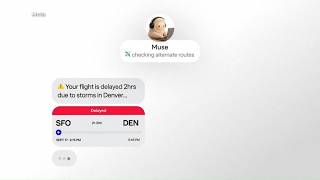
US banks blocking AI agents from accessing customer accounts
TECH

US banks blocking AI agents from accessing customer accounts

35+
Signals

Strategic Overview

  • 01.
    JPMorgan Chase, Bank of America, Citigroup, and Charles Schwab all confirmed within a four-day window (October 13-16, 2026) that they will not let third-party AI agents, such as Meta's Muse, log into customer accounts with credentials or move money.
  • 02.
    Schwab is rolling out read-only Model Context Protocol (MCP) servers for balance-checking and research while explicitly blocking money movement, and is steering clients toward its own assistant, Charley, instead of outside agents.
  • 03.
    Wells Fargo is updating its Online Access Agreement, effective November 24, 2026, to reserve the right to restrict third-party AI tools and to treat agent-submitted requests as if they came directly from the customer.
  • 04.
    A major driver behind the policy wave is deposit-flight risk: Apollo Global Management's chief economist has warned of a possible 'agentic bank run' as AI agents sweep idle cash from low-yield checking accounts into higher-yielding alternatives.

Deep Analysis

The Double Standard: Blocking Outside Agents While Building Their Own

One analyst's framing captures the real logic at work: an outside agent works for the client, while Schwab's in-house assistant Charley works for Schwab[3]. That distinction explains why the same bank drawing a hard line against Meta's Muse is simultaneously building a functionally similar tool for itself - Schwab points clients toward Charley for administrative tasks it still controls[3], while deploying read-only MCP servers that let partner agents view balances but never move money[1]. Community discussion around JPMorgan's announcement noted the same tension from a different angle: the bank that bars Muse from touching customer accounts is reportedly piloting its own internal cash-optimization tool aimed at the identical yield-chasing behavior it won't let outsiders perform. The liability language banks use publicly - Wurster's 'who's liable?'[1], sits awkwardly next to a business logic that keeps the client relationship, the data, and the fee revenue inside the bank's own walls rather than ceding it to Meta or any other outside agent maker.


The $47 Billion Math Behind the Blocking

Beneath the liability language is a balance-sheet problem: roughly $1.6 trillion in non-interest-bearing deposits at JPMorgan, Bank of America, and Wells Fargo is exposed if AI agents automatically sweep idle cash out of checking accounts paying a national average of about 0.1% and into fintech alternatives such as Revolut, SoFi, Varo, or Wealthfront offering 3.3% to 5%[4]. Apollo Global Management's Torsten Slok has framed this as a potential 'agentic bank run,' warning that banks could lose a large share of the cheap deposits they rely on to make loans[4]. If banks had to pay a competitive 3% on that at-risk deposit base, the added cost would run to roughly $47 billion a year - close to half the combined annual earnings of the banks involved[5]. That math, more than any single security incident, is a plausible reason banks moved from quiet caution to public blocking policies within days of each other in mid-October 2026. X.com commentary around Slok's warning echoed the same framing, treating deposit flight as a systemic worry for the sector rather than a niche technical one.

Liability Transfer: Is the Risk the Agent, or the Credential?

JPMorgan CEO Jamie Dimon has been the most explicit about what the bank is actually guarding against: not AI itself, but the liability transfer that happens when a customer hands banking credentials to a third party. 'We're not going to allow just any outside agent to come in inside the company, because it's just too risky for clients and for JPMorgan. You don't want rogue agents, and it could be thousands of them,' Dimon said[2]. Schwab draws the same line around credential-sharing and browser automation specifically, rather than AI access in general - the bank says it already blocks tens to twenties of unauthorized access attempts a week by agents like Muse trying to log in and transact[1]. Bank of America has taken a softer version of the same stance, allowing agent-initiated transactions but insisting a human approve any money movement rather than banning agents outright[5]. The common thread is that none of the banks are rejecting AI as a concept - Schwab, for instance, already runs its own proprietary assistant, Charley, for the tasks it keeps in-house - they are rejecting a model where a client's login credentials, and therefore legal responsibility for what happens next, pass to a company the bank has no authority over.

A Regulatory Vacuum, and a Lockout Bigger Than Banking

Banks are setting these policies without a clear regulatory mandate to do so. Agentic AI remains explicitly outside the scope of the interagency model-risk guidance banking regulators currently rely on[6], and banks say they have briefed Federal Reserve officials on their blocking stance even though no formal rule compels it. That gap matters because generative-AI-related lawsuits in the US grew 978% between 2021 and 2025[6], meaning banks are making unilateral risk calls in a legal environment that is already becoming more litigious. Reddit and YouTube discussion of the story both situated the banking lockout inside a wider pattern: AI agents are reportedly being blocked or restricted not just by banks but by Amazon, Yelp, Delta, Amtrak, and Cars.com, suggesting the agent-versus-platform standoff triggered by Meta's Muse extends well past financial services. One recurring counterpoint in that discussion is that none of this strictly requires large language models at all - a simple deterministic app could already auto-sweep cash to higher-yield accounts, which some read as a sign that the 'AI agent' framing is doing more rhetorical work than technical work in this story.

Historical Context

2026-09-08
Meta launched its Muse personal AI agent app, which rapidly reached 2.5 million US downloads and the top of the Apple App Store within two weeks.
2026-09-23
Meta expanded Muse with a Realtime Avatar model, macOS app control, and its own forwarding email address, deepening its reach into users' financial and digital lives.
2026-09-28
Torsten Slok publicly warned of a potential agentic bank run as AI agents could move cheap deposits into higher-yielding accounts.
2026-10-13
Jamie Dimon confirmed on the bank's Q3 2026 earnings call that JPMorgan blocks third-party AI agents like Muse from accessing customer accounts.
2026-10-14
Bank of America said it restricts agent-initiated money movement without human approval.
2026-10-16
Citigroup and Charles Schwab both confirmed to media that they block third-party AI agents from logging into or transacting on customer accounts.
2026-11-24
Wells Fargo's updated Online Access Agreement takes effect, formally reserving the right to block third-party AI tools and shifting liability for agent-submitted requests to the customer.

Power Map

Key Players
Subject

US banks blocking AI agents from accessing customer accounts

CH

Charles Schwab (CEO Rick Wurster)

Blocks unauthorized AI agent logins and transactions, builds MCP read-only servers for partner LLMs, and launches proprietary assistant Charley to retain control of the client relationship

JP

JPMorgan Chase (CEO Jamie Dimon)

Publicly confirmed on its Q3 2026 earnings call (Oct 13) that it blocks third-party agents like Muse from logging in with customer credentials, citing 'rogue agent' and liability-transfer risk

CI

Citigroup

Issued a formal statement barring third-party AI agents from logging into accounts or transacting on its digital banking platforms, while still permitting data sharing via authorized open-banking providers

BA

Bank of America (CEO Brian Moynihan)

Restricts agent-initiated money movement by requiring human approval, working with AI developers on approval workflows rather than imposing a blanket ban

WE

Wells Fargo

Updating its customer agreement, effective Nov 24, 2026, to reserve the right to block third-party AI tools and to shift responsibility for agent-submitted requests onto the customer

ME

Meta (Muse)

Launched a fast-growing personal AI agent capable of payments and multi-step tasks across a user's digital life, becoming the specific trigger banks cite when describing the behavior they block

AP

Apollo Global Management (Chief Economist Torsten Slok)

Warned of an 'agentic bank run' and a potential $1.6 trillion deposit shift, giving banks' deposit-flight concerns a quantified, widely-cited framing

FE

Federal Reserve / OCC / FDIC

Excluded agentic AI from interagency model-risk guidance, leaving liability rules undefined even as banks say they have briefed regulators on their blocking stance

Fact Check

6 cited
  1. [1] Schwab, JPMorgan Block Unauthorized AI Agents From Taking Action on Customer Accounts
  2. [2] JPMorgan's Dimon Warns AI Agents Could Transfer Liability to Bank Customers
  3. [3] Schwab Blocks Unauthorized AI Agents, Points Clients to Charley
  4. [4] AI Agents Could Drain Cheap Bank Deposits, Apollo's Torsten Slok Warns
  5. [5] Citi and BofA Block AI Agents From Client Accounts Amid Fears of Deposit Outflows
  6. [6] Regulatory Silence on Generative AI Isn't a License for Inaction

Source Articles

Top 4

THE SIGNAL.

Analysts

“Warns customers that handing AI agents their banking credentials creates a liability transfer and risks rogue agents acting against their interest”

Jamie Dimon
CEO, JPMorgan Chase

“Insists on human-in-the-loop approval for any AI-initiated money movement rather than fully blocking agents”

Brian Moynihan
CEO, Bank of America

“Frames outside-agent access as inherently unsafe because no party can be accountable if something goes wrong, distinguishing Schwab's own Charley as working for Schwab, not the client”

Rick Wurster
CEO, Charles Schwab

“Warns that AI agents sweeping idle cash out of low-yield checking en masse amounts to a slow-motion agentic bank run threatening the cheap-deposit base banks rely on for lending”

Torsten Slok
Chief Economist, Apollo Global Management

“Draws the distinction between third-party agents acting for the client and bank-built assistants like Charley acting for the bank, explaining the commercial logic behind pushing proprietary tools”

Tim Welsh
Principal, Nexus Strategies
The Crowd

“LATEST: Citi has become the latest US bank to restrict AI agents from accessing accounts, the Financial Times reports.”

@@Cointelegraph341

“JPMORGAN CEO JAMIE DIMON WARNS OF RISKS FROM AI AGENTS ACCESSING BANK ACCOUNTS. Jamie Dimon warns that giving AI agents access to bank accounts carries serious security and liability risks. He says customers must understand that responsibility for misuse could shift when...”

@@DeItaone824

“Is an Agentic Bank Run Coming? AI assistants are about to auto-sweep cash from 0.1% checking accounts into 5% yields. If everyone adopts them, banks lose their cheap deposit base... risking a systemic crunch. Torsten at Apollo .. I use $BOXX”

@@MikeZaccardi246

“Websites are closing their doors to AI agents”

@u/ksjdragon846
Broadcast
Why Are Amazon and Major Banks Blocking AI Agents?

Why Are Amazon and Major Banks Blocking AI Agents?

How AI Agents Could Threaten Bank Profits

How AI Agents Could Threaten Bank Profits

Experts warning against AI agents as Meta introduces Muse software

Experts warning against AI agents as Meta introduces Muse software