The Silence Before 16,000 Pull Requests
OpenClaw broke its own rhythm to build this release. The project had shipped 106 versions in 230 days before quietly going dark for close to seven weeks - an eternity by its standards - because, in its own words, the growing codebase needed a stronger technical foundation and a safer upgrade path [1]. What came out the other side is the largest release in OpenClaw's history: more than 16,000 merged pull requests from 933 contributors, including 569 people submitting a PR for the first time, together accounting for roughly half of every pull request ever merged into the project [2].
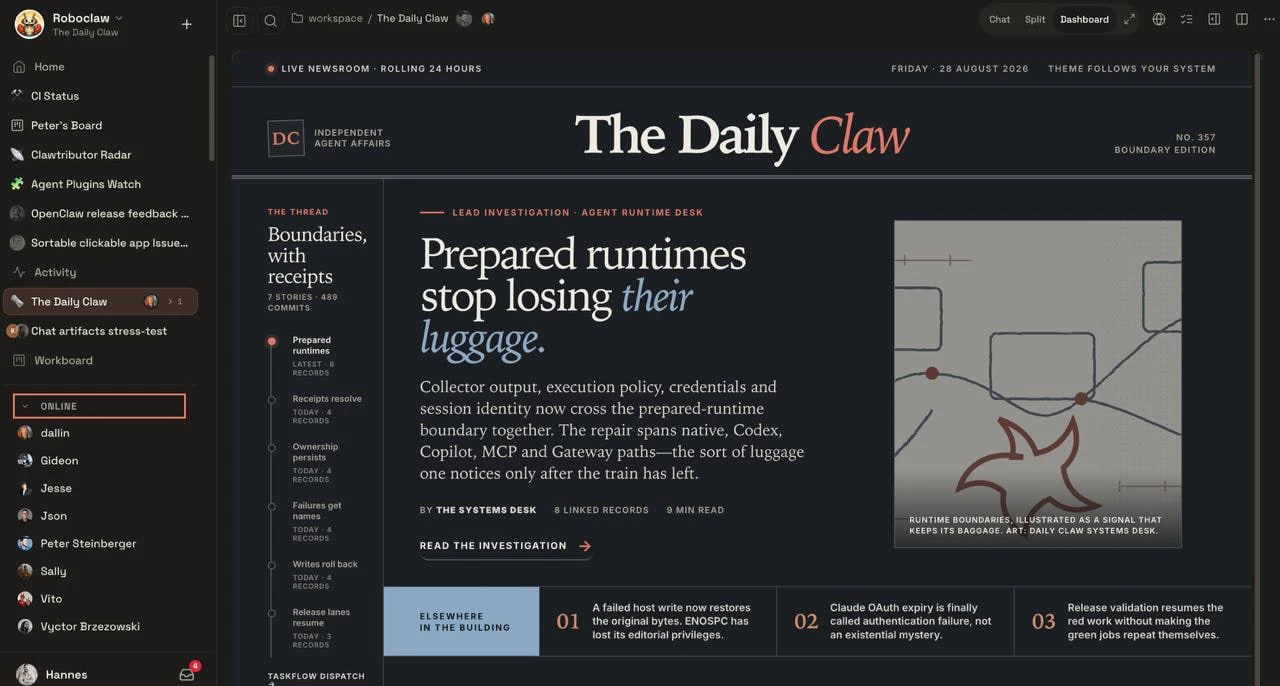
The most visible payoff is speed, not features. The browser-based Control UI was rebuilt around a chat-first layout that tucks sessions into a sidebar next to files, approvals, terminals, and git diffs, cutting JavaScript requests from 140 to 45 and shrinking startup time from about 1.6 seconds to 575 milliseconds [3]. Installation got a parallel simplification: a guided setup now scans the machine for AI access a user already has - verified Codex, ChatGPT, or Claude CLI logins, existing API keys, or locally installed Ollama and LM Studio models - so most configuration never has to happen on first run [3]. Paired with a genuine architecture change underneath, moving session and transcript storage from flat JSONL files into SQLite [1], this reads less like a feature drop and more like the rebuild a fast-growing open-source project eventually has to do to keep scaling.