NVIDIA Vera Rubin's Agentic AI Infrastructure Rollout
TECH

NVIDIA Vera Rubin's Agentic AI Infrastructure Rollout

40+
Signals

Strategic Overview

  • 01.
    NVIDIA's Vera Rubin platform is ramping into full production to power agentic AI factories, with NVIDIA citing 10x agent throughput at scale compared with the previous-generation Grace Blackwell platform.
  • 02.
    Groq 3 LPX, a dedicated low-latency inference accelerator built from Groq's acquired technology, has entered full production and is being paired with Vera Rubin, with Nebius as the first cloud provider to deploy it in its Token Factory inference service.
  • 03.
    SpaceXAI is deploying standalone NVIDIA Vera CPUs to power Grok's agentic workloads and, together with NVIDIA, plans to launch a space-optimized Vera Rubin NVL72 rack into orbit aboard the first-generation Starmind satellite.
  • 04.
    NVIDIA acquired Groq's key inference-chip assets for approximately $20 billion in cash in December 2025, structured as an asset purchase and acquihire rather than a full corporate acquisition, making it NVIDIA's largest deal on record.

Deep Analysis

The 10x Number Nobody Can Fully Verify

NVIDIA's central pitch for Vera Rubin is a single multiple: 10x agent throughput at scale versus the previous-generation Grace Blackwell platform[1], extending to a projected 35x higher inference throughput per megawatt for trillion-plus-parameter models running long-context, low-latency workloads once Groq 3 LPX is paired with Vera Rubin NVL72[2]. NVIDIA is positioning Vera Rubin as an answer to the defining bottleneck of the next AI build-out cycle, energy and latency per token, with the platform positioned to unlock an estimated $200 billion addressable market[3].

The catch is that the number is not really an apples-to-apples silicon comparison, and the online reaction has split into two camps. On Reddit, the top comment in the r/nvidia thread on the announcement dismisses NVIDIA's figure as a 'fluff piece,' arguing the headline gain does not reflect a uniform leap in the underlying silicon and attributing a meaningful share of it to 'a dedicated LPU that's now onboard, developed by the collaboration between Groq and Nvidia,' bolted onto the rack rather than built into the Rubin GPU die itself. That reading lines up with how the comparison is actually built: the 10x figure sets an entire heterogeneous rack, Rubin GPUs plus a newly acquired specialist inference chip bought for roughly $20 billion in NVIDIA's largest deal on record[4], against last generation's GPU-only system, which is a different exercise than a straight process-node comparison.

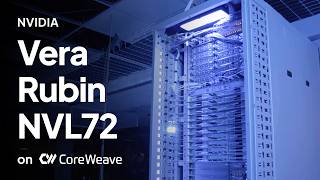
But the skepticism is not the whole picture. CoreWeave, an independent cloud operator running Vera Rubin NVL72 in production, has cited what it describes as its own first measured result, not a projection: roughly a 10x improvement in tokens-per-second-per-megawatt on DeepSeek-R1 compared with the prior Blackwell generation. That is a materially different kind of evidence than NVIDIA's own marketing claim, a real deployment reporting a real number, and it sits in direct tension with the Reddit thread's 'fluff' verdict. Whether the truth lands closer to the vendor's framing or the community's discount likely will not be settled until more operators, beyond NVIDIA's own launch partners, publish their own measured numbers.

Why the CPU, Not the GPU, Is the Real Story for Agents

The most counterintuitive detail in this rollout is that SpaceXAI's headline deployment for Grok is not Rubin GPUs at all, it is standalone Vera CPUs[5]. Vera packs 88 custom Olympus (Armv9.2-compatible) cores, 176 threads, 164MB of unified L3 cache, and up to 1.2 TB/s of LPDDR5X memory bandwidth, which NVIDIA pitches as up to 50% higher IPC than the outgoing Grace chip[6]. SpaceXAI president Mike Nicolls explained the logic directly: "Vera gives us the CPU performance and memory bandwidth to run enormous amounts of orchestration, code and data processing while keeping GPUs doing what they do best."[5]NVIDIA's own VP, Ian Buck, frames it the same way from the vendor side: "Vera gives AI agents the CPU performance to act in real time, executing code, processing data and coordinating complex tasks."[5]

The framing matters because it reveals what NVIDIA now believes the actual bottleneck in agentic AI is. Jensen Huang describes a single agent prompt as triggering "a thousand-step journey of reasoning, retrieval, tool use and response generation"[1], and the overwhelming majority of those thousand steps are control-flow and orchestration work, the kind of latency-sensitive, branch-heavy computation GPUs handle poorly and CPUs are purpose-built for. By decoupling Vera CPUs from Rubin GPUs and selling them as a standalone orchestration layer, NVIDIA is effectively arguing that scaling agentic AI requires buying more CPU capacity, not simply more GPU capacity, a meaningful break from the GPU-centric spending narrative that has defined AI infrastructure since the generative-AI boom began.

NVIDIA's own technical materials make the same division of labor explicit at the hardware level. Groq 3 LPX packs 256 Groq LPUs across 16 trays and roughly 40 petabytes per second of SRAM bandwidth, purpose-built for ultra-low latency, while Vera Rubin NVL72 is tuned for raw throughput: NVIDIA describes the pairing as 'NVL72 generates tokens at the highest throughput, Groq LPX generates them at the lowest latency,' with the two engines meant to run side by side rather than compete for the same workload. At Hot Chips 2026, NVIDIA framed the full lineup, Vera CPU, Rubin GPU, Groq 3 LPX, Spectrum-X Multiplane networking and BlueField-4 scale-in fabric, as one integrated AI stack rather than a set of separate chips, reinforcing that orchestration and networking, not any single chip, are what NVIDIA is actually selling. Microsoft has already stood up the first operational Vera Rubin NVL72 deployment, with NVIDIA citing fully automated manufacturing, compute trays assembled in about a minute, as evidence the platform is shipping at real volume rather than staying in pilot mode.

A $20 Billion Deal Built to Dodge Antitrust Review

NVIDIA's acquisition of Groq is not, technically, an acquisition. "NVIDIA is not acquiring Groq as a company, but rather structuring it as an asset purchase,"[4]paying roughly $20 billion in cash for the startup's key inference-chip assets, its largest deal on record, surpassing the roughly $7 billion Mellanox acquisition in 2019[4]. Jensen Huang has confirmed the intent is to fold Groq's low-latency processors directly into NVIDIA's AI factory architecture: "We plan to integrate Groq's low-latency processors into the NVIDIA AI factory architecture."[7]The result, branded Groq 3 LPX, is now the low-latency half of a dual-engine inference architecture running alongside Vera Rubin NVL72.

That asset-purchase-plus-acquihire structure, leaving Groq's legal entity behind while NVIDIA absorbs the technology, is precisely what drew scrutiny from Washington. US Senators Elizabeth Warren and Richard Blumenthal publicly questioned whether the deal was designed to evade antitrust review, citing NVIDIA's roughly 90% share of the GPU market: "By further consolidating NVIDIA's control over the AI chip industry, the Groq deal limits consumer choice and innovation, which will ultimately raise prices and threaten domestic firms' ability to compete with China."[8]The tension is structural, not incidental: the same acquihire mechanics that let NVIDIA move fast and integrate Groq's technology into a shipping product within months are the mechanics regulators view as a way to sidestep the merger review a full corporate acquisition would trigger.

From Data Center to Orbit, on a Timeline Nobody Will Officially Confirm

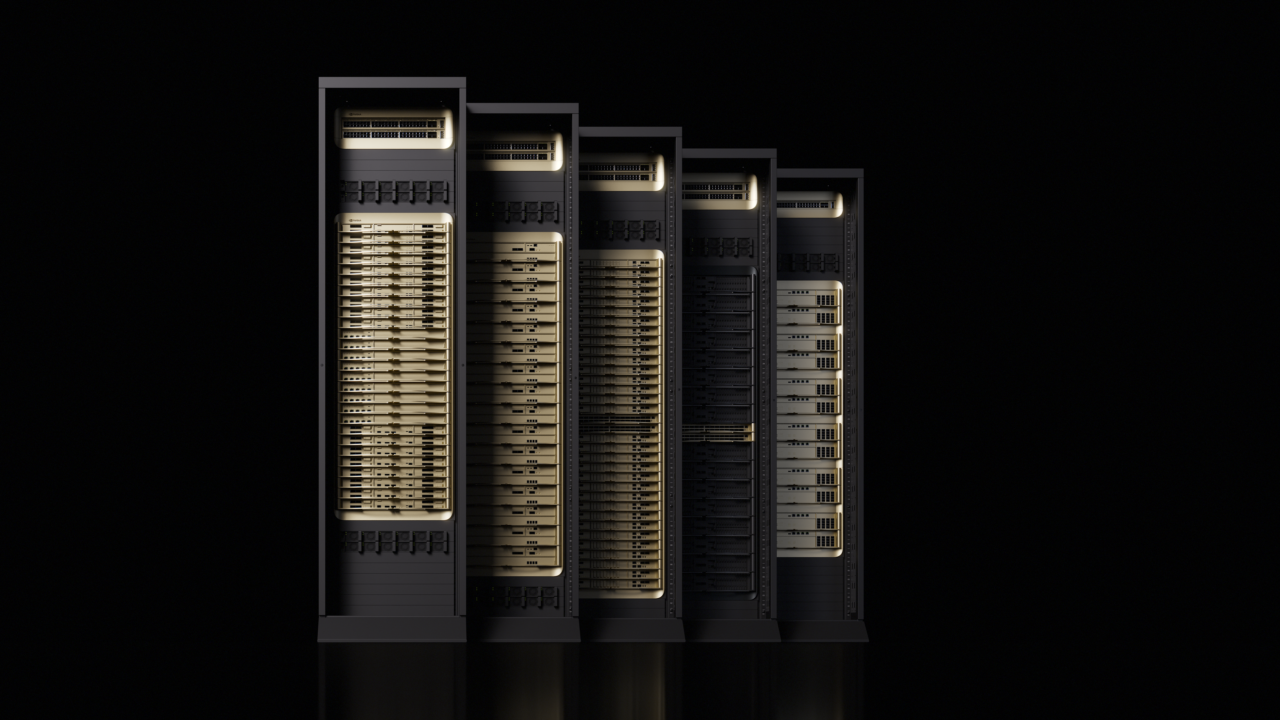
Beyond terrestrial clouds, NVIDIA and SpaceXAI have committed to something more unusual: launching a space-optimized Vera Rubin NVL72, ordinarily a 72-Rubin-GPU, 36-Vera-CPU, fully liquid-cooled rack[5], into orbit aboard SpaceX's first-generation Starmind satellite. Reported coverage citing Elon Musk puts the first modified unit in orbit in the fourth quarter of 2027, with a much larger rollout planned for 2028[9]. But that timeline is notably absent from NVIDIA and SpaceXAI's own announcement materials, which gave no official launch date, timeline, or capacity figure for the orbital deployment[5], meaning the most concrete date attached to this plan currently traces back to a public statement rather than a company commitment.

The gap matters because the engineering lift is substantial: a rack designed to run in a climate-controlled data center with facility water loops has to be reworked for radiation exposure, heat rejection via radiators instead of liquid-cooling infrastructure, and launch vibration tolerance[9]. It also arrives against a backdrop of real execution risk on the ground: NVIDIA's next-generation server rack system reportedly hit manufacturing delays tied to a specialized connector circuit board, even as Huang maintained Vera Rubin production volumes were on track to be 'giant'[10]. Set against that, India's AM Intelligence placing an order for 9,000 Vera Rubin systems for delivery next year[11]shows the terrestrial rollout is real and large regardless of how the orbital bet plays out, but it also underscores how much manufacturing bandwidth NVIDIA is already committing before an orbital variant has a confirmed launch date.

Historical Context

2025-12-24
NVIDIA agreed to acquire Groq's key assets for about $20 billion in cash, its largest deal on record, structured as a licensing-and-acquihire agreement rather than a full corporate acquisition.
2026-05-31
NVIDIA announced Vera Rubin ramping into full production at GTC Taipei, with Jensen Huang declaring 'useful AI has arrived.'
2026-07-15
Reports surfaced of manufacturing delays on NVIDIA's next-generation AI server rack system tied to a specialized circuit board, even as Jensen Huang maintained Vera Rubin was on pace for 'giant' production volumes.
2026-08-24
NVIDIA announced Groq 3 LPX entering full production, Nebius as the first cloud adopter in its Token Factory, and SpaceXAI's adoption of Vera CPUs for Grok plus the Starmind orbital satellite plan.
2026-08-25
Indian AI infrastructure firm AM Intelligence ordered 9,000 NVIDIA Vera Rubin systems, slated to come online next year in southern India.

Power Map

Key Players
Subject

NVIDIA Vera Rubin's Agentic AI Infrastructure Rollout

NV

NVIDIA

Platform owner driving Vera Rubin (Vera CPU plus Rubin GPU) into full production, and acquirer of Groq's inference-chip assets for roughly $20 billion, integrating Groq 3 LPX into the Vera Rubin stack for agentic inference.

NE

Nebius

First AI cloud provider to adopt NVIDIA Groq 3 LPX in its production Token Factory inference platform alongside Vera Rubin NVL72.

SP

SpaceXAI

Deploying standalone NVIDIA Vera CPUs to power Grok's agentic workloads and partnering with NVIDIA to send a space-optimized Vera Rubin NVL72 into orbit aboard the Starmind satellite.

GR

Groq

AI inference-chip startup whose key inference-chip assets were absorbed into NVIDIA via a roughly $20 billion licensing-and-acquihire deal; its LPU technology forms the basis of Groq 3 LPX.

US

US Senators Elizabeth Warren and Richard Blumenthal

Publicly questioned whether NVIDIA's Groq deal structure was designed to evade antitrust review, citing NVIDIA's roughly 90% GPU market share, applying regulatory pressure that could shape how future NVIDIA acquisitions are structured.

Fact Check

11 cited
  1. [1] NVIDIA Vera Rubin Full Production Agentic AI Factory
  2. [2] NVIDIA Groq 3 LPX Boosts Nebius Token Factory
  3. [3] Jensen Huang Declares the Age of Agents at GTC Taipei
  4. [4] Nvidia Buying AI Chip Startup Groq's Assets for About $20 Billion
  5. [5] SpaceXAI Adopts NVIDIA Vera CPUs for Grok With a Vera Rubin NVL72 Bound for Orbit in Starmind
  6. [6] NVIDIA Details Vera CPU With 88 Olympus Cores, 176 Threads and 1.2 TB/s LPDDR5X Memory
  7. [7] NVIDIA's $20 Billion Groq Acquisition Just Paid Off
  8. [8] Warren, Blumenthal Question Whether NVIDIA's $20 Billion Groq Deal Is Attempt to Avoid Antitrust Laws
  9. [9] SpaceXAI Sends NVIDIA's Vera Rubin Into Space
  10. [10] Nvidia's Huang Declares Vera Rubin on Track Despite Delay Talk
  11. [11] India AI Data Center Firm Orders 9,000 NVIDIA Vera Rubin Systems

Source Articles

Top 5

THE SIGNAL.

Analysts

Declared that agentic AI represents a fundamentally new workload class and that Vera Rubin's production ramp marks the arrival of 'useful AI'; separately affirmed the Groq acquisition's rationale of folding low-latency inference directly into NVIDIA's AI factory architecture.

Jensen Huang
CEO, NVIDIA

Explains that NVIDIA's Vera CPU offloads orchestration, code execution and data processing from Grok's GPUs, letting GPUs stay focused on model computation.

Mike Nicolls
President, SpaceXAI

Frames the Vera CPU as purpose-built to let AI agents act in real time by handling code execution, data processing and task coordination.

Ian Buck
VP/GM, NVIDIA

Argue the Groq deal's asset-purchase-plus-acquihire structure is designed to dodge antitrust scrutiny, warning it entrenches NVIDIA's dominance and could raise prices while weakening US competitiveness against China.

Elizabeth Warren and Richard Blumenthal
US Senators
The Crowd

10x more tokens per megawatt. CoreWeave has the first measured performance of NVIDIA Vera Rubin NVL72, showing 10x improvement in tokens per second per megawatt on DeepSeek-R1 compared to Blackwell.

@@nvidia4282

NVIDIA Vera Rubin NVL72 production racks are here. The compute tray is engineered for fast compute, assembly, and serviceability. Manufacturing is 100% automated, and every tray goes together in one minute. Congratulations to @Microsoft on the first operational Vera Rubin NVL72

@@nvidia2552

From the show floor to the AI factory: Hot Chips 2026 was all about extreme co-design to accelerate agentic workloads — the most complex workload in history. Vera CPU, Vera Rubin, Groq 3 LPX, Spectrum-X Multiplane, BlueField-4 Scale-In networking. One full AI stack platform

@@nvidia440

OpenAI's new chip is better than Vera rubin on benchmark

@u/Wonderful_Buffalo_32179
Broadcast
Deconstructing Nvidia's Vera Rubin — The Successor To Blackwell That's 10x More Efficient

Deconstructing Nvidia's Vera Rubin — The Successor To Blackwell That's 10x More Efficient

NVIDIA Vera Rubin Platform Ramping into Full Production | Built for the Era of Agents

NVIDIA Vera Rubin Platform Ramping into Full Production | Built for the Era of Agents

NVIDIA Vera Rubin NVL72 on CoreWeave Cloud: Built for Agentic AI

NVIDIA Vera Rubin NVL72 on CoreWeave Cloud: Built for Agentic AI