The Digital Forensics Behind an Anonymous Model
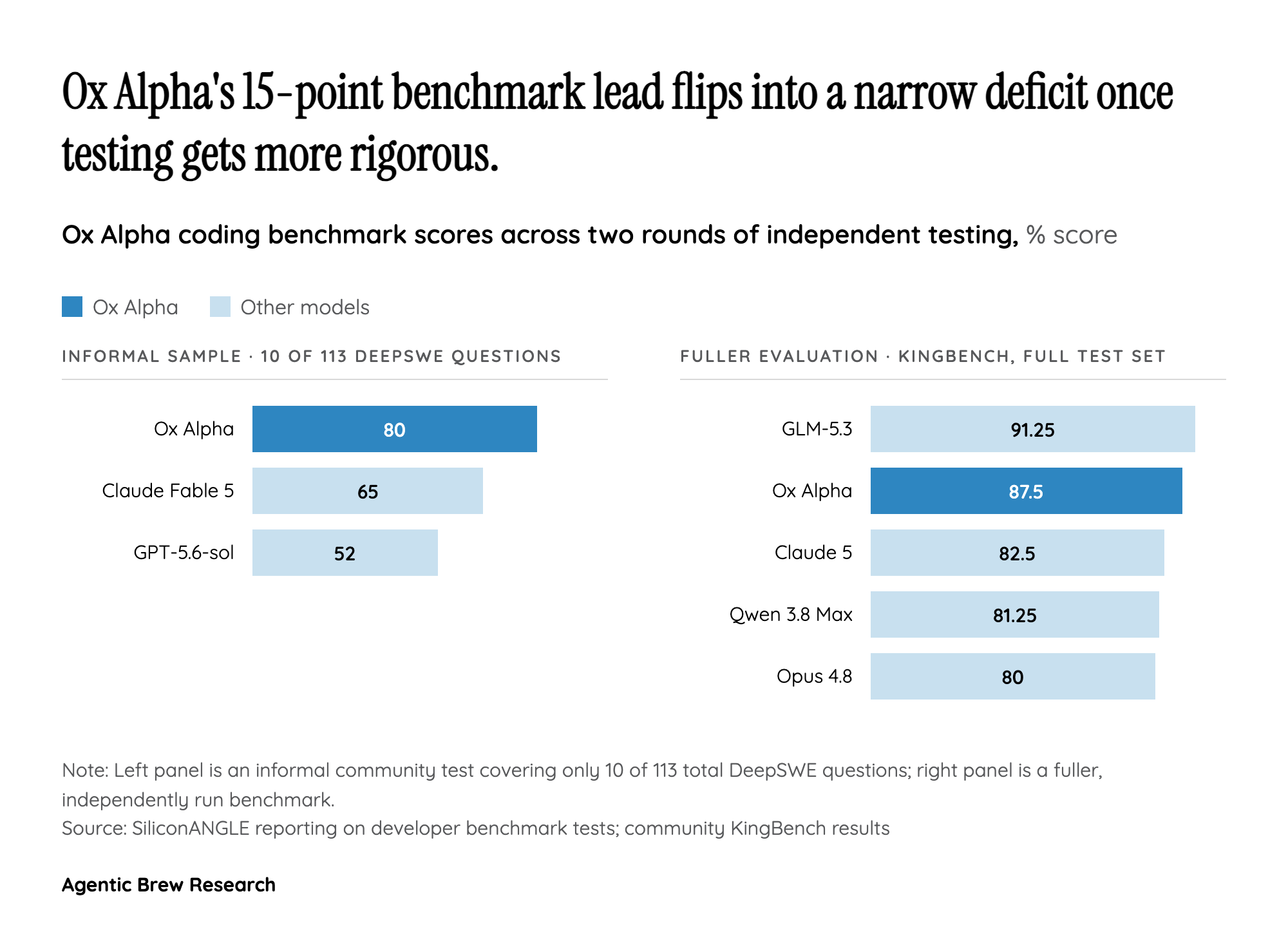
With no lab willing to put its name on Ox Alpha, developers have turned to a form of AI archaeology: infrastructure fingerprinting. Rather than asking the model who built it, researchers compare its measurable behavior - how many tokens its tokenizer produces for a fixed set of prompts, how it counts frames when processing video, how it handles unusual input types - against known models with public specs. Independent researcher unclecode ran this kind of probe against Ox Alpha and found it matched GLM-5.3, Z.ai's model family, on six of nine tests, including all of the tokenizer counts checked [2]. That is a meaningfully high hit rate, but unclecode was explicit that it is circumstantial: matching fingerprints prove shared infrastructure, not identity [2].
That caveat proved prescient. Within a day of the initial GLM consensus forming, AI analyst Andrew Curran observed that conviction had already softened as new, conflicting fingerprints surfaced [3]. A competing theory pointed instead toward Microsoft's Phi/MAI model lineage based on a different reading of tokenization behavior, though that theory remains contested and unconfirmed [5]. The episode is a useful case study in the limits of black-box forensics: without access to a model's weights or training data, the AI community can build a probabilistic case, but not a definitive one - and the case can shift within 24 hours as more people run their own tests.