Banks block AI agents from customer accounts
TECH

Banks block AI agents from customer accounts

46+
Signals

Strategic Overview

  • 01.
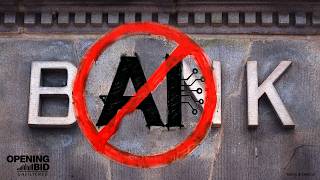
    JPMorgan Chase is blocking outside AI agents, including Meta's Muse and Instinct, from directly accessing customer accounts.
  • 02.
    Citigroup will not permit third-party AI agents to log into a customer's account or transact directly through its digital banking platforms.
  • 03.
    Bank of America requires a human to remain in the loop before any AI-initiated transfer of money out of an account.
  • 04.
    Charles Schwab CEO Rick Wurster confirmed the firm is actively blocking unauthorized AI agents such as Meta's Muse from executing transactions on behalf of clients, while receiving weekly reports on blocked attempts.
  • 05.
    Schwab is blocking roughly ten to twenty attempts per week by major AI agents trying to access and manipulate client funds.
  • 06.
    Schwab plans to let clients connect their own LLMs to Schwab's Model Context Protocol (MCP) servers for controlled, read-only access rather than full credential-based access.
  • 07.
    Wells Fargo updated its Online Access Agreement, effective November 24, 2026, to state that requests made through third-party AI tools may be treated as if they came directly from the customer, shifting liability onto the account holder rather than outright blocking agent access.
  • 08.
    Meta launched its Muse AI agent in September 2026, which links to over 12,000 financial institutions through Plaid and can read a user's financial data but does not yet move money between accounts.
  • 09.
    JPMorgan CEO Jamie Dimon said customers who authorize outside AI agents to access accounts take on a liability transfer, because the agent effectively holds the customer's bank credentials.

Deep Analysis

The Line Banks Are Drawing: Read-Only Access vs. Full Credential Control

Across JPMorgan Chase, Citigroup, Bank of America and Charles Schwab, the policy converges on one distinction: an AI agent may look at an account, but it may not move money out of it on its own [2]. Schwab CEO Rick Wurster frames the problem as a loss of control that happens the moment a customer hands bank login credentials to an unauthorized agent like Meta's Muse: "We can't control it, the client can't control it, something could go wrong and who's liable?" [1]Schwab's answer is to build its own channel instead - letting clients connect their own LLMs to Schwab-run Model Context Protocol (MCP) servers, where the bank controls authentication and limits access to balances and research, with no ability to move funds [1]. That controlled-access model already has a working precedent: Grasshopper Bank, partnering with Narmi, launched the first MCP server operated by a US bank in August 2025 and later became the first bank listed in Anthropic's MCP Directory [3][4], showing that bank-gated, permissioned AI access is technically live - just not the credential-sharing kind Meta's Muse was attempting. The emerging shape of 'safe' agentic banking, then, looks less like a personal assistant with your password and more like a scoped, bank-issued API key that a customer's AI can read from but not spend from.


Why Now: A $1.6 Trillion Deposit Base and a Yield Gap Banks Can't Ignore

The timing lines up with Meta's launch of Muse in September 2026, an agent that connects to more than 12,000 financial institutions via Plaid and can already read a user's full financial picture without yet moving money [12]. Apollo Global Management's chief economist Torsten Slok has warned that if AI agents are used broadly to chase yield, banks could lose a large share of the cheap deposits they rely on for lending [5]- a risk reporting pegs at roughly $1.6 trillion in non-interest-bearing deposits sitting at JPMorgan, Bank of America and Wells Fargo alone [2]. The incentive for households is stark: traditional checking accounts pay around 0.1% interest versus 3.3%-5.0% on some fintech cash platforms [6]. Not everyone buys the bank-run framing, though - former Morgan Stanley executive Jeff McMillan and M&T Bank's Rhea Rajwani both call a near-term, AI-triggered bank run unlikely, even as they agree AI will make deposit movements faster and more coordinated [7], while PSECU's Erin Hennessy takes the opposite view, calling a large-scale AI-driven deposit shift 'absolutely coming' [7].

Liability Is the Real Fault Line, and Banks Are Splitting on the Answer

Underneath the security rhetoric, the dispute banks keep coming back to is who is responsible when an agent gets it wrong. JPMorgan, Citigroup and Schwab have chosen to simply block credential-based third-party access rather than resolve that question case by case [1][8]. Wells Fargo has taken a different route: instead of blocking agents outright, it updated its Online Access Agreement, effective November 24, 2026, to state that requests made through third-party AI tools may be treated as if they came directly from the customer [8]- shifting the liability onto the account holder rather than the bank. JPMorgan CEO Jamie Dimon has been the most explicit about what that liability transfer actually means for a customer: handing an outside agent your credentials means 'they are in your bank and you're assuming they're going to act properly on your behalf and they may not' [9][10].

The Security and Regulatory Case Beyond Deposit Flight

Dimon's objection isn't only financial - it's operational. He has warned against 'rogue agents' operating with live banking credentials outside the bank's view, noting there could eventually be 'thousands of them' acting on behalf of different customers at once [10]. That concern is now being echoed by supervisors: a Reuters report citing six people familiar with the matter found that US banking regulators are actively questioning banks about their AI model safeguards, how agent decisions get monitored and approved, whether a human stays in the loop, and whether a kill-switch exists to shut an agent down [11]. The parallel timing - banks announcing blocks in the same window regulators are asking these questions - suggests the industry is positioning itself ahead of rules that haven't been written yet rather than reacting to a single incident.

Historical Context

2026-09
Meta launched its Muse AI financial agent, which connects to over 12,000 institutions via Plaid and can read account data but not yet move money, triggering the industry's defensive response.
2026-09-27
Chief Economist Torsten Slok published a note warning AI agents could accelerate deposit flight comparable to prior bank runs, framing it as a potential 'agentic bank run.'
2026-10-13
CEO Jamie Dimon said JPMorgan is blocking outside AI agents like Meta's Muse and Instinct from accessing customer accounts, citing 'rogue agent' risk.
2026-10-16
Both banks confirmed restrictions on AI agent access to customer accounts, citing deposit flight and liability risk, in statements reported the same week as Schwab's and JPMorgan's announcements.
2026-10-16
CEO Rick Wurster confirmed on Bloomberg TV that Schwab is blocking unauthorized AI agents like Meta Muse from executing transactions, citing weekly reports of 'tens and twenties' of blocked attempts.
2025-08
Grasshopper Bank, partnering with Narmi, launched the first MCP server by a US bank, letting business clients access account data via Claude/ChatGPT in a controlled, permissioned way - an early example of the 'controlled alternative' banks are now citing.
2023-03-09
Referenced historically as the fastest bank run in U.S. history, with customers withdrawing $42 billion in a single day - the benchmark Apollo's Slok uses when warning about AI-agent-accelerated deposit flight.

Power Map

Key Players
Subject

Banks block AI agents from customer accounts

JP

JPMorgan Chase / Jamie Dimon (CEO)

Largest US bank by assets; blocking outside AI agents like Meta's Muse and Instinct from accessing customer accounts, citing 'rogue agent' risk and liability transfer to customers who hand over credentials.

CI

Citigroup

Stated it will not permit third-party AI agents to log in or transact directly on customer accounts.

BA

Bank of America / Brian Moynihan (CEO)

Restricting AI agent access to deposits until the bank establishes a process for determining liability on AI-approved payments; requires human-in-the-loop approval before funds move.

CH

Charles Schwab / Rick Wurster (CEO)

Actively blocking unauthorized third-party AI agents (e.g., Meta Muse) weekly, while building MCP-server-based controlled access for client-connected LLMs (read-only balances/research, no money movement).

ME

Meta (Muse agent)

Launched Muse in September 2026 as a financial AI agent connected via Plaid to 12,000+ institutions; currently read-only (no fund transfers), but is the specific product named by banks as the trigger for new restrictions.

WE

Wells Fargo

Updated its Online Access Agreement (effective Nov 24, 2026) to shift liability to customers for actions taken via third-party AI tools, rather than outright blocking, as its approach to the same risk.

TO

Torsten Slok, Chief Economist, Apollo Global Management

Published a note warning that widespread AI-agent-driven cash optimization could trigger an 'agentic bank run' by draining cheap deposits banks rely on for lending.

M&

M&T Bank / Rhea Rajwani

Said the bank is monitoring the impact of AI agents on deposits; views bank runs as unlikely near-term but expects AI to make deposit movements faster and more coordinated.

US

US banking regulators

Per a Reuters report citing six people familiar with the matter, regulators are questioning banks about AI model safeguards, agent decision monitoring/approval, human involvement, and kill-switch capability.

Fact Check

12 cited
  1. [1] Schwab Blocks Third-Party AI Agents From Moving Client Funds
  2. [2] JPMorgan Blocks Outside AI Agents From Account Access
  3. [3] Inside Grasshopper Bank's First-of-Its-Kind Natural Language Banking Experience
  4. [4] Grasshopper Becomes First Bank Listed in Anthropic's MCP Directory
  5. [5] AI Agents Threaten US Bank Deposits
  6. [6] Apollo's Chief Economist Warns AI Agents Like Meta's Muse Could Trigger the Next Bank Run
  7. [7] AI Agent Bank Runs Possible But Unlikely, Experts Say
  8. [8] US Banks Block AI Agents
  9. [9] Jamie Dimon on AI Agents, Meta's Muse and JPMorgan
  10. [10] Jamie Dimon Warns Against AI Bank Payments
  11. [11] US Banks Block AI Agents Attempting to Move Money for Customers
  12. [12] M&T Says It's Monitoring Impact of AI Agents on Deposits

Source Articles

Top 5

THE SIGNAL.

Analysts

“Argues that handing banking credentials to an unauthorized agent like Muse removes control from both the bank and the client, creating an unresolved liability question; favors a controlled MCP-based channel instead.”

Rick Wurster
CEO, Charles Schwab

“Warns that autonomous 'rogue agents' acting with banking credentials may not act in a customer's best interest, and that there could be thousands of such agents operating at once.”

Jamie Dimon
CEO, JPMorgan Chase

“Warns that if AI agents are used broadly by households to chase higher yields, banks could lose a large share of the cheap deposits they depend on for lending, posing a systemic risk he frames as a potential 'agentic bank run.'”

Torsten Slok
Chief Economist, Apollo Global Management

“Considers an AI-agent-triggered bank run theoretically possible but unlikely in the near term.”

Jeff McMillan
Founder, McMillan AI (former Morgan Stanley executive)

“Says AI agents are unlikely to cause bank runs on their own near-term, but could make deposit movements faster, more coordinated, and more automated.”

Rhea Rajwani
M&T Bank

“Believes a large-scale AI-driven shift of deposits is coming and is not far-fetched, contrasting with more skeptical peers.”

Erin Hennessy
PSECU
The Crowd

“JPMORGAN CEO JAMIE DIMON WARNS OF RISKS FROM AI AGENTS ACCESSING BANK ACCOUNTS Jamie Dimon warns that giving AI agents access to bank accounts carries serious security and liability risks. He says customers must understand that responsibility for misuse could shift when”

@@DeItaone826

“JPMorgan Chase blocks outside AI agents like Muse, Instinct from directly accessing accounts https://t.co/k4bPHfGxpx”

@@CNBC93

“JPMorgan already blocks outside AI agents like Meta's Muse from customer accounts. Jamie Dimon said so on yesterday's earnings call. This was inevitable. Let the agent wars begin! --- The block covers any third party logging into a Chase account with the customer's”

@@sytaylor42

“Personal AI agents like Meta Muse belong in the trash”

@u/kekllkek320
Broadcast
Regulators step up fight against AI risks to banks

Regulators step up fight against AI risks to banks

How AI Agents Could Threaten Bank Profits

How AI Agents Could Threaten Bank Profits

AI Agents Can't Use Banks. So What?

AI Agents Can't Use Banks. So What?