The cash-flow math behind a record buyback
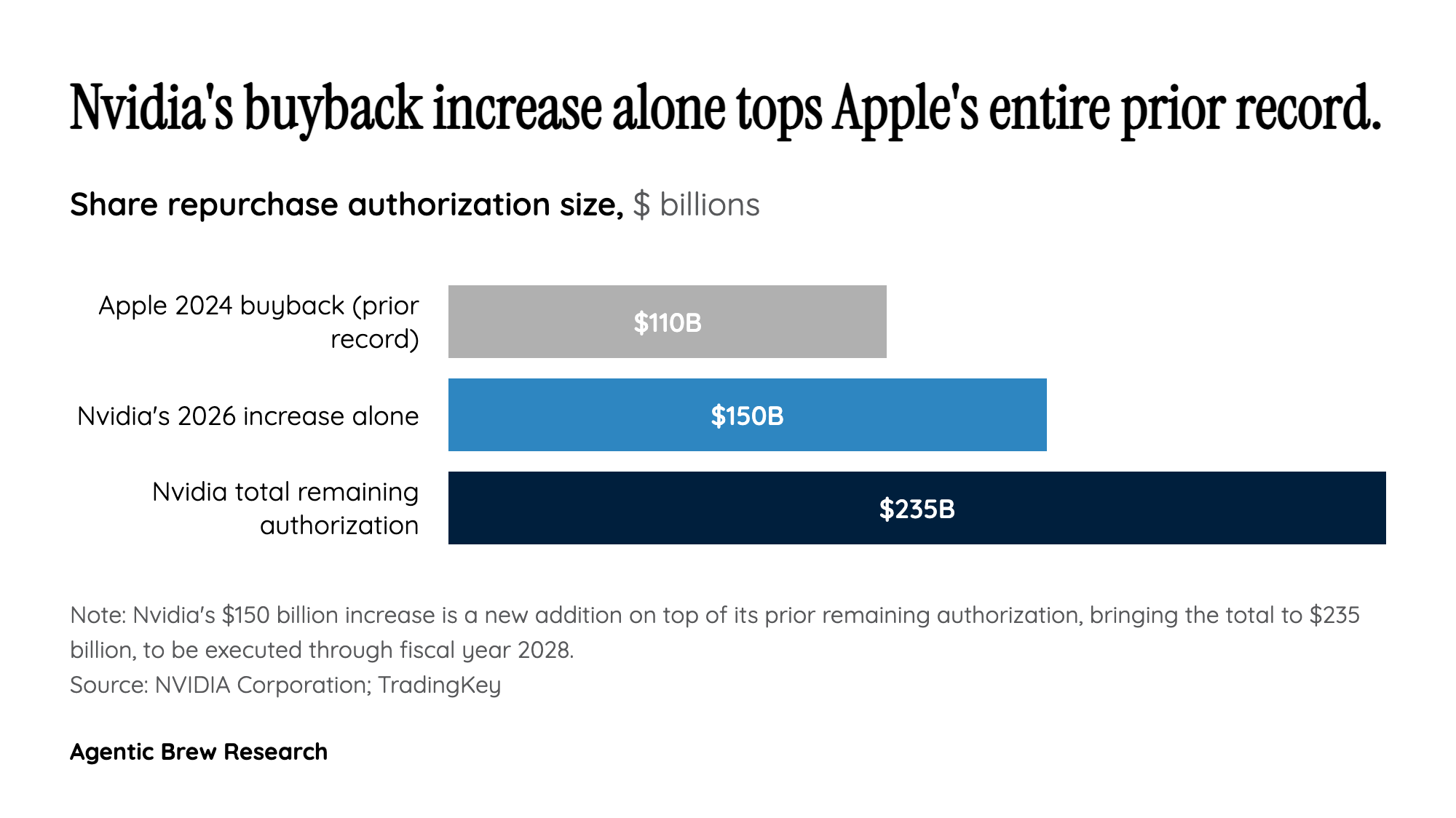
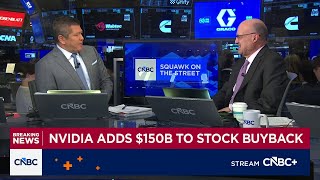
Nvidia's board authorized an additional $150 billion for share repurchases, which the company itself calls the largest single share repurchase authorization increase in history [1]. That takes total remaining buyback capacity to $235 billion, a sum management expects to work through by fiscal year 2028 [1]. It isn't a one-off flourish: Nvidia added $50 billion to the program in August 2024 and another $60 billion in August 2025, so this increase continues a pattern of topping up the authorization roughly once a year as cash keeps piling up.
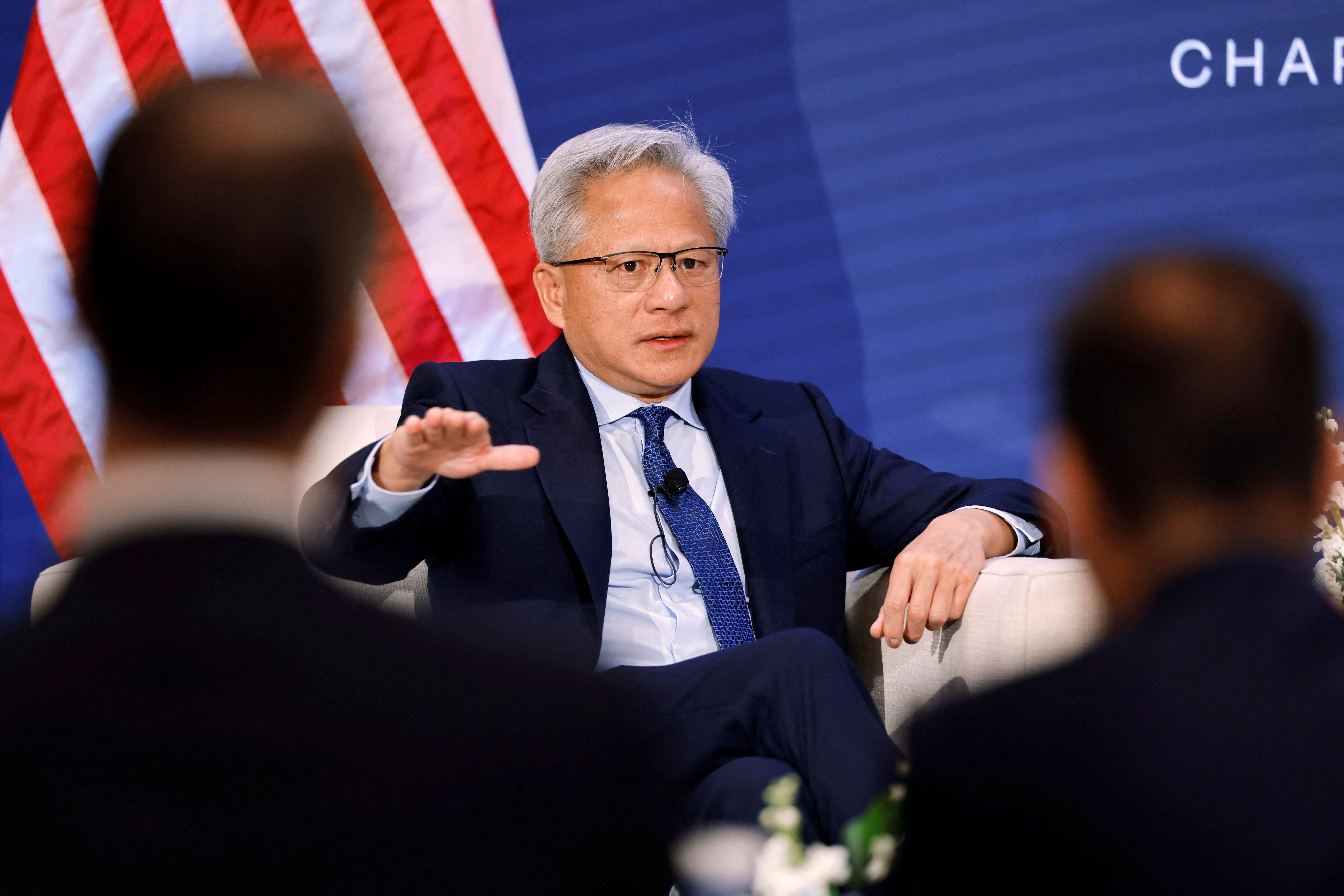
The scale only makes sense next to Nvidia's underlying financials. Quarterly revenue hit $96.22 billion, up 105.8% year over year, while free cash flow reached $21.34 billion for the quarter, up 58.43% year over year [2]. In the same quarter Nvidia already returned $26 billion to shareholders through $20 billion of buybacks and $6 billion of dividends [2]. It also signaled plans to raise its quarterly dividend beyond the current 25 cents per share, though it hasn't said by how much or when [3]. As D.A. Davidson's Gil Luria put it, Nvidia generates so much cash that even after funding its AI infrastructure buildout, "he still has a lot of cash left over" [4]. SEC filings show the mechanism scaling over time: Nvidia repurchased 310 million shares for $34.0 billion in fiscal 2025 alone, more than triple the $9.7 billion spent the year before [5], underscoring how fast the pace of buybacks has grown alongside AI-driven revenue.