Unitree Robotics IPO on Shanghai STAR Market
TECH

Unitree Robotics IPO on Shanghai STAR Market

32+
Signals

Strategic Overview

  • 01.
    Unitree priced its Shanghai STAR Market IPO at 150.8 yuan ($22.34) per share, 45% above the earlier market consensus of 104 yuan, raising 6.1 billion yuan (about $900 million) at a post-listing valuation of 61 billion yuan (about $9.04 billion).
  • 02.
    The offline institutional tranche was oversubscribed more than 2,600 times, and the deal priced at a price-to-earnings ratio of 219.23 - about six times the industry average of 38.56.
  • 03.
    AI firm DeepSeek took a 933,900-share strategic placement (about $20.8 million, a 2.31% stake under a three-year lockup) and separately agreed to co-develop AI models for Unitree's humanoid robots.
  • 04.
    Retail subscriptions open August 10 and the listing is expected around August 19, capping an approval process that took just 104 days - the fastest in STAR Market history.

Deep Analysis

The Brain Unitree Doesn't Have Yet - and Why DeepSeek Just Bought a Piece of It

Buried inside Unitree's IPO paperwork is a much smaller, much stranger deal: DeepSeek took a 933,900-share strategic placement worth roughly $20.8 million - a 2.31% slice of the placement tranche, locked up for three years [1]. Alongside the investment, the two companies signed a separate agreement to co-develop AI models for Unitree's humanoid robots, with the deal including priority access to robot procurement and AI model services [1].

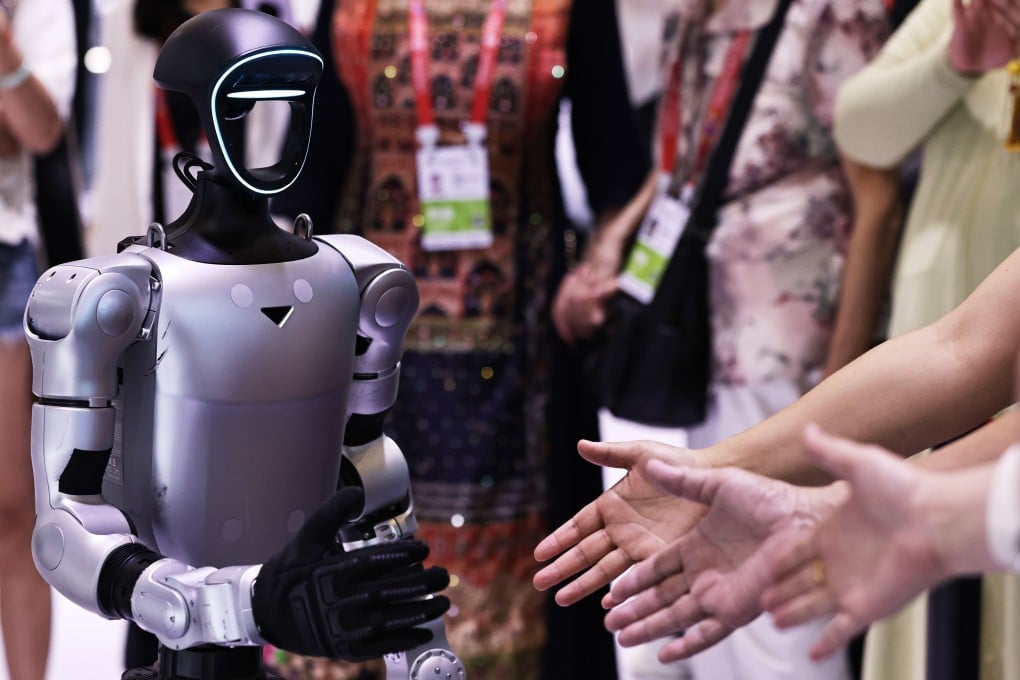
The partnership targets what has quietly become humanoid robotics' hardest unsolved problem. Unitree has spent a decade mastering the mechanical side of a robot - the hardware - well enough to undercut Boston Dynamics on price by an order of magnitude. What it hasn't solved is the 'brain': the AI model that lets a robot understand an unfamiliar room and turn a spoken instruction into the correct physical action, plus the real-world training data needed to teach it [2]. DeepSeek supplies the model expertise; Unitree supplies the fleet of physical robots to generate that data at scale.

Online discussion among Chinese retail investors ahead of the listing drew the same line, describing Unitree's strength as the robot's 'body' while treating the 'brain' - the vision-language-action and world-model layer - as an industry-wide problem nobody has solved yet, Unitree included. That two-track framing lines up with something Unitree has itself acknowledged: per a Bloomberg-sourced discussion circulating on Reddit, the company has recognized it could lose its lead in the robot 'brain' as competition in humanoid robotics shifts from motion control toward AI models - the exact gap the DeepSeek partnership is designed to close. It's also why one prominent Chinese venture capitalist, Zheng Hualiang of Leap VC, described Unitree's IPO valuation as effectively setting the ceiling for the entire embodied-intelligence sector: 'a valuation anchor - and effectively the ceiling - for other companies in the embodied-intelligence space' [3]. If DeepSeek can help crack the brain problem alongside Unitree's hardware lead, few Chinese rivals will have an easy answer.
A $9 Billion IPO - and a $40 Billion Number Circulating on X

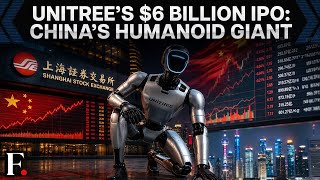
Even before Unitree's shares reached a real exchange, the pricing round revealed just how hot demand had gotten. The offline institutional tranche was oversubscribed by more than 2,600 times, and the final price of 150.8 yuan a share came in 45% above the earlier market consensus estimate of 104 yuan - pushing the deal to a price-to-earnings ratio of 219.23, nearly six times the industry average of 38.56 [4].

Then the speculation moved somewhere regulators don't reach. One widely shared X post claimed that on Hyperliquid's pre-IPO perpetuals market, traders were pricing Unitree at an implied $40 billion - about four times the actual $9 billion IPO valuation - based on speculative positioning ahead of the Shanghai listing. That figure comes from a single social-media post with no corroboration in mainstream financial reporting, so it's best read as a snapshot of retail sentiment rather than a verified market valuation. One contrarian voice on X argued Silicon Valley - not Unitree - is running "the biggest valuation scam in robotics history," pointing to Unitree's own shipment lead and margin numbers as the receipts.

Caixin's own reporting frames the frenzy as part of something bigger than one company: Chinese embodied-AI startups are racing to raise capital in a cautious market before what many investors expect could be an industry shakeout [4]. Unitree, as the first of that cohort to actually list, has become the test case for whether that capital rush is rational or just crowded.

Profitable Where Its Rivals Are Not - the Numbers Behind the Premium

Strip away the valuation drama and Unitree's underlying business looks unusually solid for a hyped IPO. Revenue grew 335% year-over-year to 1.7 billion yuan in 2025 [5], net profit reached 591 million yuan, and gross margin topped 60% - comfortably ahead of Hong Kong-listed rivals UBTech Robotics (37.7% margin) and Shenzhen Dobot (46.1% margin), both of which remain unprofitable [4]. That combination of hypergrowth and actual profit is rare in the humanoid-robot category, where most competitors are still burning cash to buy market share.

Volume tells a similar story: Unitree shipped more than 5,500 humanoid robots in 2025, a more than tenfold increase from 2024 [5]. Wang Xingxing, who founded the company in 2016 with just 100,000 yuan in registered capital, becomes China's first humanoid-robot billionaire off the listing, with an estimated net worth of about $2.4 billion based on his equity stake [5].

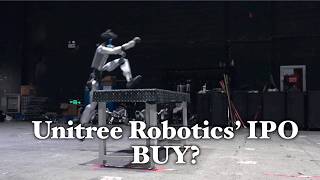
The price gap with non-Chinese rivals reinforces the same point: video coverage comparing Unitree's G1 humanoid, priced around $16,000-$21,500, to Boston Dynamics' enterprise-only Atlas, estimated at $250,000-$300,000, shows just how much of Unitree's advantage comes from manufacturing robots at a price point Western rivals haven't matched.

None of that erases the competitive reality waiting on the other side of listing day: Unitree faces more than 200 rival humanoid-robot manufacturers in China alone [5]. Profitability and shipment volume are real advantages today, but they aren't moats - they're a head start that a fast-follower market will spend the next few years trying to close.

The Geopolitical Clock Ticking Under the IPO

Ten days before Unitree priced its shares, the US Federal Communications Commission added foreign-produced advanced robots - a category that effectively targets China and Unitree - to its Covered List. New Unitree models built outside the US will be unable to obtain FCC market-entry authorization absent an exemption, though already-authorized existing models (the G1, H2 and R1 humanoids, and the Go2, B2 and A2 quadrupeds) remain on the market for now [6].

Unitree's own prospectus disclosed the risk directly to investors rather than downplaying it: 'existing humanoid and quadrupedal robots have received approval, but future models may face restrictions on U.S. sales, and additional tariffs or sanctions could impact growth in overseas markets' [7]. That disclosure lands on top of a trend already visible in the numbers - Unitree's US revenue share had been sliding even before the ban, from 19.54% in 2024 to about 13.3% most recently, even as overseas markets overall still account for more than 40% of revenue [6].

Not every China-based analyst reads the restrictions as damaging. Liu Gang, chief economist at the Chinese Institute of New Generation AI Development Strategies, argues the FCC action creates real uncertainty for future US sales but doesn't touch Unitree's underlying technology or long-term competitiveness [6]. Whether that view holds depends on how much of Unitree's next growth phase depends on markets the FCC has just made harder to reach.

Historical Context

2016-08
Founded Unitree with about 100,000 yuan in registered capital, growing the company's first quadruped robot, XDog, out of his master's thesis.
2017-09
Released its first commercial product, the Laikago quadruped robot.
2023
Entered humanoid robotics with the H1 prototype, which set a world-record bipedal running speed of 3.3 meters per second.
2026-03
Originally filed for a smaller Shanghai STAR Market IPO targeting about $610-620 million, before upsizing the offering to 6.1 billion yuan by pricing day.
2026-07-27
Debuted on the STAR Market and surged 466% on its first trading day, priming retail investor demand ahead of Unitree's listing.
2026-07-28
Added foreign-produced advanced robots to its Covered List, restricting future Unitree models built outside the US from obtaining FCC market-entry authorization.
2026-07-31
Approved Unitree's IPO registration after review, at which point the offering was still sized at about 4.2 billion yuan (roughly $620 million); the raise was not upsized to 6.1 billion yuan until pricing day in August, as part of a fast-tracked, 104-day approval process.

Power Map

Key Players
Subject

Unitree Robotics IPO on Shanghai STAR Market

DE

DeepSeek (Hangzhou DeepSeek AI Basic Technology Research)

Strategic investor holding a 933,900-share, 2.31% stake worth about $20.8 million under a three-year lockup, and Unitree's named AI partner - the two firms will co-develop AI models for humanoid robots, with the agreement including priority access to robot procurement and AI model services.

OT

Other strategic placement investors (Tencent subsidiary, China National Petroleum Corp, China Southern Power Grid, China Telecom, Citic Securities, National Council for Social Security Fund)

Took roughly 2.23% stakes each (Tencent, CNPC, Southern Power Grid, China Telecom) alongside Citic Securities and China's national pension fund, anchoring the IPO with state-linked and Big Tech capital.

WA

Wang Xingxing

Founder, chairman, CEO and CTO of Unitree, who started the company in 2016 with 100,000 yuan (about $13,800) in registered capital; the IPO makes the 36-year-old China's first humanoid-robot billionaire, with an estimated net worth of about $2.4 billion.

CH

China Securities Regulatory Commission / Shanghai Stock Exchange

Fast-tracked Unitree's IPO registration review as part of Beijing's push to speed capital-market access for strategic AI and robotics companies, compressing the filing-to-approval process to 104 days.

Fact Check

7 cited
  1. [1] DeepSeek Takes RMB141 Million Strategic Placement in Unitree IPO
  2. [2] DeepSeek Buys Into Unitree's Shanghai IPO in Humanoid AI Pact
  3. [3] Backed by DeepSeek, Unitree IPO Tests Investor Appetite in China's AI Robotics Boom
  4. [4] Unitree Robotics Prices Shanghai IPO at 61 Billion Yuan Valuation
  5. [5] Unitree IPO Turns 36-Year-Old Founder Into China's First Humanoid Robot Billionaire
  6. [6] FCC Robot Restrictions Add Uncertainty but Don't Undercut Unitree's Long-Term Competitiveness: Experts
  7. [7] Unitree to Launch IPO Next Week as US-China Robotics Rivalry Intensifies

Source Articles

Top 5

THE SIGNAL.

Analysts

Says Unitree's IPO valuation effectively sets "a valuation anchor - and effectively the ceiling - for other companies in the embodied-intelligence space."

Zheng Hualiang
Founder, Leap VC

Argues the FCC's robot restrictions create real uncertainty for Unitree's US sales but do not undercut its underlying technology or long-term competitiveness.

Liu Gang
Chief economist, Chinese Institute of New Generation AI Development Strategies

Frames the IPO within a broader capital-raising rush among Chinese embodied-AI startups, reporting that many are racing to raise money in a cautious market before an anticipated industry shakeout.

Caixin Global
Financial news outlet
The Crowd

Unitree will IPO at $9B It's trading at $40B on Hyperliquid Another big Chinese IPO pop

@@zephyr_z9634

China's top humanoid-robot maker, $UNITREE is already tradeable on Nansen, pre-IPO. See who's positioned before the listing: app.nansen.ai/token-god-mode

@@nansen_ai33

Silicon Valley is running the biggest valuation scam in robotics history. A Chinese company called Unitree priced its IPO in Shanghai yesterday at roughly $9 billion. It ships more humanoid robots than any manufacturer on Earth, it runs 60% gross margins, and it makes an

@@Ric_RTP29

Unitree Seeks $904M in Mainland China's First Humanoid Robot IPO

@Optimal_Image519269
Broadcast
This Chinese Humanoid Company Cleared For $6 Billion IPO | Why Unitree Can't Be Ignored | FP Video

This Chinese Humanoid Company Cleared For $6 Billion IPO | Why Unitree Can't Be Ignored | FP Video

China's Unitree Robotics eyeing $7 billion IPO valuation | REUTERS

China's Unitree Robotics eyeing $7 billion IPO valuation | REUTERS

China's Unitree Robotics wins Shanghai IPO approval 73 days after filing

China's Unitree Robotics wins Shanghai IPO approval 73 days after filing

Unitree Robotics IPO on Shanghai STAR Market — AI News | Agentic Brew