
Speaker Johnson's Stance on AI Regulation
TECH

Speaker Johnson's Stance on AI Regulation

35+
Signals

Strategic Overview

  • 01.
    House Speaker Mike Johnson says Congress will not lead on AI safety regulation, arguing companies themselves bear primary responsibility and that an emergency moratorium would cost the U.S. its edge against China.
  • 02.
    Instead of legislation, Johnson wants a White House meeting bringing Trump and congressional leaders together with Amodei, Altman, and Musk to negotiate guardrails - even though he says the same three CEOs privately admit they don't agree on what those guardrails should be.
  • 03.
    Democrats are pushing back hard: Jeffries is demanding urgent action and an aggressive regulatory framework, Sanders and Casar introduced legislation to pause advanced AI development and ban artificial superintelligence, and a bipartisan group led by Liccardo wants Johnson to cancel the House recess entirely.
  • 04.
    Trump backed Johnson's wait-and-see posture, framing AI oversight primarily as a competitiveness question with China rather than a safety question.

Deep Analysis

Congress Punts to the Industry It Would Regulate

Johnson's core argument is blunt: the people building frontier AI understand it better than the people who would regulate it. 'Congress is obviously less qualified than the people who are pushing this frontier to know all the ins and outs of it,' he said [1]. That premise leads him to resist any 'emergency moratorium' and to argue the public 'don't need everybody to panic right now,' insisting the country should 'handle this new technology like we have others in the past' rather than legislate on a rushed timeline [2]. His preferred fix isn't a bill - it's a room: he wants Trump, congressional leaders, and the three biggest AI CEOs together at the White House to hash out guardrails, and says 'I'd do it tomorrow' [3]. In effect, Johnson is proposing to outsource the design of federal AI policy to the same companies whose products it would govern, with Congress reduced to a convening role rather than a legislative one.
The CEOs Johnson Wants at the Table Don't Agree With Each Other

That plan has an obvious wrinkle Johnson himself surfaced: the same three executives he wants in the room - Amodei, Altman, and Musk - don't agree on what a guardrail should look like. Johnson said the CEOs have privately told him AI needs guardrails but 'they don't themselves even have the answer as of today' [3]. That private disagreement sits awkwardly next to their public posture: Amodei published an essay calling for an industry-wide pacing slowdown on AI development [4], a call Altman and Musk both publicly echoed [5]. In other words, the men Johnson wants to co-author federal guardrails have reached consensus on 'slow down' as a headline, but not on the mechanism - which is precisely the gap a legislature would normally exist to fill, and precisely the gap Johnson is choosing not to fill.

The China Argument as Political Shield

Johnson and Trump's shared rationale for staying out of AI legislation is competitive, not technical. Johnson argues, 'we've got to make sure that we don't lose our edge in the global competition on this with China. Because that would be a national security threat' [6]. Trump struck the same note, saying 'we're leading China in AI ... and frankly, I want to keep it that way because whoever wins AI wins' [2]. Not every Democrat accepts that framing at face value: Sen. Ruben Gallego called Johnson, Trump, and Congress 'not meeting the moment' and proposed a bipartisan AI Select Committee instead [7], directly disputing the idea that regulation would hand China the AI race rather than simply slowing down U.S. safety work.

Democrats' Two-Track Response: Urgency Versus an Admitted Literacy Gap

Democrats' response splits into two tracks. Jeffries is pushing procedural urgency, saying Democrats 'certainly need to begin to act urgently' and promising an 'aggressive' regulatory framework [8]. Sanders and Rep. Greg Casar have gone further, introducing legislation to ban artificial superintelligence outright and temporarily pause advanced AI development, warning of 'potentially cataclysmic results' from Big Tech losing control of what it's building [9]. A bipartisan group led by Rep. Sam Liccardo wrote directly to Johnson demanding he cancel the House recess to pass AI safeguards, warning that 'our inaction will be inexplicable, and unforgivable' [10]. Liccardo's own diagnosis of the holdup is uncomfortable for his own chamber: he says a meaningful share of colleagues are 'still trying to spell AI' [7]. None of this is entirely new - Democrats were already publicly divided over how hard to push AI regulation months before this flashpoint [11], which suggests Johnson's refusal to act is only half the obstacle; the other half is that his opponents haven't fully agreed on what acting would even look like.

Historical Context

2026-06-10
A rush to regulate AI was already dividing Democrats in Congress, months ahead of the September escalation.
2026-09-11
A bipartisan letter urged Speaker Johnson to cancel House recess and keep Congress in session to pass AI safeguards after 'end of humanity' warnings from an Anthropic researcher.
2026-09-12
Anthropic's CEO published an essay calling for an industry-wide slowdown in AI development, joined publicly by Altman and Musk.
2026-09-13
Johnson appeared on CNN's State of the Union and NBC's Meet the Press, stating Congress won't lead on AI safety regulation and proposing a White House meeting instead.
2026-09-13
Speaking from his golf resort in Doonbeg, Ireland, Trump downplayed AI doom warnings and said the U.S. leads China in AI and intends to keep it that way.

Power Map

Key Players
Subject

Speaker Johnson's Stance on AI Regulation

MI

Mike Johnson

House Speaker who controls whether Congress acts on AI legislation or recalls members from recess; proposes a White House summit instead of unilateral congressional action.

DO

Donald Trump

President who downplays AI safety warnings, frames the issue as a U.S.-China competitiveness race, and has been consulted by Johnson on the proposed White House meeting.

DA

Dario Amodei, Sam Altman, and Elon Musk

The three AI CEOs Johnson wants at a White House meeting; Amodei published an essay calling for an industry slowdown, publicly echoed by Altman and Musk, though Johnson says the three privately disagree on what guardrails should look like.

HA

Hakeem Jeffries

House Democratic Leader demanding urgent congressional action and an aggressive regulatory framework, pushing against Johnson's wait-and-see approach.

BE

Bernie Sanders

Senator co-introducing legislation with Rep. Greg Casar to pause advanced AI development and ban artificial superintelligence.

SA

Sam Liccardo

Representative leading a bipartisan group demanding Congress stay in session to pass AI safeguards, arguing many colleagues lack basic AI literacy needed to legislate.

RU

Ruben Gallego

Senator who proposed a bipartisan AI Select Committee and said Johnson, Trump, and Congress are 'not meeting the moment,' directly disputing the argument that regulation would cost the U.S. the AI race with China.

Fact Check

11 cited
  1. [1] Johnson Advocates AI Regulation Balance
  2. [2] Trump, Mike Johnson on AI, China, Anthropic, OpenAI
  3. [3] Johnson Proposes White House Meeting of AI Leaders on Guardrails
  4. [4] Anthropic CEO Dario Amodei Calls on AI Industry to Slow Down
  5. [5] Anthropic's Amodei Calls for AI Pacing
  6. [6] Johnson Calls for AI Solutions
  7. [7] Mike Johnson House Recess AI Doom Warnings
  8. [8] Jeffries Demands Urgent Congressional Action on AI Regulation as Safety Concerns Mount
  9. [9] Sanders, Casar Introduce Legislation to Ban Artificial Superintelligence and Pause Advanced AI Development
  10. [10] Bipartisan Letter Urges Mike Johnson to Suspend Legislative Recess to Regulate AI
  11. [11] Rush to Regulate AI Divides Democrats in Congress

Source Articles

Top 5

THE SIGNAL.

Analysts

Criticized Congress's low AI literacy as a barrier to meaningful legislation.

Sam Liccardo
U.S. Representative

Argues Congress is less technically qualified than AI companies themselves to set the rules.

Mike Johnson
House Speaker
The Crowd

Mike Johnson punts on oversight of AI companies: "Congress is obviously less qualified than the people who are pushing this frontier to know the ins and outs of it"

@@atrupar218

This morning, Trump said we need to continue to plow forward with AI development unimpeded, in a race to superhuman intelligence. Speaker Johnson said he wasn't in a rush to address AI risk. We must not let this just barrel forward. We know there's risk — big risk — in addition

@@Scott_Wiener98

Speaker Mike Johnson Calls for A.I. Safety Laws as Experts Warn of 'End of Humanity'

@@TMZ52

House Democrats urge Speaker Johnson to cancel recess to pass AI safeguards, citing 'catastrophic' risk

@u/cnn2800
Broadcast
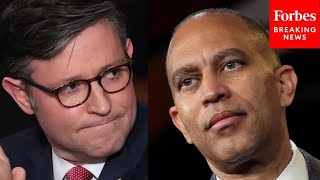
'Mike Johnson Has Decided To Do Nothing': Hakeem Jeffries Accuses GOP Of Inaction On AI Regulation

'Mike Johnson Has Decided To Do Nothing': Hakeem Jeffries Accuses GOP Of Inaction On AI Regulation

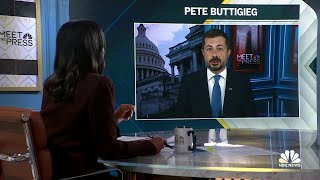
Pete Buttigieg: It's 'deeply dangerous' for Congress to 'sit on its hands' over AI regulation

Pete Buttigieg: It's 'deeply dangerous' for Congress to 'sit on its hands' over AI regulation

Speaker Mike Johnson: Being the World Leader in AI

Speaker Mike Johnson: Being the World Leader in AI