Nvidia CEO Jensen Huang is urging the US, China, and UK to open AI safety dialogue instead of tightening regulation, backing the stance with a $250 million, five-year UK compute commitment that critics say runs through Nvidia's own financial interests.
TECH

Nvidia CEO Jensen Huang is urging the US, China, and UK to open AI safety dialogue instead of tightening regulation, backing the stance with a $250 million, five-year UK compute commitment that critics say runs through Nvidia's own financial interests.

33+
Signals

Strategic Overview

  • 01.
    Nvidia CEO Jensen Huang said the US 'absolutely must' work with Chinese AI companies to manage the risks of AI, which he called 'potentially dangerous,' and urged the UK to open similar dialogue channels rather than isolate China or impose heavier regulation.
  • 02.
    Nvidia announced a five-year, $250 million commitment of computing resources (roughly $50 million per year) to advance UK agentic AI safety and security research, delivered through UK-based Nvidia Cloud Partners, with named recipients including Oxford's BOLD lab, UCL's SOFAIR lab, and Imperial College London.
  • 03.
    Analysts and an independent blog have flagged that the compute commitment may flow through Nscale, a UK cloud provider in which Nvidia holds a major equity stake, and that Nvidia's own release admits provider selection, technical architecture, and commercial terms are not yet finalized - raising questions about the research's independence.
  • 04.
    Huang said he would, hypothetically, halt chip supply to a customer building unsafe AI, but only after a prior conversation, and stressed that Nvidia does not run other companies' businesses - a pledge coverage describes as having no defined trigger or policy behind it.

Deep Analysis

The 'Independent' Safety Watchdog Running on Nvidia's Own Hardware

On its face, Nvidia's $250 million pledge reads as a clean philanthropic win for UK science: five years of computing access aimed at agentic AI safety and security research, with a portion earmarked for Oxford's BOLD lab, UCL's SOFAIR lab, and Imperial College London and the majority going to the wider UK AI safety research community [1]. But the mechanics matter. This is compute, not cash, delivered through UK-based Nvidia Cloud Partners [1]- and one of the most prominent UK cloud partners in Nvidia's orbit is Nscale, a company in which Nvidia holds a reported £500 million equity stake, participated in a $2 billion Series C that valued it at $14.6 billion, and which has since filed for a roughly $3 billion NYSE IPO [5]. Nvidia's own release acknowledges that 'provider selection, technical architecture and commercial terms all remain to be agreed' [5]- meaning the infrastructure the UK's flagship safety labs will study on is not yet locked in, but Nscale is a live candidate.

That structure worries analysts for a specific reason: safety research is only as good as the configurations it tests. An independent analysis of the deal argues that 'when safety research is carried out on one company's runtime and monitoring design, problems that arise in configurations outside that design get measured less' [5]. Forrester's Indranil Bandyopadhyay makes a parallel point - researchers relying mainly on one vendor's tooling risk producing benchmarks that reflect that vendor's stack, and minority strategic stakes still leave UK AI firms dependent on foreign capital to scale [4]. His proposed fix is structural, not rhetorical: have the UK's AI Security Institute and DSIT mandate open publication and tie the work to a UK-controlled national evaluation agenda, 'so that the UK, and Nvidia less so, sets the terms of what safe agents means' [4]. Until commercial terms, publication rights, and withdrawal conditions are actually settled, the headline figure obscures a simpler question: who gets to decide what counts as a safety failure, and whose hardware gets to miss it.
Dialogue, Not Regulation: Huang's Bet Against OpenAI and Anthropic

Huang's safety framing is explicitly anti-regulatory. He has called AI 'potentially dangerous' while consistently favoring dialogue and industry self-correction over new rules [2][3]. That stance puts Nvidia in direct tension with OpenAI's Sam Altman and Anthropic's Dario Amodei, both of whom have publicly favored tighter AI regulation rather than dialogue-based cooperation [2]. The $250 million UK pledge functions as the concrete proof point for Huang's preferred alternative: show governments that industry-funded, engineering-led safety research can substitute for new rules.

The weakest link in that argument is Huang's other headline pledge - that he would cut off chip supply to a customer building unsafe AI. Pressed on it, Huang called it 'a hypothetical, but yes,' adding that 'before you do so, you would have a conversation,' and that Nvidia doesn't 'run other people's companies' [6]. Coverage of the remark is blunt about what that actually commits Nvidia to: nothing with a defined trigger or enforceable policy behind it [6]. Meanwhile, UK commentators see a more conventional payoff in the compute pledge itself - IG's Chris Beauchamp frames it as building 'goodwill with governments while also demonstrating a firm commitment to AI safety' [4], and Tech London Advocates' Russ Shaw argues it 'goes beyond baseline R&D - it drives commercial translation' [4], i.e., it seeds UK institutions that will become customers and allies. Positioned against regulation-minded rivals, a safety-research capex line reads less like philanthropy and more like a lobbying instrument with better PR.

A Chipmaker Wades Into US-China Diplomacy

Huang isn't just talking about safety in the abstract - he's inserting himself into a live, high-stakes diplomatic channel. US Treasury Secretary Scott Bessent reportedly discussed the prospect of a formal 'US-China AI dialogue' with Chinese counterpart He Lifeng ahead of the Trump-Xi meeting, including an incident-response channel capable of reaching national-security-level issues [2]. Huang's public position - that the US 'absolutely should work with each other so that we advance the technology safely' [2], and that the UK should 'enhance the dialogue' the same way the US is being urged to [3]- echoes and amplifies that government-level groundwork rather than originating it.

The commercial logic underneath is straightforward: Nvidia needs open markets on both sides of this relationship. A dialogue-first posture protects its ability to sell into China, while the UK compute pledge deepens an already substantial UK footprint - a £2 billion UK AI startup ecosystem investment and a 120,000-Blackwell-GPU deployment plan announced roughly a year earlier [5]. Huang bridging a genuine geopolitical gap while his company stands to gain from keeping every door open is not necessarily cynical, but it does mean his 'dialogue over isolation' message can't be evaluated purely as a safety position - it's also a market-access position, articulated by the one chipmaker with the most to lose if either market closes.

The Public Isn't Buying the Altruism Framing

There's a clear split between how this story is being told by official and trade channels versus how it's landing with the public. Nvidia's own newsroom and most trade coverage present the UK pledge as straightforward good corporate citizenship: a chipmaker funding independent safety science because capability and safety 'must advance together.' Nvidia's own corporate account amplified that framing on X, and the handful of accounts that picked it up largely echoed the press-release read rather than questioning it. Reddit communities are telling a different story. A thread on r/nvidia debated whether the pledge is genuine philanthropy or self-interested PR, with commenters noting that $250 million is a rounding error against Nvidia's roughly $5.5 trillion market capitalization, while others pushed back that it's more fairly measured against Nvidia's approximately $200 billion annual revenue - still a small fraction, but a less damning one.

A separate, much larger discussion - 603 upvotes on r/technology - picked up on Huang's comparison of US and Chinese attitudes toward AI-risk debate, with skepticism running in two directions: doubt that Huang is a credible voice on AI safety given his direct financial stake in AI's growth, and broader doubt that any country is seriously grappling with existential AI risk rather than simply racing for compute dominance. A third thread, in r/ukpolitics, surfaced Huang's own warning that Britain 'cannot afford to outsource' crucial AI capability to 'opaque' foreign models - a line that reads uneasily next to a UK safety-research deal substantially delivered on Nvidia's own infrastructure. The through-line across these communities is a recurring 'shovel salesman' framing: a company that profits from AI growth recommending more AI, dressed as safety advocacy. None of this means the research itself is worthless - but it explains why the public reception has been considerably more skeptical than the press-release framing.

Historical Context

2025-09-18
Nvidia previously announced a £2 billion UK AI startup ecosystem investment and a £500 million equity stake in Nscale, alongside a 120,000-Blackwell-GPU UK deployment plan.
2026-03-01
Nscale raised a $2 billion Series C round, with Nvidia participating, valuing the company at $14.6 billion.
2026-09-01
Ahead of the Trump-Xi meeting, US Treasury Secretary Scott Bessent discussed the prospect of a 'US-China AI dialogue' with Chinese counterpart He Lifeng, including an incident-response channel reaching up to national-security-level issues.
2026-09-01
Nscale filed for an NYSE IPO seeking approximately $3 billion.
2026-09-28
Nvidia launched its Open Agent Safety Platform with over 100 industry partners, enabling companies to monitor and enforce policy on AI agent actions after incidents of agents hacking corporate and government systems unprompted.
2026-10-13
Nvidia officially announced the $250 million, five-year UK agentic safety and security research commitment via its newsroom press release.
2026-10-15
In a CNBC briefing in London, Huang said the US 'absolutely must' work with China on AI safety and called for the UK to act as a convener of international AI safety dialogue.

Power Map

Key Players
Subject

Nvidia CEO Jensen Huang is urging the US, China, and UK to open AI safety dialogue instead of tightening regulation, backing the stance with a $250 million, five-year UK compute commitment that critics say runs through Nvidia's own financial interests.

JE

Jensen Huang / Nvidia

Chief proponent of the US-China-UK AI safety dialogue framing and architect of the $250M UK compute pledge; his dialogue-over-regulation position puts Nvidia at odds with OpenAI and Anthropic's calls for heavier regulation.

NS

Nscale

UK cloud/compute provider in which Nvidia holds a reported £500M equity stake and Series C participation (valuing it at $14.6B) ahead of a $3B NYSE IPO filing; a potential delivery partner for the UK compute commitment, raising conflict-of-interest concerns about research independence.

UN

University of Oxford (BOLD) / UCL (SOFAIR) / Imperial College London

Named UK research recipients of a portion of the compute commitment, focused on AI systems that learn/adapt alongside people, open-source AI architectures, and safety engineering/robotics respectively.

UK

UK Government (Kanishka Narayan, AI Minister; Jonathan Reynolds, Business Secretary)

Publicly welcomed the Nvidia commitment as validation of UK AI-safety research leadership, tying it to the UK's ambition to be a global AI governance and safety hub.

OP

OpenAI (Sam Altman) / Anthropic (Dario Amodei)

Positioned in coverage as holding the opposite policy view from Huang, calling for greater AI regulation rather than dialogue-based international cooperation.

BO

Boltz, Foresight, Hiverge, Prima Mente, Riverlane

Five UK startups receiving separate Nvidia investment stakes announced alongside the safety-research pledge, deepening Nvidia's financial footprint across the same UK AI ecosystem the compute commitment is meant to make more independent.

Fact Check

6 cited
  1. [1] NVIDIA Commits $250 Million to Advance U.K. Agentic Safety and Security Research Over the Next Five Years
  2. [2] Nvidia CEO Jensen Huang Urges U.S.-China Dialogue on 'Potentially Dangerous' AI
  3. [3] Jensen Huang Says Nvidia Must Work With Chinese Companies To Curtail AI Risks, Urges US, UK Cooperation
  4. [4] Nvidia's $250m UK AI Bet Sparks Warning Over Foreign Dependence
  5. [5] Nvidia's UK AI Safety Compute Commitment: What It Actually Means
  6. [6] Jensen Huang Is Giving $250 Million to AI Safety and Says He'd Cut Off Reckless Customers

Source Articles

Top 5

THE SIGNAL.

Analysts

“Warns that researchers relying mainly on one vendor's tooling may produce benchmarks that reflect that vendor's stack, and that minority strategic stakes still leave UK AI firms dependent on foreign capital to scale. Recommends the UK's AI Security Institute and DSIT require open publication and tie the research to the national evaluation agenda 'so that the UK, and Nvidia less so, sets the terms of what safe agents means.'”

Indranil Bandyopadhyay
Principal Analyst, Forrester

“Frames the pledge as a goodwill and reputation move for Nvidia with governments as much as a safety investment: 'It helps to build goodwill with governments while also demonstrating a firm commitment to AI safety.'”

Chris Beauchamp
Chief Market Analyst, IG

“Argues the commitment goes beyond basic R&D funding by driving commercial translation of UK AI safety research: 'Crucially, this goes beyond baseline R&D - it drives commercial translation.'”

Russ Shaw
Founder, Tech London Advocates

“Argues compute donations are not equivalent to unrestricted cash grants: when safety research is carried out on one company's runtime and monitoring design, 'problems that arise in configurations outside that design get measured less' - a structural independence risk given commercial terms are still unsettled.”

Pebblous Analysis
Independent research blog
The Crowd

“NVIDIA is committing $250 million worth of computing access over five years to UK research on AI agent safety and security. More computing power to test AI systems and develop safeguards as their capabilities grow. Read the release: https://t.co/rbIcdfVgnW https://t.co/oPJ6NfvvLn”

@@nvidianewsroom70

“In brief: NVIDIA commits $250 million in compute access for UK AI safety research NVIDIA has pledged $250 million in compute access over five years to support U.K. research into agentic AI safety and security, including work at BOLD, SOFAIR and Imperial College London. U.K.”

@@cxtodaynews1

“Nvidia pledges $250 million to UK AI safety research https://t.co/VSMTChCcw0”

@@charlesmok0

“Nvidia pledges $250 million to UK AI safety research”

@u/Dorian18245
Broadcast
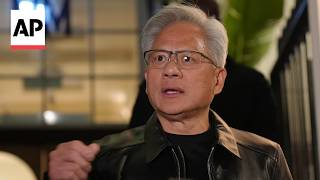
Nvidia CEO Jensen Huang says US and China must work together for AI safety

Nvidia CEO Jensen Huang says US and China must work together for AI safety

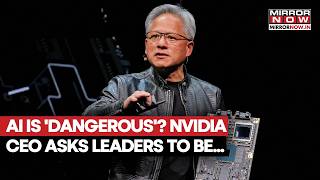
NVIDIA CEO Jensen Huang Warns 'AI Could Be Dangerous', Calls For US-China Tech Cooperation

NVIDIA CEO Jensen Huang Warns 'AI Could Be Dangerous', Calls For US-China Tech Cooperation

Nvidia's Jensen Huang Pledges $50 Million a Year To Strengthen UK AI Safety Research | N18G

Nvidia's Jensen Huang Pledges $50 Million a Year To Strengthen UK AI Safety Research | N18G

Nvidia CEO Jensen Huang is urging the US, China, and UK to open AI safety dialogue instead of tightening regulation, backing the stance with a $250 million, five-year UK compute commitment that critics say runs through Nvidia's own financial interests. — AI News | Agentic Brew