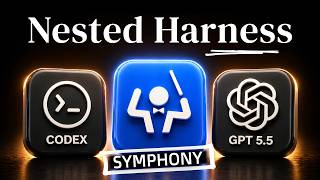
OpenAI Codex expansion and unification
TECH

OpenAI Codex expansion and unification

43+
Signals

Strategic Overview

  • 01.
    OpenAI launched Codex in the ChatGPT mobile app for iOS and Android on May 14, 2026, in preview across all plans including Free and Go, turning the phone into a remote control for Codex sessions running on Macs, devboxes, and remote environments.
  • 02.
    OpenAI open-sourced Symphony, an orchestration spec with an Elixir reference implementation that turns Linear into a control plane for autonomous Codex coding agents.
  • 03.
    Co-founder Greg Brockman has taken charge of product strategy and is merging ChatGPT, Codex, and the developer API into a single unified agentic platform, with Codex first to expand beyond coding into general productivity tasks.
  • 04.
    OpenAI is partnering with Accenture, Capgemini, and PwC to push Codex into enterprise workflows for data science, business operations, and sales teams, with Codex now serving 4 million weekly active users.

From chatbot maker to OS-layer agent platform
From chatbot maker to OS-layer agent platform
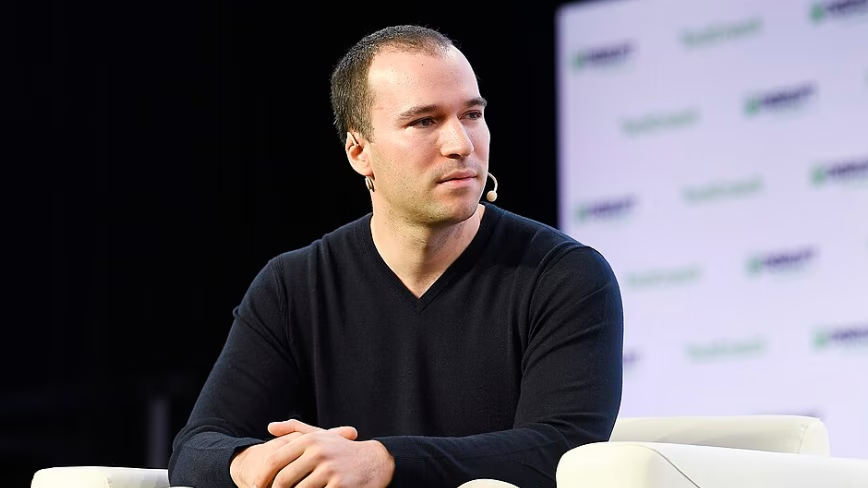
Brockman now leads a unified ChatGPT-Codex-API organization ahead of OpenAI's planned Q4 2026 IPO.

The Codex mobile preview, Symphony, and the Brockman-led reorg are not three separate launches — they are one consolidation move. Brockman now runs a unified organization combining ChatGPT, Codex, and the developer API, with the explicit mandate to 'invest in a single agentic platform' and 'merge ChatGPT and Codex into one unified agentic experience for all'[1]. The sequencing matters: Codex expands first beyond coding into general productivity, then ChatGPT and the Atlas research tool fold in afterwards[1]. Brockman cites compute scarcity as the operational reason — OpenAI does not have enough silicon to run a personal assistant and a separate Codex line in parallel[1]. The strategic reason is harder-edged: OpenAI is targeting an IPO in Q4 2026 at roughly an $852 billion valuation, and the consolidation closes the 'side quests' (Sora, OpenAI for Science) that fragmented the story[2]. The May 16 announcement landed four days before Google I/O, framing the merger as OpenAI's counter to a $900 billion-valued Anthropic in the agentic-coding race[3].

The phone becomes a Codex command center

Codex mobile is not a stripped-down companion app — it is a remote control layer. From iOS or Android, users 'can work across all of your threads, review outputs, approve commands, change models, or start something new'[4], while the actual work continues to execute on laptops, Mac minis, devboxes, or remote environments[5]. Screenshots, terminal output, diffs, and test results stream live across devices, so a Codex run started on a desktop can be steered from a phone mid-meeting[6]. Crucially, the preview shipped on Free and Go plans, not just paid tiers[6], which makes Codex the default mobile agent in the largest ChatGPT install base on day one. Windows support is still forthcoming, and community threads tracking the rollout show platform-parity complaints from Windows and Android users who feel second-class in the preview window.

Symphony reframes coding as managed delivery — but analysts flag a validation gap

Symphony reframes coding as managed delivery — but analysts flag a validation gap
Symphony makes Linear the control plane for Codex; analysts warn output metrics can mask validation debt.

Symphony is the outer harness OpenAI built around Codex. The spec 'turns project work into isolated, autonomous implementation runs, allowing teams to manage work instead of supervising coding agents'[7], and the reference implementation makes Linear the default control plane so an issue tracker becomes the queue, dashboard, and audit log for autonomous agents[7]. OpenAI's headline number — a 500% increase in landed pull requests for some internal teams in the first three weeks[7]— is the figure analysts are most skeptical of. Greyhound Research's Sanchit Vir Gogia describes Symphony as an operating layer that 'schedules, tracks, retries, reconciles, persists state, and governs flow,' but warns that 'generation scales effortlessly, validation does not'[8]. Forrester's Biswajeet Mahapatra echoes the caution, urging enterprises to 'look beyond output metrics such as lines of code or pull request counts' and to measure quality, delivery speed, developer experience, and business impact instead[8]. The risk Symphony introduces is structural: peer-review friction, downstream rework, and post-deployment incidents may absorb the gains if validation pipelines do not scale at the same rate as agent throughput[8].

Codex broadens beyond engineering — and consultancies are the distribution channel

The unification narrative is also a TAM expansion play. Codex has reached 4 million weekly active users[9], with user count inside ChatGPT Business and Enterprise growing 6x between January and April 2026[10]. To capture the next wave, OpenAI is partnering with Accenture, Capgemini, and PwC to sell Codex into data science, business operations, and sales teams[9]. The OpenAI Academy playbooks make the use cases concrete: data science teams draft analyses and tradeoff models[11], business operations teams produce decision-ready briefs[12], and the same workflow extends to account priority briefs for sales. Customer evidence is starting to land — WorkOS reports Codex absorbs implementation work that previously consumed 30-40% of developer time[13], and named adopters include Notion, Ramp, Braintrust, Cisco, and NVIDIA[13]. The consultancy channel matters because horizontal rollout into non-engineering departments is a workshop-and-services motion, not a self-serve one.

Computer Use and Locked Use expand the trust perimeter

The most consequential capability shipping alongside the mobile preview is also the most security-sensitive. OpenAI 'appears to be quietly extending the reach of its Codex remote control system, working on a capability that would let the coding agent operate macOS applications through Computer Use even when a laptop is locked or asleep'[14]. Combined with the Codex-network primitive that lets one Codex host control another desktop without SSH[14], this redefines what a 'trusted machine' is — an agent can now act on a developer's hardware without the developer being at it. OpenAI uses a secure relay layer for these remote connections[15], but the community reception in mobile-preview threads is bifurcated: enthusiasm about asynchronous workflows on one side, and concern about giving an agent 'free reign' on a sleeping laptop on the other. For enterprises, the practical implication is that endpoint policy, identity scoping, and audit logging now have to treat the Codex relay as a first-class actor on the network.

Historical Context

2025-04
Codex launched as an open-source terminal coding agent, establishing the foundation for the broader product line that now spans cloud, IDE, and mobile.
2025-12
Altman declared an internal 'code red,' instructing staff to refocus on the core ChatGPT experience and kicking off the strategic consolidation that culminated in the May 2026 reorg.
2026-04
OpenAI's CEO of Applications went on medical leave, prompting Brockman to assume interim product leadership that became permanent in May.
2026-04-28
OpenAI released Symphony, an open-source orchestration spec that automates Codex work through Linear, signaling a shift from single-prompt coding to managed agentic delivery.
2026-05-14
Codex preview shipped inside the ChatGPT mobile app for iOS and Android on every plan, turning phones into a control surface for Codex sessions on remote machines.
2026-05-16
OpenAI formally unified ChatGPT, Codex, and the developer API under Greg Brockman, four days before Google I/O and against the backdrop of a planned Q4 2026 IPO.

Power Map

Key Players
Subject

OpenAI Codex expansion and unification

GR

Greg Brockman

OpenAI co-founder and president; permanently took charge of product strategy, leading the merger of ChatGPT, Codex, and API while retaining oversight of AI infrastructure including Stargate.

FI

Fidji Simo

OpenAI CEO of Applications; on medical leave since early April 2026; collaborated with Brockman on the reorganization before stepping back and is expected to return.

SA

Sam Altman

OpenAI CEO who declared an internal December 'code red' that triggered the refocus on ChatGPT and shutdowns of side projects like Sora and OpenAI for Science.

AC

Accenture, Capgemini, and PwC

Consultancy partners that will sell Codex, run hands-on workshops, and integrate it into enterprise business workflows beyond software engineering.

EN

Enterprise customers (Notion, Ramp, Braintrust, Cisco, NVIDIA)

Named enterprise users deploying Codex in production engineering workflows, with WorkOS reporting Codex absorbs work that used to consume 30-40% of developer time.

LI

Linear

Issue tracker integrated as the default control plane in Symphony's reference implementation, effectively becoming a Codex command center for autonomous coding runs.

Fact Check

16 cited
  1. [1] Brockman to unify ChatGPT and Codex into one agentic platform
  2. [2] OpenAI IPO and the ChatGPT-Codex-API unification
  3. [3] OpenAI Unifies ChatGPT, Codex, Developer API Under Co-Founder Brockman Four Days Before Google I/O
  4. [4] Now in preview: Codex in the ChatGPT mobile app
  5. [5] OpenAI says Codex is coming to your phone
  6. [6] OpenAI brings Codex control to ChatGPT for iPhone and Android
  7. [7] Open-sourcing Symphony: agent orchestration for Codex
  8. [8] OpenAI's Symphony spec pushes coding agents from prompts to orchestration
  9. [9] OpenAI partners with consultancies to expand Codex sales
  10. [10] Codex Statistics 2026
  11. [11] How data science teams use Codex
  12. [12] How business operations teams use Codex
  13. [13] OpenAI builds out its developer ecosystem
  14. [14] OpenAI will let Codex control other desktop devices via Computer Use
  15. [15] Codex Remote Connections
  16. [16] openai/symphony

Source Articles

Top 5

THE SIGNAL.

Analysts

"Frames the consolidation as a focus play for the agentic era, arguing OpenAI must execute against consumer and enterprise simultaneously and that limited compute forces a single platform rather than parallel product lines."

Greg Brockman
President, OpenAI

"Argues Symphony is an emerging operating layer for software delivery that 'schedules, tracks, retries, reconciles, persists state, and governs flow,' but warns the headline 500% PR figure should not be read as productivity proof because 'generation scales effortlessly, validation does not.'"

Sanchit Vir Gogia
Chief Analyst and CEO, Greyhound Research

"Urges enterprises to 'look beyond output metrics such as lines of code or pull request counts' and instead measure delivery quality, developer experience, and business impact when evaluating agentic coding rollouts."

Biswajeet Mahapatra
Principal Analyst, Forrester
The Crowd

"You've been asking for this one... Now in preview: Codex in the ChatGPT mobile app. Start new work, review outputs, steer execution, and approve next steps, all from the ChatGPT mobile app. Codex will keep running on your laptop, Mac mini, or devbox."

@@OpenAI21000

"What if every open issue had a Codex agent? That's the idea behind Symphony, an open-source agent orchestrator for Codex that turns task trackers into always-on systems for agentic work, letting humans focus on review and direction."

@@OpenAIDevs3900

"Scoop: OpenAI announced another major reorg on Friday, as part of its effort to unify ChatGPT and Codex. - Greg Brockman is officially taking over OpenAI's products, after previously being tapped as an interim leader - Head of Codex, Thibault Sottiaux, is now leading core product"

@@ZeffMax859

"Now in preview: Codex mobile in the ChatGPT mobile app."

@u/OpenAI228
Broadcast
Introducing the Codex app

Introducing the Codex app

OpenAI Codex Explained for Normal People ("Claude Cowork Killer")

OpenAI Codex Explained for Normal People ("Claude Cowork Killer")

OpenAI Just Showed Us What Comes After the Harness. Here's The Layer Almost Everyone's Missing.

OpenAI Just Showed Us What Comes After the Harness. Here's The Layer Almost Everyone's Missing.