The Single Idea That Cracked a 46-Year Plateau
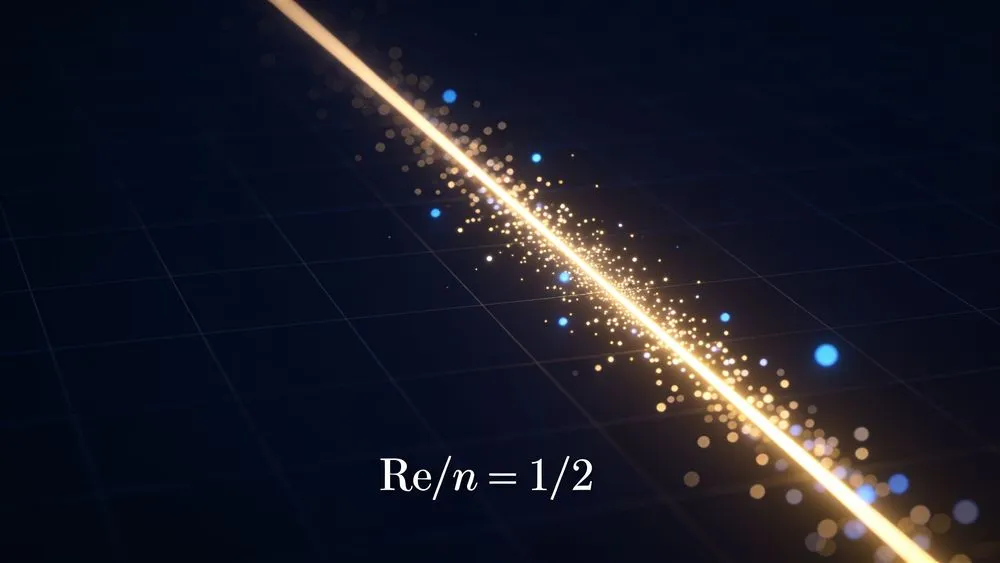
Human mathematicians spent 46 years, from 1974 to 2020, inching the proven lower bound up by only about 8 percentage points[3]. Claude closed more than triple that gap in one run, pushing the figure from 41.6% to 67.2%, a 25.6 percentage point jump[1]. The move that got it there was conceptual, not computational: rather than analyzing zeros on the critical line and zeros off it as separate problems, Claude worked in a single space built from a Weil-induced quadratic form, with positive-definite subspaces standing in for on-line zeros and negative-definite subspaces for off-line zeros[1]. Anthropic's own writeup credits the decisive step to a specific act of nerve: 'The courage to treat the entire space, with positive- and negative-definiteness taken into account together, and with the quadratic form allowed to be non-diagonal, is in some sense the step that allows Claude to achieve the conclusion based on the important prior work'[1]. In other words, the ingredients (a 2000 paper by Enrico Bombieri and the pair-correlation lineage that followed it) already existed; what was missing was the willingness to combine them in a non-diagonal, unified form.