Xiaomi's Xring in-house AI chips and AI Cube
TECH

Xiaomi's Xring in-house AI chips and AI Cube

27+
Signals

Strategic Overview

  • 01.
    Xiaomi unveiled the Xring O3, a 3nm mobile SoC, on August 24, 2026, billed as the world's first mobile processor to support LPDDR6 memory, delivering speeds up to 10,667Mbps and 113.8GB/s of bandwidth, a 48% increase over the Xring O1.
  • 02.
    Alongside it, Xiaomi introduced the Xring O100, a 6nm AI accelerator built around a near-memory architecture rated at 1.22TB/s of bandwidth and aimed at large on-device AI models, with commercial availability planned for 2027.
  • 03.
    Xiaomi also unveiled the Xring D100, described as China's first 3nm high-computing-power smart-driving chip, designed to replace the Nvidia hardware currently running Xiaomi's SU7 and YU7 EVs starting in 2027.
  • 04.
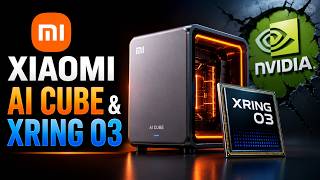
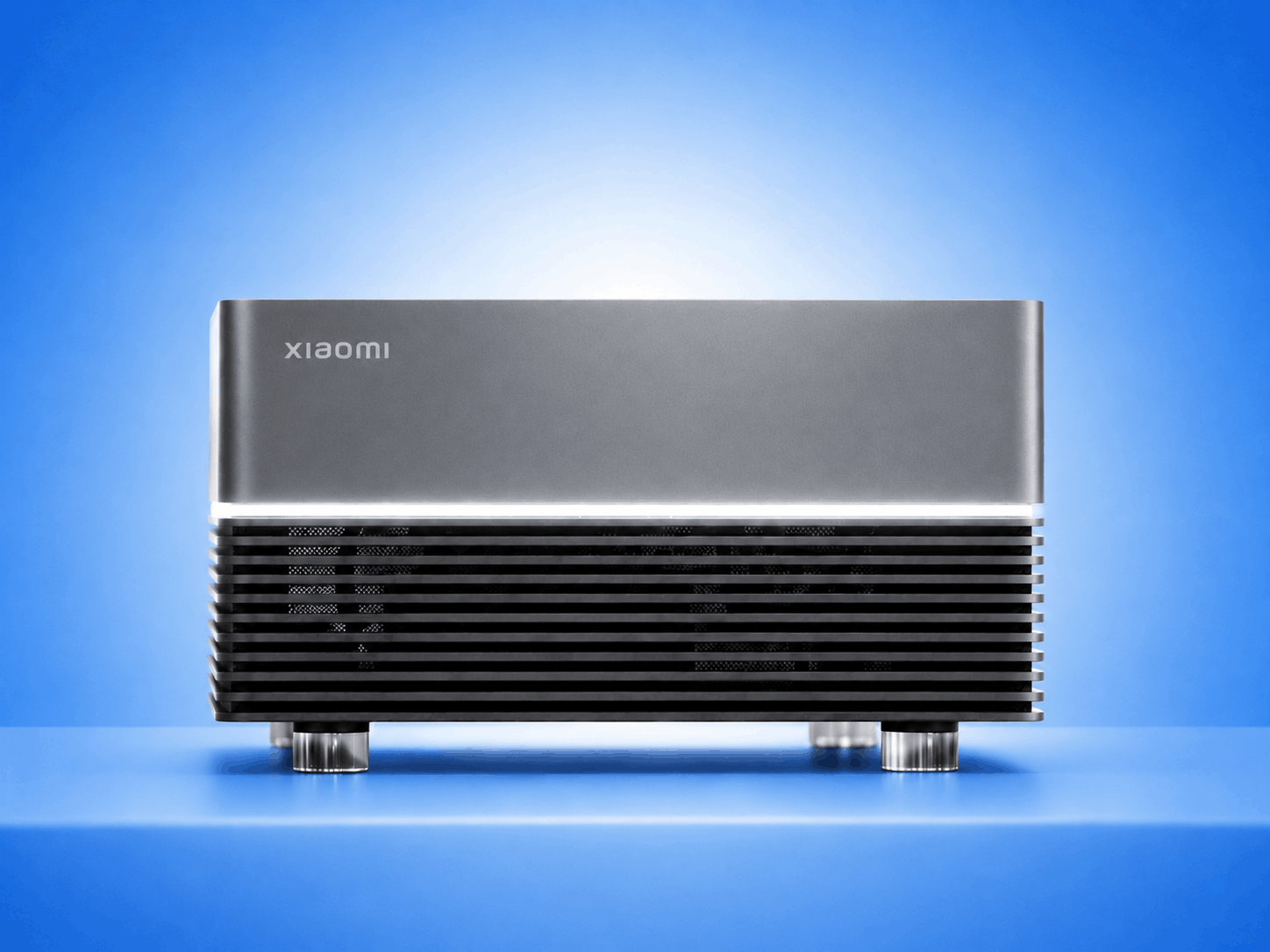
    The AI Cube, an engineering-prototype mini PC combining all three Xring chips with up to 160GB of unified memory and 150W of sustained power, can run a 120-billion-parameter model for complex reasoning alongside a 3-billion-parameter model for real-time responses at the same time; Xiaomi has not announced pricing or a release date.

Deep Analysis

The Memory Wall Is the Real Product

Xiaomi's chip conference on August 24, 2026 wasn't just about faster silicon - it staked a claim that memory bandwidth, not raw compute, is what actually gates useful on-device AI. The Xring O100 is built around what Xiaomi calls a near-memory AI architecture, and Xiaomi rates the result at 1.22TB/s of bandwidth [1]. That figure is the headline spec behind the AI Cube, an engineering-prototype mini-PC that combines the O3 mobile SoC, the O100 accelerator, and the D100 driving chip with up to 160GB of unified memory and 150W of sustained power - enough, Xiaomi says, to run a 120-billion-parameter model for complex reasoning alongside a 3-billion-parameter model for instant responses at the same time [2]. The logic tracks basic transformer math: every token a large language model generates requires re-reading the model's weights from memory, so generation speed scales with bandwidth divided by model size far more than with peak TOPS. That framing - and a live debate over whether Xiaomi's 1.22TB/s reflects HBM-like stacked DRAM, on-package SRAM, or something genuinely new - dominated the most technical corners of X and Reddit's r/LocalLLaMA in the hours after launch, with Xiaomi's own materials never specifying which. The same near-memory philosophy carries into the car: the D100 pairs a 3nm, 20-core CPU and 16-core NPU with up to 160GB of unified memory, which Xiaomi says can run models up to 200 billion parameters locally inside a vehicle [3], without a round trip to the cloud.

Why Xiaomi Bets Big During a Profit Slump

The timing is the counterintuitive part. Xiaomi is unveiling its most ambitious chip lineup yet while its own margins are being squeezed by surging memory and component costs across both its phone and EV businesses; semiconductor design carries no near-term financial return [4]. Xiaomi has now sunk more than 20 billion yuan (about $3 billion) into the Xring program and committed to at least 50 billion yuan (roughly $7 billion) over a decade, growing its in-house chip design unit to more than 3,000 engineers, up from 2,500 a year earlier [5]- on top of the 13.5 billion yuan it spent developing the original Xring O1 in 2025 [6]. Counterpoint Research analyst Ivan Lam frames the rationale around how central on-chip AI performance has become as workloads grow more complex, arguing that Xiaomi's long-term commitment is viewed positively across the industry despite the lack of immediate payoff [4]. It is worth remembering this is Xiaomi's second attempt: its first self-designed chip, the 2017 Surge S1, flopped on an outdated 28nm process that lacked support for major Chinese carrier networks, and the 'big chip' program went dormant until Xiaomi restarted it in 2021 through a dedicated Shanghai subsidiary, Xuanjie Technology [7]. The 2025 Xring O1 made Xiaomi the second smartphone brand after Apple to mass-produce a 3nm chip; the O3 is proof the restart compounded instead of stalling again.

What the Skeptics Are Missing (and Not Missing)

Not every technical reader is convinced the specs translate into a real-world edge. The sharpest pushback, concentrated on X and across Reddit's hardware communities, targets two distinct claims rather than one. The first is a marketing-versus-physics argument: several commentators pointed out that headline TOPS and bandwidth figures say little about sustained real-world throughput, and that Nvidia's own DGX Spark - a comparable local-inference box - publishes a meaningfully different bandwidth number, meaning any head-to-head comparison needs real workload testing, not spec-sheet arithmetic. The second, and more consequential, is a software-ecosystem argument that recurred throughout r/LocalLLaMA: strong silicon is close to worthless for local-LLM developers without upstream support in the tools they actually use, namely llama.cpp and vLLM, and multiple commenters drew a direct parallel to Intel's Gaudi, Huawei's Ascend, and Graphcore - three accelerators with respectable hardware that failed commercially because their software stacks stayed under-supported and effectively vendor-locked. A separate discussion in r/chipdesign, built around an annotated die shot of the O3 on TSMC's 3nm node, raised a narrower doubt: the benchmark figures Xiaomi published reportedly came from a test board rather than a shipping phone, and may reflect cherry-picked silicon bins running at power levels a real handset's thermal envelope could not sustain. None of this disputes that the underlying chips are real, TSMC-fabricated 3nm silicon [5]- it disputes whether Xiaomi can turn strong chips into a strong platform, a different and considerably harder problem than tape-out.

The Nvidia Exit Ramp, and the Geopolitical Shadow Behind It

The D100's clearest strategic target is Nvidia. Xiaomi's own SU7 and YU7 electric vehicles currently run their smart-driving stacks on Nvidia's Drive Orin and Drive Thor hardware, and the D100 - the same 3nm, 20-core CPU, 16-core NPU design capable of running 200-billion-parameter models locally [3]- is built explicitly to replace that hardware starting with commercial vehicle deployment in 2027 [8]. Xiaomi is not alone: BYD, Nio, and Xpeng are all developing their own proprietary autonomous-driving silicon, turning what used to be a routine Nvidia purchase order into a competitive front of its own among Chinese EV makers [8]. The stakes reach beyond one supplier relationship: reducing dependence on a US chipmaker for the compute that steers a car aligns with broader Chinese efforts to insulate against further export controls [8], the same logic running through Xiaomi's mobile and AI-accelerator silicon, all fabricated at TSMC on 3nm process technology [5]. That dependency still cuts both ways - Xiaomi's most advanced designs run through a Taiwanese foundry it does not control, an irony not lost on hardware-focused commentators, who raised the possibility of future US sanctions given how far Xiaomi is pushing into cutting-edge chip design, drew comparisons to Huawei's HiSilicon trajectory, and noted Xiaomi already lacks access to TSMC's most advanced nodes below 2nm. For now, none of Xiaomi's published figures include an independent, third-party benchmark of the D100 against Drive Thor or Tesla's Hardware 4 [8], so the Nvidia-displacement claim remains a roadmap promise rather than a demonstrated result.

Historical Context

2014-10
Established Pinecone Electronics in Beijing, officially starting its mobile chip R&D program.
2017-02
Unveiled its first self-developed smartphone chip, the Surge S1, in the Mi 5C; an outdated 28nm process and missing carrier-network support limited its success.
2019
The 'big chip' program stalled after the Surge S1's limited success, and Xiaomi shifted to smaller chip projects.
2021
Restarted its 'big chip' initiative and established Xuanjie Technology in Shanghai as its dedicated chipmaking hub.
2025-05
Launched the Xring O1, its first in-house 3nm SoC built on TSMC's process, investing 13.5 billion yuan and committing to at least 50 billion yuan more over a decade - making Xiaomi the second smartphone brand after Apple to mass-produce a 3nm chip.
2026-08-24
Held its Xring chip technology conference, unveiling the Xring O3, O100, and D100 chips plus the AI Cube prototype.

Power Map

Key Players
Subject

Xiaomi's Xring in-house AI chips and AI Cube

XI

Xiaomi

Designed and unveiled the Xring O3, O100, D100 chips and the AI Cube prototype; the parent company driving the in-house semiconductor push despite margin pressure elsewhere in the business.

TS

TSMC (Taiwan Semiconductor Manufacturing Company)

Foundry partner manufacturing the Xring O3 (and holding contracts for the O100/D100) on 3nm process technology, meaning Xiaomi's most advanced chips still depend on a foundry it doesn't control.

XU

Xuanjie Technology Co., Ltd.

Xiaomi's Shanghai-based chipmaking subsidiary, established in 2021 with 1.5 billion yuan in registered capital, that develops the Xring lineup.

NV

Nvidia

Incumbent supplier of the Drive Orin/Drive Thor chips currently powering smart-driving in Xiaomi's SU7 and YU7 EVs; the Xring D100 is built explicitly to displace that hardware from 2027.

QU

Qualcomm

Third-party mobile chip supplier Xiaomi is reducing reliance on as it pushes the in-house Xring O3 into flagship phones.

BY

BYD, Nio, Xpeng

Other Chinese EV makers developing their own proprietary autonomous-driving silicon, forming the competitive backdrop the Xring D100 has to compete against.

Fact Check

8 cited
  1. [1] Xiaomi Unveils Xring O100, a 1.22TB/s AI Accelerator for On-Device Models
  2. [2] Xiaomi Unveils AI Cube Mini PC With Three Xring Chips and 150 W Performance
  3. [3] Xiaomi Unveils Xring D100 Smart Driving Chip
  4. [4] Why Xiaomi Is Doubling Down on In-House Chips Despite Profit Slump
  5. [5] Xiaomi Launches New Xring Chip, Partners With TSMC for Production, Sources Say
  6. [6] Xiaomi Started Mass-Producing Self-Developed 3nm Chip
  7. [7] Overachievement: Xiaomi's Decade-Long Chip Development Journey
  8. [8] Xiaomi's New Self-Driving Chip Aims to Replace Nvidia

Source Articles

Top 5

THE SIGNAL.

Analysts

Says Xiaomi's chip progress places it in the top tier of China's self-developed mobile SoC makers, notes on-chip AI performance is increasingly critical as AI workloads grow more complex, and views Xiaomi's long-term investment positively despite the lack of immediate financial return.

Ivan Lam
Senior Analyst, Counterpoint Research
The Crowd

Xiaomi just showed its AI Cube Prototype and this could become a serious GB10 competitor from China - 3 custom chips: Xring O3, O100, D100 - 200 TOPS NPU - 1.22 TB/s AI memory bandwidth - Up to 160GB unified memory - 150W sustained power - 120B models running locally

@@ItsmeAjayKV3899

"A 120B model. On your desk. At 150 watts." — Xiaomi's answer to the local-AI question is a box with three of its own chips inside. Xiaomi didn't launch a chip last night. It launched three. Aug 24, Beijing, the new XRING lineup: - XRING O3 — 2nd-gen flagship SoC, TSMC 3nm, ...

@@jiqizhixin61

Xiaomi's new AI box claims 1.22 TB/s. NVIDIA DGX Spark does 273. Generation speed = memory bandwidth divided by model size. Not TOPS. Every token reloads the entire model from memory once, so the bus is the ceiling.

@@gemchange_ltd16

Xiaomi AI Cube announced with 1.2TB/s memory bandwidth

@u/Mysterious_Finish5431700
Broadcast
Xiaomi XRING O3 First Look: This Chip Is Alien Tech!

Xiaomi XRING O3 First Look: This Chip Is Alien Tech!

Xiaomi Just Shocked NVIDIA — A Tiny AI Cube Running 120B Locally

Xiaomi Just Shocked NVIDIA — A Tiny AI Cube Running 120B Locally

Xiaomi's AI Cube & XRING O3 are INSANE — NVIDIA Should Be Worried

Xiaomi's AI Cube & XRING O3 are INSANE — NVIDIA Should Be Worried

Xiaomi's Xring in-house AI chips and AI Cube — AI News | Agentic Brew