Bernie Sanders AI Sovereign Wealth Fund Bill
TECH

Bernie Sanders AI Sovereign Wealth Fund Bill

31+
Signals

Strategic Overview

  • 01.
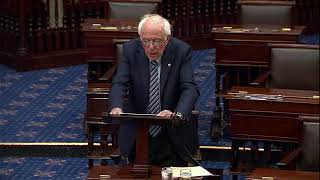
    Senator Bernie Sanders introduced the American AI Sovereign Wealth Fund Act on June 18, 2026, giving the public a 50% ownership stake in the largest U.S. AI companies through a federally managed fund valued at roughly $7 trillion.
  • 02.
    The fund is financed by a one-time 50% tax paid in stock, not cash, on AI companies earning $200 million or more in annual AI revenue, with a required 5% annual dividend delivering payments exceeding $1,000 per American per year.
  • 03.
    A seven-member Independent Commission for Democratic AI, nominated by the President and confirmed by the Senate, would manage the fund and use its voting shares to block harmful corporate decisions, while companies would have to separate their AI and non-AI businesses.

Deep Analysis

The mechanism: why a stock-funded fund, not just a tax

The core design choice in Sanders's bill is its strangest feature. Rather than simply taxing AI profits and cutting checks, the legislation imposes a one-time 50% tax payable in stock, seeding a sovereign wealth fund estimated at roughly $7 trillion, then mandates a 5% annual dividend that flows to citizens as payments exceeding $1,000 a year [1]. The choice is deliberate: Sanders is arguing the public should own a permanent equity stake in companies built on collective human knowledge, not merely collect a recurring levy [8]. But that distinction draws the sharpest critique from within his own camp. Stephanie Kelton, an economist and former Sanders adviser, argues the architecture is unnecessary, noting that 'the federal government doesn't need to seed an investment fund with assets in order to disburse dollars to Americans' [3]. Her point cuts to the bill's heart: if the goal is putting cash in pockets, Washington can tax AI firms directly and skip the fund entirely. By contrast, the fund's defenders see ownership itself as the point, granting the public both dividends and, through a seven-member Independent Commission for Democratic AI, voting power over the labs [1]. The mechanism, in other words, is not an implementation detail; it is the ideological argument.

Strange bedfellows: Sanders, Trump, and Altman circling the same idea

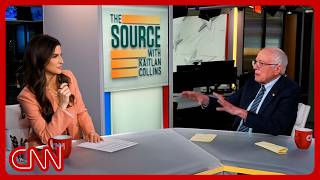
The most surprising feature of this fight is who agrees with it. Public ownership of AI has produced a cross-spectrum alignment that scrambles the usual battle lines. Just weeks before the bill dropped, reports surfaced that the Trump administration was separately negotiating a government stake in OpenAI, and Trump has broadly embraced government investment in private firms [5]. OpenAI CEO Sam Altman met with Sanders and supports the general concept of public equity in AI, even offering to advocate for it, while objecting that the 50% figure is too high [2]. That overlap is striking given the venom from the right elsewhere: the Wall Street Journal editorial board branded the plan a 'road to AI state socialism,' and critics frame it as confiscation [3]. Yet the seam runs deeper than the labels suggest. The reaction on social platforms reflected the same split, with even an ideological opponent inside the administration conceding the proposal resonates across the spectrum while rejecting the socialism framing. The takeaway: the question is no longer whether the public should hold a stake in frontier AI, but how large the stake should be and who controls it, an argument now joined by figures who agree on almost nothing else.

The feasibility paradox: seizing half of companies that lose money

There is a basic accounting problem at the center of the bill. The named targets, including OpenAI, Anthropic, and xAI, are companies Sanders himself acknowledged are currently unprofitable [2]. A fund built on equity in money-losing firms and a dividend that depends on stock appreciation invites an obvious question, raised across both expert commentary and online debate: is there any 'wealth' to seize yet? [6]. The proposal is widely described as unlikely to become law, though analysts note it advances the broader idea of offsetting AI's labor disruption through government stakes [7]. The dominant register of public reaction captured the tension precisely, with supporters embracing the principle while doubting both its political odds and its arithmetic. A frequent contrarian thread held that nationalizing unprofitable startups would damage the United States as a place to found or invest in a company. The feasibility gap is the bill's most concrete vulnerability: even sympathizers struggle to explain how a stake in firms that don't yet turn a profit funds a guaranteed annual check to every American.

The constitutional fight and the 'restitution for scraped data' defense

The bill's two loudest framings sit on opposite poles. Critics led by the Wall Street Journal editorial board argue the 'one-time 50% tax' is really expropriation that would violate the Fifth Amendment's takings clause, a constitutional challenge that could stall the plan before any dividend is paid [3]. Samuel Hammond of the Foundation for American Innovation extends the warning to governance, cautioning that 'even if taking partial ownership of frontier AI companies can make sense on paper, in practice it's a recipe for political favoritism and corruption' [3]. Tosin Akintola of Reason adds that government veto power would throttle innovation, writing that 'if every advancement in AI is subject to government approval, as Sanders proposes, it's unlikely that breakthroughs like these would be achieved' [4]. Against the takings argument, the online left advances a mirror-image moral claim: that a 50% stake is not seizure but restitution, owed because the labs trained their models on scraped art, code, and books without consent, the same 'collective human knowledge' Sanders invokes [8]. That framing reframes the entire dispute, casting the government's stake as repayment of a debt the companies already incurred, and it is the argument doing the most to unify the bill's supporters even as legal experts question whether it can survive court.

Historical Context

2026-06-03
Sanders published a New York Times op-ed, 'The Public Should Own Half of the Big A.I. Companies,' previewing the bill's core argument.
2026-06-05
Reports surfaced that the Trump administration and OpenAI were discussing a possible government stake in the AI startup.
2026-06-18
Sanders formally introduced the American AI Sovereign Wealth Fund Act.

Power Map

Key Players
Subject

Bernie Sanders AI Sovereign Wealth Fund Bill

BE

Bernie Sanders

Bill sponsor; frames the fund as making AI 'work for ordinary people' and asserts the public should share in wealth built on collective human knowledge.

SA

Sam Altman (OpenAI CEO)

Met with Sanders and supports the general idea of public equity in AI but objects to the 50% figure as too high; offered to advocate for the concept.

OP

OpenAI, Anthropic, xAI

Named target companies whose AI equity would be taxed into the fund; Sanders acknowledged several are currently unprofitable.

NV

Nvidia, Google, Microsoft, Amazon, SpaceX

Larger tech firms whose AI business units could be swept in if they meet the $200M AI-revenue threshold.

TR

Trump administration

Separately negotiating a government stake in OpenAI; Trump has embraced government investment in private firms, creating unusual cross-spectrum alignment with Sanders on public AI ownership.

Fact Check

8 cited
  1. [1] Sanders Introduces Legislation to Create $7 Trillion AI Sovereign Wealth Fund
  2. [2] Bernie Sanders wants to pay you $1,000 a year from a government stake in AI companies
  3. [3] Government ownership of AI companies
  4. [4] Bernie Sanders's AI Wealth Fund Bill Shows He Doesn't Understand AI or Wealth
  5. [5] Trump administration in talks for a stake in OpenAI
  6. [6] Sovereign wealth fund tax on AI companies unveiled by Sanders
  7. [7] Bernie Sanders pitches $1,000 annual payout from public ownership of AI
  8. [8] The Public Should Own Half of the Big A.I. Companies

Source Articles

Top 5

THE SIGNAL.

Analysts

"The government doesn't need to seed an investment fund with assets to pay Americans; it can simply tax AI companies directly rather than rely on stock appreciation."

Stephanie Kelton
Economist, former Sanders adviser

"Even if partial ownership of frontier AI firms makes sense on paper, in practice it invites political favoritism and corruption."

Samuel Hammond
Foundation for American Innovation

"The proposal misunderstands AI's broad benefits, government voting and veto power would slow innovation, and the wealth-fund model is associated with authoritarian regimes."

Tosin Akintola
Writer, Reason

"Calls the plan a 'road to AI state socialism' and argues the 'one-time 50% tax' is really government expropriation that would violate the Fifth Amendment's takings clause."

Wall Street Journal Editorial Board
Editorial board

"Praises Sanders as the rare lawmaker willing to govern on AI and challenge billionaire-controlled labs."

AJ Dellinger
Writer, Gizmodo
The Crowd

"I will soon be introducing a bill to give the public a 50% ownership stake in the largest AI companies in America. This would guarantee that the trillions created by AI are used to improve the lives of all of us — and block oligarch decisions that harm the American people."

@@BernieSanders29075

"While I'm no fan of socialism or arbitrary confiscations of wealth, I can see why Bernie Sanders' proposal (for the government to take a 50% stake in AI companies) resonates, including with many on the right. The CEOs of the leading AI labs have told us repeatedly that they will [text truncated by source]"

@@DavidSacks6385

"Senator Bernie Sanders is proposing a one-time 50% tax directly in stock from the AI labs which will be used to fund the American AI Sovereign Wealth Fund. This would give the government voting rights and board seats, and then directly pay a dividend to American citizens."

@@AndrewCurran_325

"Bernie Sanders pushes for 50% public ownership of American AI companies — proposes AI sovereign wealth fund that would hold direct ownership stakes in largest AI firms"

@u/yourfavchoom47000
Broadcast
Introducing the American AI Sovereign Wealth Fund Act

Introducing the American AI Sovereign Wealth Fund Act

Why Bernie Sanders wants to force AI companies to share their wealth

Why Bernie Sanders wants to force AI companies to share their wealth

LIVE: Who will own and control the future of AI?

LIVE: Who will own and control the future of AI?