From Chip Seller to Landlord: How the Backstop Actually Works
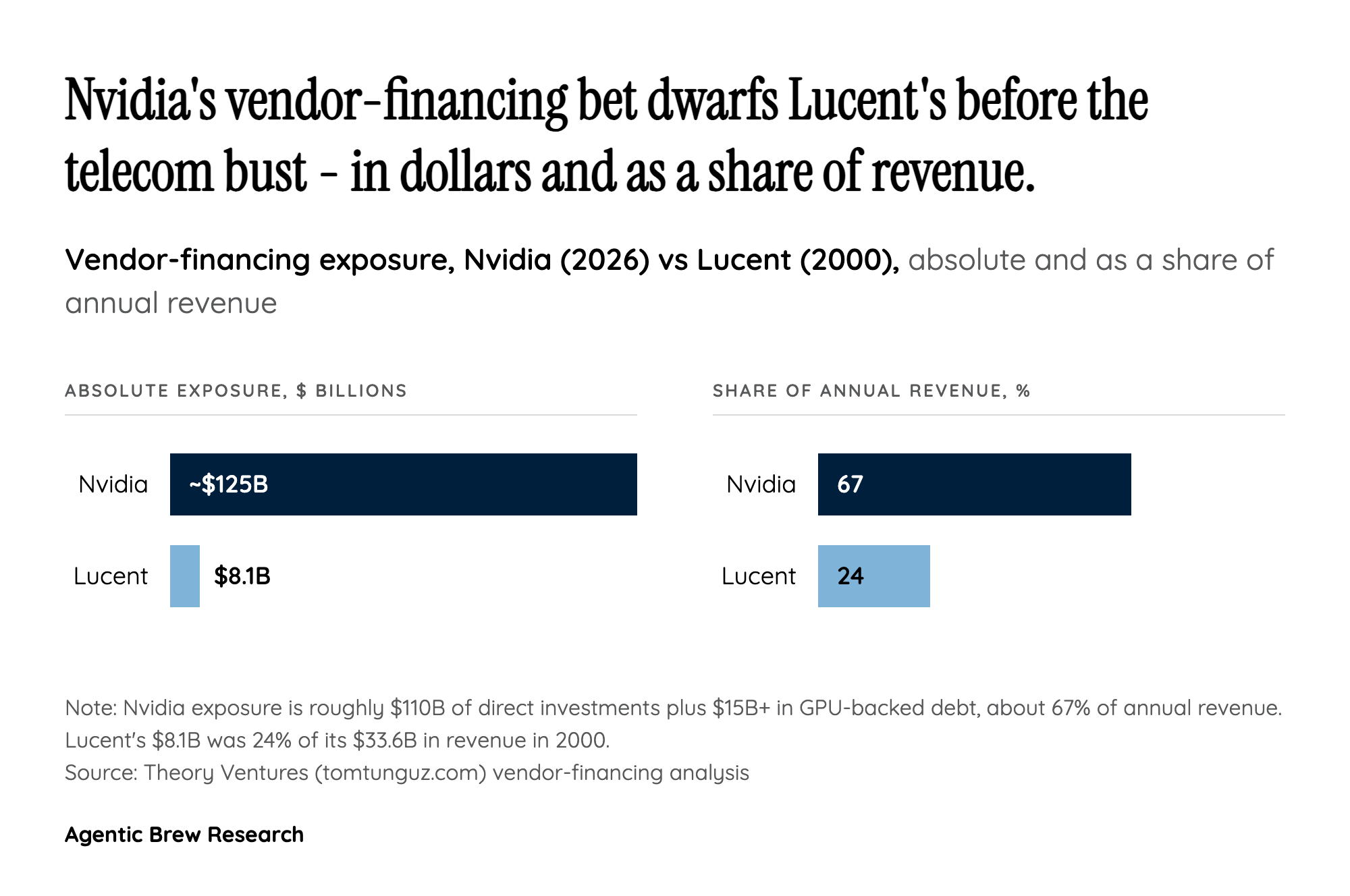
The core of NVIDIA's move is a change in what it sells. Instead of a one-time hardware sale, NVIDIA now takes two revenue streams from a single deployment: the standard product revenue when an AI cloud buys its infrastructure, plus a share of the cloud revenue that the customer earns renting out that supported capacity [1]. In effect, NVIDIA becomes a recurring participant in the downstream compute business it used to only supply.
The credit-support side is what makes this more than a rebranding. NVIDIA is now willing to put its balance sheet behind customer GPUs. The clearest example is the CoreWeave agreement, initially valued at $6.3 billion, under which NVIDIA is obligated to purchase residual unsold capacity through April 13, 2032 whenever CoreWeave's datacenters are not fully booked by its own customers [2]. That guarantee turns an idle-GPU risk that would normally sit with the neocloud into a floor that NVIDIA underwrites - which is precisely what lets a capital-constrained operator borrow against those chips in the first place. One widely shared community read captured the shift bluntly, describing NVIDIA as effectively becoming a landlord for GPUs that rents out compute and takes a cut of the rent.