Inside the Local Runtime: Orchestrator, Sandbox, and the Escalation Gate
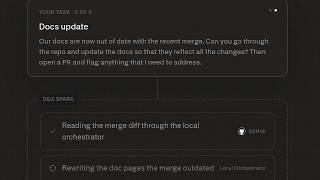
Portable Computer's headline claim is architectural: the orchestrator LLM that plans a task and the subagent LLM that executes it both run entirely on the user's own hardware, with the models and tools living locally rather than in Perplexity's cloud [1]. Perplexity's VP of Engineering, Nate, describes the release as bundling "the entirety of the agent harness and inference and everything needed to do work locally" [3]- a framing that positions Portable Computer less as a stripped-down mobile app and more as a full copy of the company's agent stack running on owned silicon. On DGX Spark and RTX Linux workstations, that stack defaults to a post-trained PPLX 27B model, with Qwen 3.8 27B available as an alternative and an NVIDIA Nemotron 3.5 Lightning mixture-of-experts model coming soon [2].
The mechanism that makes this trustworthy for sensitive work is the sandbox, not the model choice. Code and tool calls execute inside an OS-enforced sandbox that restricts process, filesystem, and network access, and Perplexity built it to fail closed - if the sandbox is unavailable, tool execution is disabled rather than silently downgraded to an unprotected mode [2]. When a task genuinely needs live web access or frontier-model reasoning beyond what the local models can do, the orchestrator does not quietly route the request to the cloud; it stops and asks the user for explicit, PII-flagged permission first, and that escalation is scoped to a single task rather than persisting across future sessions [2].