China's Domestic Immersion DUV Lithography Breakthrough
TECH

China's Domestic Immersion DUV Lithography Breakthrough

28+
Signals

Strategic Overview

  • 01.
    A Shanghai state-backed manufacturer, Shanghai Aishengna Electronic Technology Group, has begun limited production of domestic immersion DUV lithography machines, targeting about 5 systems in 2026 and 20 in 2027.
  • 02.
    First deliveries are expected this year to three major Chinese chipmakers - SMIC, Hua Hong Semiconductor, and ChangXin Memory Technologies (CXMT) - with SMIC already testing a related Yuliangsheng prototype since September 2025.
  • 03.
    The tools use 28nm-class immersion DUV technology that reaches 7nm-class features only through multipatterning, and still depend on imported Japanese components even though most parts are domestically sourced, with local supplier delays slowing 2026 output.
  • 04.
    News of the ramp triggered an over 6-8% drop in ASML shares (roughly $44 billion in market value) and a broader semiconductor equipment sell-off, despite most analysts calling the near-term threat modest.

Deep Analysis

A Machine Built With 2000s-Era Specs Triggered a $44 Billion Selloff

ASML reported blow-out second-quarter results just twelve days before a single report about a Chinese domestic toolmaker erased roughly $44 billion of its market value in one trading session, with shares sliding 6.3 percent to $1,645.65 - and by some estimates as much as 8 percent, or about EUR 8 billion[1][2]. The damage spread well beyond ASML: Applied Materials fell 5.3 percent, Lam Research 6.2 percent, KLA Corp 4.7 percent, and the Semiconductor ETF (SOXX) dropped 3.2 percent[1]. What makes the reaction striking is the scale mismatch - the reported ramp targets roughly five machines in 2026 and twenty in 2027, a fraction of what a single established supplier ships in a year, yet the headline alone was enough to move an entire equipment sector.
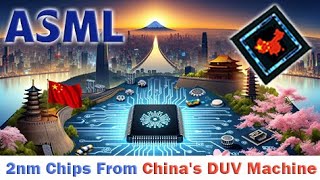
Behind the Headline: A 28nm-Class Tool Still Leaning on Japanese Parts

Behind the Headline: A 28nm-Class Tool Still Leaning on Japanese Parts
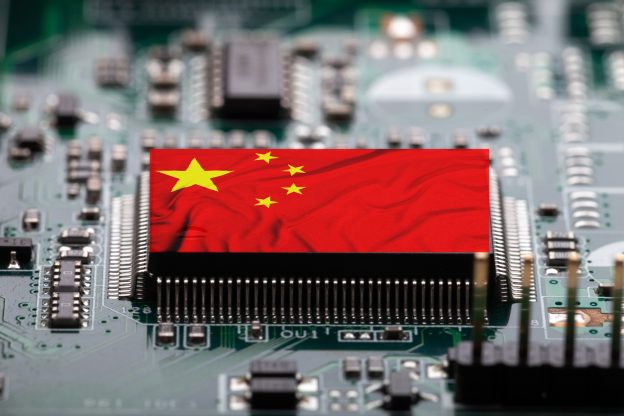
Illustrative image of semiconductor chip manufacturing.

Strip away the market drama and the underlying hardware is more modest than 'breakthrough' implies. Immersion DUV lithography uses a thin layer of water between the lens and the wafer to sharpen resolution, letting the new Chinese tools pattern 28-nanometer-class features in a single exposure and reach 7-nanometer-class geometries only through multipatterning - a workaround that adds overlay complexity and lowers yield compared with ASML's more advanced systems[3]. Most components are domestically produced, but critical parts are still imported from Japan, and local supplier delays have already slowed the 2026 production ramp[3]. In other words, the 'domestic' lithography chain is not yet fully domestic.

Wall Street's Own Analysts Say the Panic Overshot

The gap between headline and substance is exactly what the analysts covering ASML pointed to once the dust settled. Bank of America's Didier Scemama called the sell-off 'an over-reaction' and framed the pullback as 'an attractive opportunity,' noting that China's domestic toolmaker has yet to demonstrate high-volume production at 28nm or below - and that truly replacing ASML means matching its 330 wafers-per-hour throughput and 2.5-nanometer overlay precision, benchmarks the new tools haven't shown[4]. JPMorgan's equity analysts were blunter still: producing a handful of immersion DUV tools 'is not the same as producing tools that can be used for high-volume manufacturing'[5]. ODDO BHF's Stephane Houri went further, warning that whatever China has shown 'could be limited to the very low end'[6]. Even the more measured voices agreed the news was only a modest negative - analyst Jakob Bluestone called it a 'small negative' given that global demand for ASML's tools still far outstrips supply[6], while Degroof Petercam's Michael Roeg noted the underlying quarter was 'blow-out results across the board' even as China-related headlines overshadowed it[1].

The Real Prize Is Supply-Chain Insurance, Not Beating ASML at the Frontier

None of this changes the strategic logic driving Beijing. US and Dutch export controls have already cut China off from EUV tools entirely and are tightening around immersion DUV, pushing self-sufficiency in lithography from an ambition into a policy imperative[2]. The production effort itself was built through consolidation rather than a single lab breakthrough: Shanghai Aishengna Electronic Technology Group, a state-owned company capitalized with 7 billion yuan (about $1 billion) by Shanghai Electric Holding and Shanghai International Trust, absorbed development teams from Shanghai Yuliangsheng Technology and Shanghai Micro Electronics Equipment (SMEE) to pool years of scattered domestic expertise into one production line[5]. That patience is reinforced by numbers that predate this news: China's share of ASML's group sales had already fallen to 14 percent in the second quarter of 2026, down from 19 percent in the first, as existing export restrictions bit[7]. Even a successful, legacy-node-focused domestic supply chain still leaves a residual dependency on Japanese components, meaning the export-control chokepoint has narrowed rather than closed[3]. Public reaction largely tracked this same split - posts on X converged on the same sober facts (state-backed Shanghai producer, immersion DUV rather than EUV, deliveries to SMIC, Hua Hong, and CXMT) without overstating the technological leap, while the dominant read across tech-focused Reddit threads was that this is impressive engineering wrapped in overblown market panic, with several commenters drawing a comparison to China's EV and solar playbook of subsidizing capacity now to compete on legacy-node volume later.

Historical Context

2023-08
Established as a state-owned enterprise with 7 billion yuan ($1.0 billion) in registered capital, backed by Shanghai Electric Holding and Shanghai International Trust.
2025-09
Began testing a Yuliangsheng immersion DUV lithography prototype system ahead of the 2026 mass-production ramp.
2026-Q2
China's share of ASML sales fell to 14% from 19% in the prior quarter, reflecting existing export-control pressure ahead of the DUV production news.

Power Map

Key Players
Subject

China's Domestic Immersion DUV Lithography Breakthrough

SH

Shanghai Aishengna Electronic Technology Group

State-owned Shanghai manufacturer leading domestic immersion DUV production, formed by consolidating development teams from Yuliangsheng and SMEE, backed by Shanghai Electric Holding and Shanghai International Trust with $1 billion registered capital.

SM

SMIC, Hua Hong Semiconductor, CXMT

Target Chinese chipmakers set to receive the first domestic immersion DUV deliveries in 2026; SMIC has already been testing a Yuliangsheng prototype since September 2025.

AS

ASML

Dutch lithography leader whose immersion DUV dominance is being tested; shares fell over 6-8% on the news even though China still represents roughly 20% of group sales and 44% of DUV revenue.

AP

Applied Materials, Lam Research, KLA Corp

US semiconductor capital equipment makers whose shares fell 4-7% in the sympathy sell-off tied to the China DUV report.

US

US lawmakers (MATCH Act)

Advancing bipartisan legislation to restrict Chinese purchases of DUV tools, treating immersion DUV as an export-control chokepoint that this development could weaken.

Fact Check

7 cited
  1. [1] ASML Drops 6% After China DUV Report Raises Questions About Lithography Edge
  2. [2] China's DUV Chipmaking Breakthrough Challenges Western Dominance
  3. [3] China Reportedly Starts Mass-Producing Immersion DUV Tools, SMIC/Hua Hong/CXMT Deliveries Expected This Year
  4. [4] BofA Downplays China's DUV Tool Production Report, Sees Only Modest Threat to ASML
  5. [5] Exclusive: China Starts Production of Home-Grown Immersion DUV Lithography Machines
  6. [6] China's Chipmaking DUV Tool and ASML, Explained
  7. [7] ASML and US Chip Stocks Sink on Report of China's DUV Breakthrough

Source Articles

Top 5

THE SIGNAL.

Analysts

Sees the ASML sell-off as an overreaction, calling the threat from China's domestic DUV tools modest, since the domestic toolmaker has yet to demonstrate high-volume production at 28nm or below and matching ASML requires matching its throughput and overlay precision.

Didier Scemama
Analyst, Bank of America

Caution that a handful of tools does not equal high-volume manufacturing capability.

JPMorgan Chase equity analysts
Equity analysts, JPMorgan Chase

Expresses skepticism that China's demonstrated capability extends beyond low-end chip production.

Stephane Houri
Head of equity research, ODDO BHF

Frames the development as only a modest negative for ASML given that global demand for ASML's tools still far outstrips available supply.

Jakob Bluestone
Analyst

Notes ASML's underlying quarterly execution was very strong even as China-related headline risk overshadowed it in the market's reaction.

Michael Roeg
Analyst, Degroof Petercam
The Crowd

China has begun manufacturing its own immersion DUV lithography machines, the chipmaking tool the Dutch ASML has long dominated. The first units are due this year to Chinese chipmakers SMIC, Hua Hong and ChangXin Memory. ASML shares fell more than 7%.

@@IntCyberDigest643

SITUATION EXPLAINED: A Chinese state-backed company started mass-producing DUV lithography tools, a step below EUV but still significant. • ASML shares fell as much as 6.5%, their lowest since early June, after The Information reported a Shanghai-based, state-backed company...

@@MTSlive54

China just started mass-producing its own DUV lithography tools. According to The Information, a state-backed Shanghai company is delivering the first homegrown immersion DUV machines to SMIC, Hua Hong and CXMT. Target: ~5 systems this year, 20 in 2027. This is not EUV. It...

@@Kenjatina_og5

China begins mass production of homegrown immersion chipmaking machines in major breakthrough, report claims — first DUV lithography units will be delivered this year to SMIC, Hua Hong, and CXMT

@u/Steap-Edit965
Broadcast
China's immersion DUV lithography machine may be able to manufacture 2nm chips!

China's immersion DUV lithography machine may be able to manufacture 2nm chips!

China successfully developed a DUV lithography machine with an overlay accuracy of ≤8nm.

China successfully developed a DUV lithography machine with an overlay accuracy of ≤8nm.

No shortage of immersion DUV lithography machines in China?!

No shortage of immersion DUV lithography machines in China?!

China's Domestic Immersion DUV Lithography Breakthrough — AI News | Agentic Brew