The Deflation Argument Behind 'AI and Robots Will Fix the Debt'
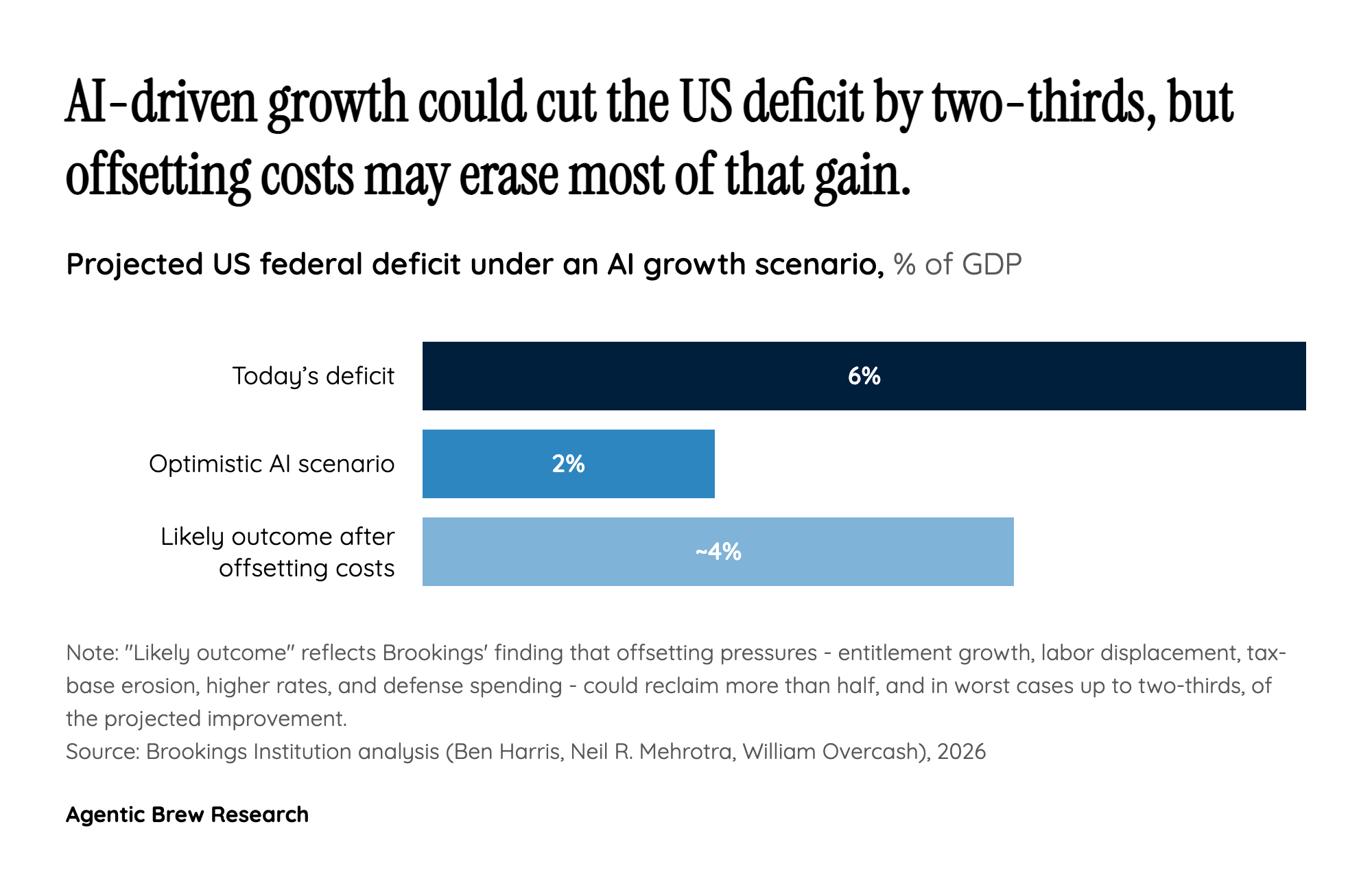
Musk's claim is built on a specific economic mechanism, not just a slogan. He argues that if AI and robotics drive a dramatic increase in the output of goods and services, that output will grow faster than the money supply, and the result will be deflation - which shrinks the real burden of existing debt over time [1]. He first laid out this thesis in detail in December 2025, attaching a concrete timeline: roughly three years for AI and robotics to begin resolving the crisis [1]. By the time he appeared on the Dwarkesh Podcast, the framing had hardened into an ultimatum - the country is '1,000% going to go bankrupt' without that productivity boost [2]. The Isaacson interview previewed this week is the premiere episode of 'The Builders,' a podcast series launching October 20, 2026 that also features Peter Thiel, Alex Karp, Fei-Fei Li, and Dario and Daniela Amodei [3]. In it, Musk repeats the core line almost verbatim: 'We're not gonna solve it by trying to save our way there.' [4]What the soundbite leaves out is that Musk's own fix depends on deflation taking hold broadly enough to matter - a condition that, if it materialized, would also ripple through wages and asset prices, not just debt service costs.