The Pricing Play: Racing Cloud Incumbents to the Bottom
Meta Superintelligence Labs shipped Muse Voice Transcribe on September 1, pairing streaming speech recognition with speaker diarization for 20-plus voices and endpointing in a single real-time model [1]. The headline is price: Meta set it at $3 per 1,000 audio-minutes, or roughly $0.18 an hour, about one-fifth of what Google Cloud Speech-to-Text charges on its standard tier [2]. That squeeze extends into text generation, too. Muse Spark 1.3's discounted 'contributor' tier runs $0.10 per million input tokens and $0.20 per million output tokens, a fraction of the $1.25/$4.25 rate for the full model [3], prompting Zuckerberg to call the release "almost too cheap to meter" [4].
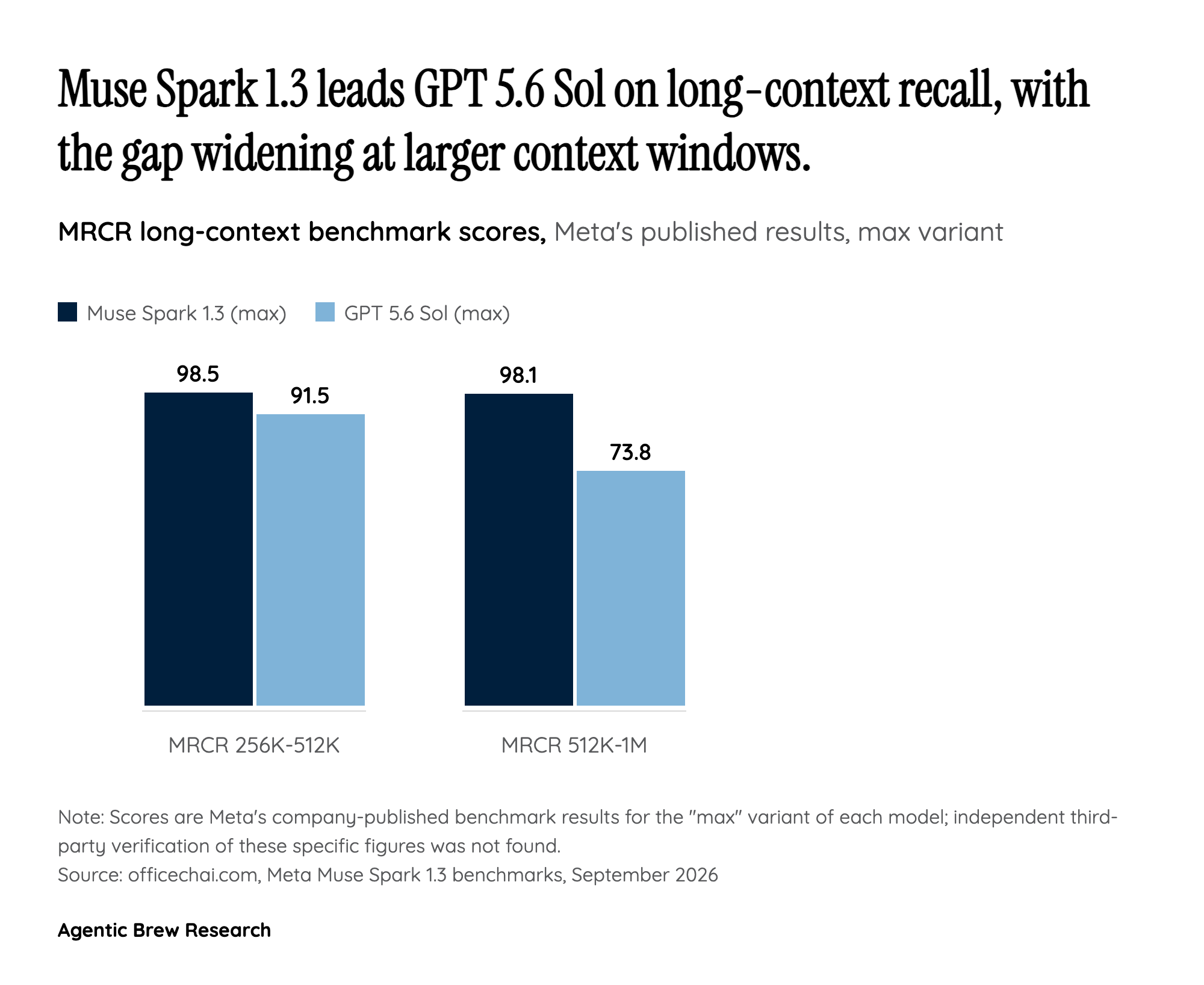
The pricing isn't incidental - it's the actual pitch. Rather than lead with a clean benchmark sweep, Meta is explicitly selling cost as the differentiator against Google's transcription stack and against per-token rates from OpenAI and Anthropic. That's a familiar Meta playbook (subsidize adoption, worry about margin later), and the reaction wasn't uniformly positive: the r/ClaudeAI thread discussing Spark 1.3's contributor-tier pricing met it with heavy skepticism, its auto-mod summary bluntly concluding 'nobody's buying it' toward Meta's benchmark claims at that price point. The pricing story is landing as intended in one sense - as the thing worth arguing about - even if not everyone is convinced the math holds up.