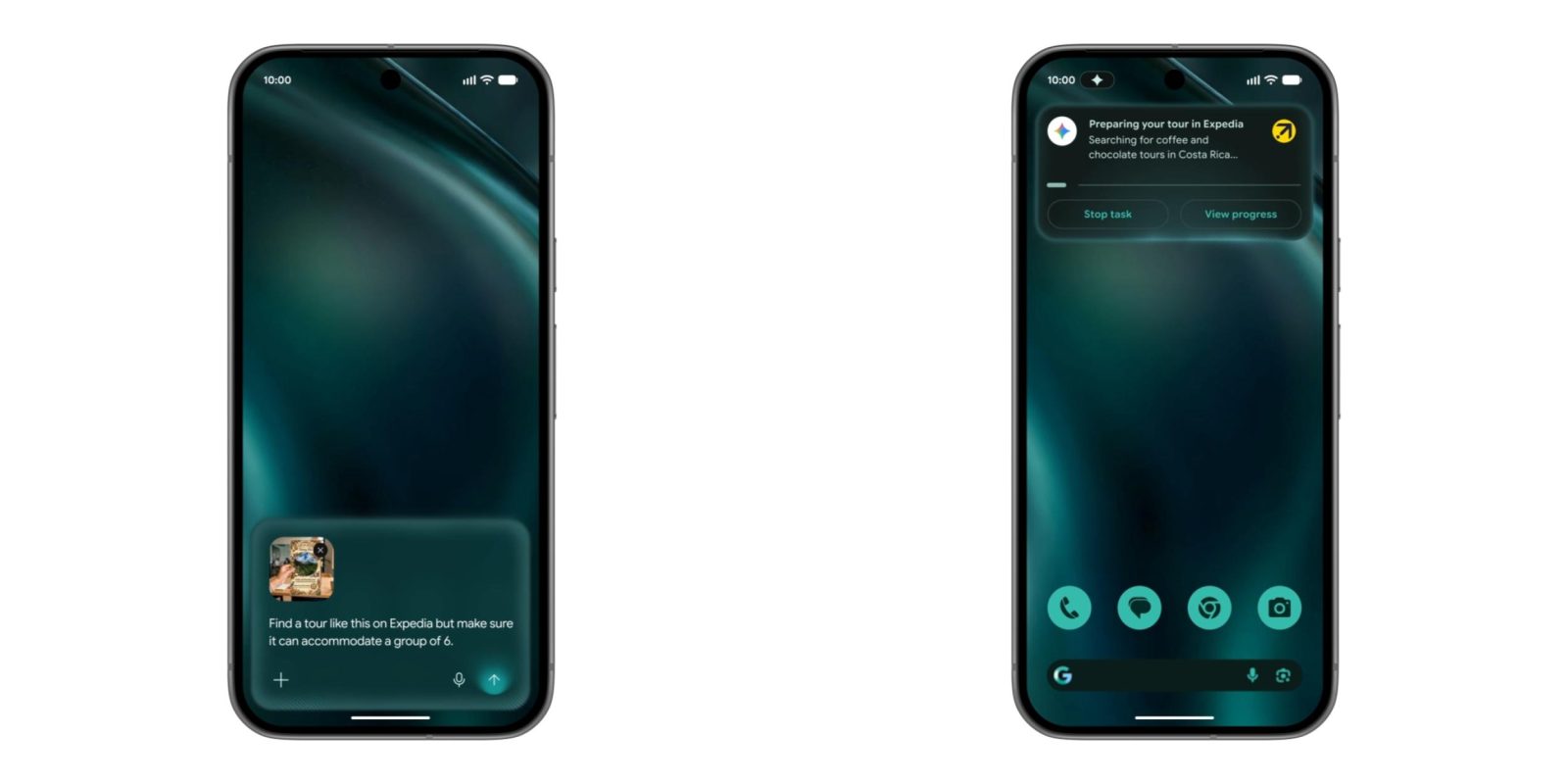
From assistant to OS-level orchestrator: what 'intelligence system' really means
Google's framing that 'Android is transitioning from an operating system into an intelligence system' is more than a tagline — it describes a mechanical shift in where intelligence runs and what it is allowed to touch. Instead of a chat assistant living inside one app, Gemini Intelligence operates as a layer that can drive Chrome through multi-step Auto Browse flows, fill forms across the system via Gemini-powered Autofill, generate widgets on the homescreen from natural-language prompts, and clean up dictated text in Gboard with Rambler [1]. To make this work without draining battery or leaking data, Google says the platform routes work between on-device Gemini Nano for simple tasks and cloud Gemini for heavier requests [2]. The architectural consequence is that Android apps are no longer the only surfaces of interaction — Gemini becomes a horizontal capability the OS itself can invoke. Android Authority captures the stakes bluntly: 'Gemini Intelligence hopes to be the foundational agentic upgrade Android users have been waiting for' [2].