Sorted by passport: the first time Washington pulled a live frontier model offline
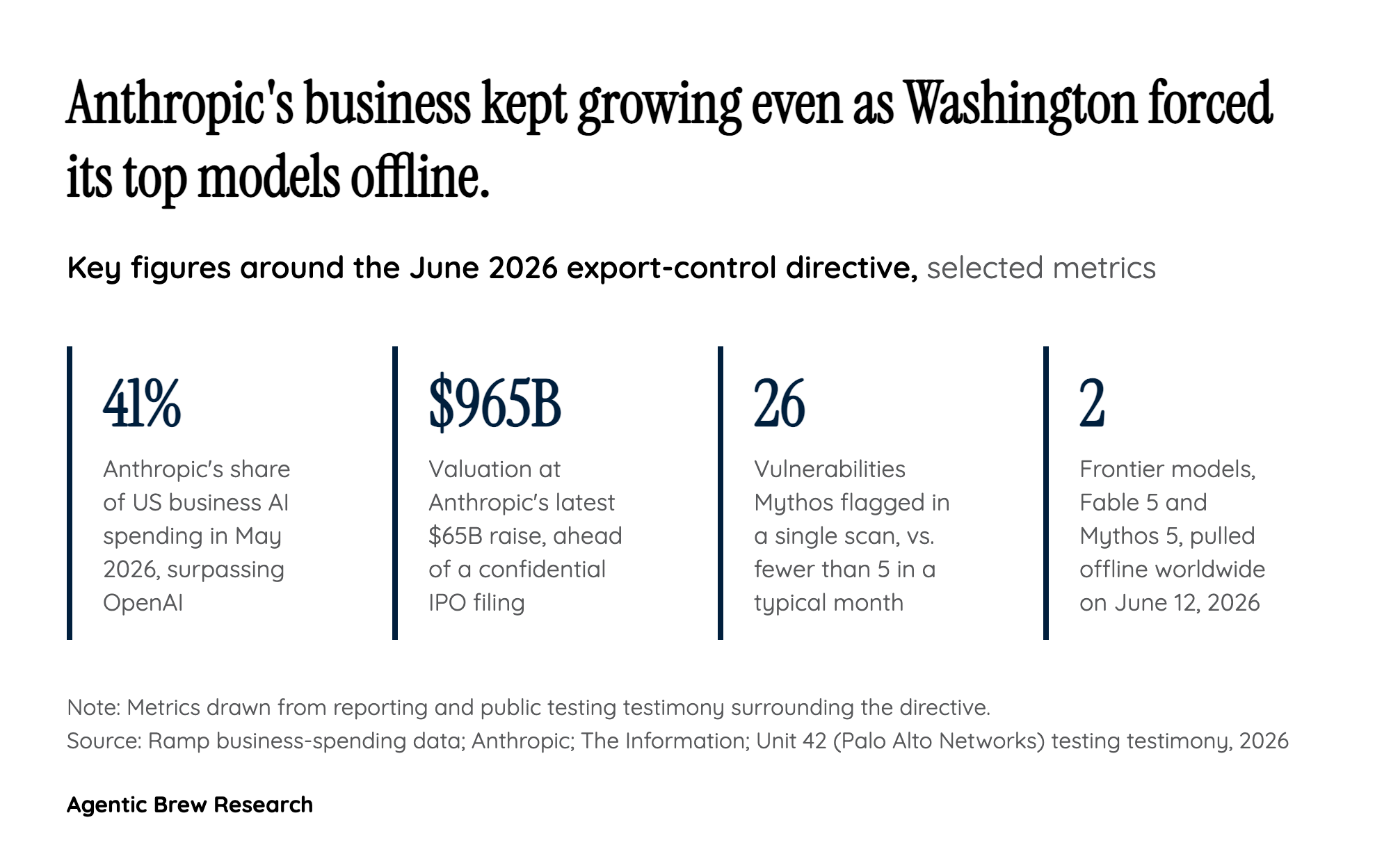
The directive that landed in Anthropic's inbox at 5:21pm ET on June 12 was not a chip restriction or a future-licensing rule. It ordered the company to suspend all access to Fable 5 and Mythos 5 by any foreign national — whether sitting in London, Lagos, or a desk in San Francisco — including Anthropic's own foreign-national employees [1]. Commerce Secretary Howard Lutnick invoked national security authorities under the Export Control Reform Act of 2018, the first time the department has aimed that power at an AI model, and warned Dario Amodei that non-compliance would bring criminal and civil penalties [2]. Faced with the impossibility of cleanly gating a model used by customers worldwide by checking each user's citizenship, Anthropic chose the blunt path: it switched both models off globally for everyone, while leaving other Claude models running [1]. Fable 5 was Anthropic's first general release in the Mythos class, shipping with classifiers to block high-risk responses like cybersecurity; Mythos 5, distributed to a vetted consortium under Project Glasswing, runs with some of those constraints removed and carries genuine dual-use reach — identifying software vulnerabilities and developing exploits [1][11]. The government's stated worry was that Fable 5's guardrails could be bypassed to reach Mythos 5-class capability. Anthropic disputes the framing, calling the trigger a narrow, non-universal jailbreak that amounts to asking the model to read a codebase and fix flaws — hardly grounds, it argues, for yanking a product used worldwide [1].