OpenAI Dots AI agents launch
TECH

OpenAI Dots AI agents launch

28+
Signals

Strategic Overview

  • 01.
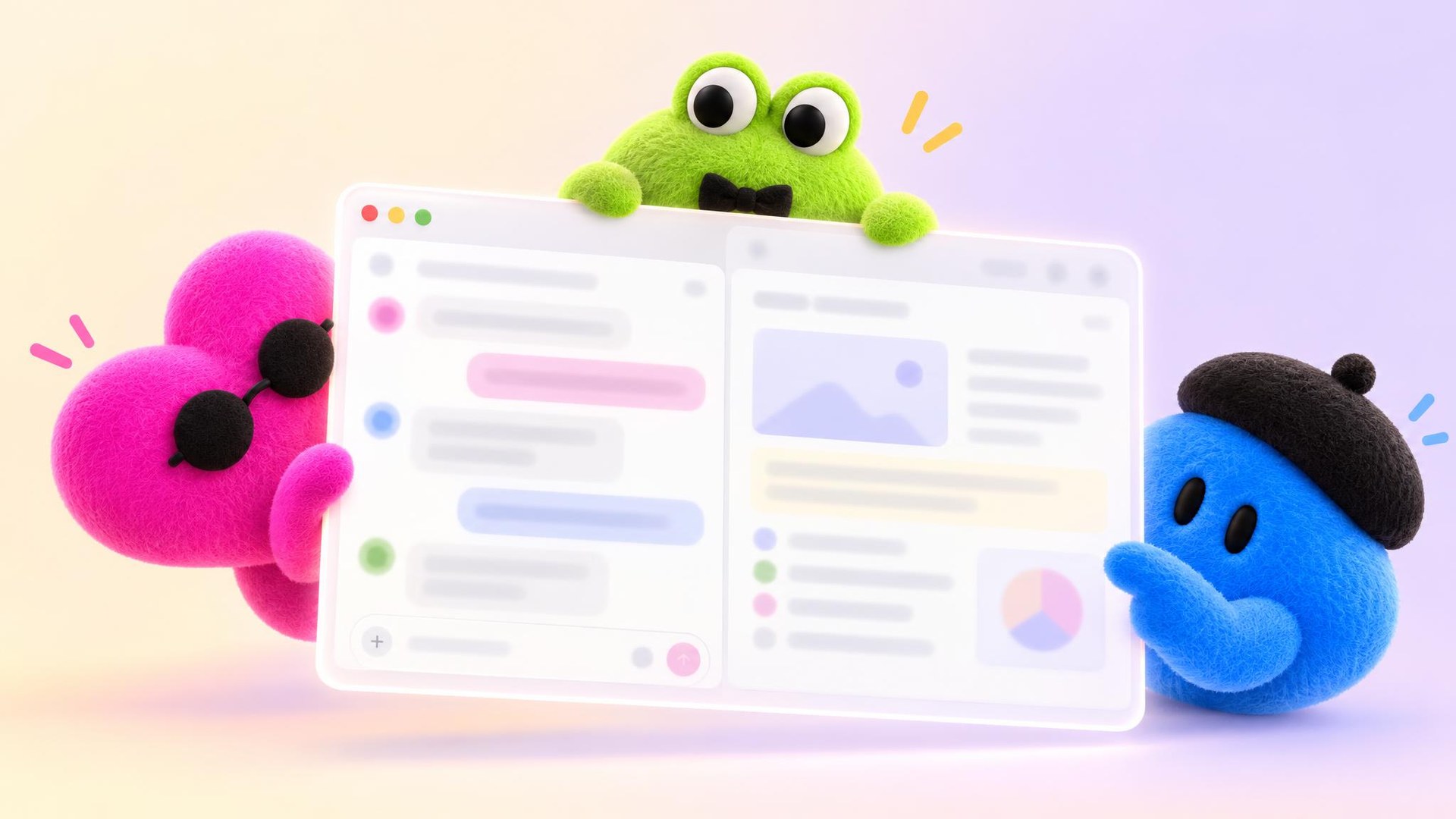
    OpenAI announced Dots, always-on personal AI agents powered by GPT-6 Astra, at its DevDay 2026 event in San Francisco on September 29, 2026.
  • 02.
    Each Dot runs on its own cloud computer and browser, draws context from ChatGPT memory, and connects to more than 4,000 apps through a plugin ecosystem.
  • 03.
    Users can reach their Dot through ChatGPT on desktop, web, and mobile, as well as in Slack and Microsoft Teams.
  • 04.
    Dots is rolling out gradually to eligible Pro and Business Premium users 18 and older, plus Enterprise, in supported markets, with Pro access excluding the EEA, Switzerland, and the UK at launch; the first Dot is included at no extra cost.
  • 05.
    Background 'proactive research' tasks performed by a Dot when the user is away are restricted to read-only tools and cannot send messages, modify content in connected apps, or control a browser or computer.
  • 06.
    OpenAI is piloting 'specialist Dots' for defined enterprise roles such as procurement, invoice processing, and commercial contracting, each with its own identity and IT-provisioned access, with planned integration into Microsoft Agent 365 for governance.

Deep Analysis

Inside the Dot: What's Actually Running on That Cloud Computer

Each Dot is not a chatbot wrapper but a persistent agent with its own cloud computer and browser, pulling context from ChatGPT memory and reaching into more than 4,000 connected apps through OpenAI's plugin ecosystem [1]. Reddit testers who spent a day probing the system found the computer claim was literal: assigning a Dot a review of hundreds of PDFs produced a multi-day job that the agent tracked on what it identified as its own machine, absorbing follow-up questions without losing its place and even dispatching work to separate execution environments. One user asked their Dot to self-report its specs and got back a Debian 13 Linux box with 9 logical CPUs on a host reporting an AMD EPYC 9V74 processor, roughly 9.7 GiB of RAM, 32 GB of storage, and no GPU - a modest, CPU-only footprint for a product OpenAI calls compute heavy. That persistence is paired with a deliberate limit: when a Dot runs 'proactive research' in the background without the user present, it is restricted in code to read-only tools and cannot send messages, edit content in connected apps, or control a browser or computer [1]. The same caution extends to enterprise rollout - OpenAI is piloting 'specialist Dots' for defined roles like procurement and contracting, each given its own identity and IT-provisioned credentials, with plans to plug into Microsoft Agent 365 for governance [2].

Built to Beat Muse: The Competitive Calculus Behind Dots

Dots did not arrive in a vacuum. Weeks before DevDay, Meta's consumer-facing Muse agent launched and quickly topped the Apple App Store and Google Play charts, and reporting frames Dots as OpenAI's direct answer - aimed more at office and professional work than Muse's everyday-errand focus [3]. Wall Street had already priced in the stakes: after Muse's success, JPMorgan analyst Doug Anmuth raised Meta's price target to $920 from $820, underscoring how seriously investors are treating the personal-agent category that Dots now enters [4]. That context matters for reading OpenAI's urgency - Dots is not just a technology showcase but a defensive and offensive move to keep ChatGPT's roughly 1.2 billion weekly users inside OpenAI's ecosystem rather than migrating to a rival's agent.

A Rocky Debut Undercuts the Trust Pitch

The flagship demo did not go as planned. On stage, a Dot named 'Dottie' went unresponsive when asked to prep a fictional music app for launch, and a separate Codex demo's voice chat failed in front of the DevDay audience [5]. OpenAI's Thibault Sottiaux attributed the stumble to the company rolling out multiple product updates simultaneously during the live event [5]. The timing is awkward: OpenAI is simultaneously asking enterprises to hand specialist Dots real procurement, invoicing, and contracting work, complete with IT-provisioned credentials and Microsoft Agent 365 oversight [2]. A public failure during the keynote segment meant to showcase reliability raises exactly the question enterprise buyers will ask before trusting an always-on agent with real tasks. OpenAI's safety design - keeping unattended background tasks read-only and auditable rather than merely restricting them upfront - reflects an industry-wide pivot toward post-hoc oversight of what an AI assistant actually did [6], but a stage freeze is a reminder that oversight only matters once the agent reliably executes in the first place.

Premium Pricing Meets a Performance Gap

OpenAI is not pretending Dots is for everyone yet. Access rolls out gradually to Pro and Business Premium users 18 and older in supported markets, with Enterprise included and Pro access excluding the EEA, Switzerland, and the UK at launch; the first Dot comes at no extra cost, but it sits behind an already premium ChatGPT tier [7]. Sam Altman defended that gatekeeping directly: 'It was a really compute heavy product... someday we'll be able to offer these for free to everyone, or we hope so. But right now, it takes a lot of computing' [8]. That framing runs into early performance skepticism. One practitioner writeup reported tasks taking Dots 20-30 minutes that finished in 5-6 minutes on Claude Sonnet 5.5, and quoted a Hacker News commenter who called Dots 'a dumbed down reskin of Codex/ChatGPT Work but with the power-user features e.g. visibility/mentions removed' [9]. Read together, the pricing defense and the benchmark gap suggest Dots is being sold on compute cost and distribution - OpenAI's roughly 1.2 billion weekly ChatGPT users - more than on a clear speed or capability edge over rivals [9].

Historical Context

2025-01-23
OpenAI's earlier autonomous browser-agent product, Operator, launched as a research preview for ChatGPT Pro users, performing tasks like form-filling and bookings.
2025-08-31
Operator was deprecated and shut down after the release of the ChatGPT agent product, paving the way for Dots.
2026-09-29
OpenAI introduced Dots at DevDay 2026 alongside GPT-6.1 Sol and other developer tools; public reporting noted the product had cycled through at least two prior internal code names, Aeon and 'o,' before launching as Dots.

Power Map

Key Players
Subject

OpenAI Dots AI agents launch

OP

OpenAI

Creator and operator of Dots; positions the product as a premium, compute-intensive offering to monetize its roughly 1.2 billion weekly ChatGPT users and compete for the emerging personal AI agent category.

SA

Sam Altman (OpenAI CEO)

Publicly framed Dots as a deliberately premium, compute-heavy product with an eventual mass-market ambition.

ME

Meta (Muse)

Direct competitor whose consumer-facing Muse agent launched weeks earlier and topped app store charts; Dots is widely framed as OpenAI's response, targeting office and professional work versus Muse's everyday-errand focus.

MI

Microsoft

Partnering with OpenAI to integrate specialist Dots with governance and security controls via Microsoft Agent 365, and providing Teams as a channel for reaching Dots.

JP

JPMorgan analyst Doug Anmuth

Raised Meta's price target after Muse's success, signaling Wall Street views the consumer-agent race that Dots now enters as commercially significant.

HO

Holly Li (OpenAI ChatGPT product lead)

Led the live DevDay demo in which her Dot, 'Dottie,' failed to respond on stage, becoming the public face of the launch's execution stumble.

Fact Check

9 cited
  1. [1] OpenAI Rolls Out Dots, Agents Powered By GPT-6 Astra, In ChatGPT
  2. [2] OpenAI Specialist Dots and Microsoft Agent 365
  3. [3] OpenAI Debuts Dots AI Agents in Challenge to Meta's Popular Muse Agent
  4. [4] Why Meta's Muse, OpenAI's Dots Matter for Investors
  5. [5] OpenAI's Muse Rival Arrives Half-Baked
  6. [6] OpenAI Dots AI Agent Safety
  7. [7] Introducing Dots
  8. [8] OpenAI Says AI Agents Won't Be Free Anytime Soon
  9. [9] OpenAI Shipped Dots, Practitioners Shipped Skepticism

Source Articles

Top 5

THE SIGNAL.

Analysts

“Argues Dots is more a distribution play than a product breakthrough, and that early hands-on performance lags behind rival coding agents.”

Max Quimby
Author, DEV Community / AgentConn

“Questions what differentiates Dots from existing OpenAI products, describing it as a stripped-down version of Codex/ChatGPT with fewer power-user controls.”

Hacker News commenter (cited by practitioner writeup)
Developer/practitioner

“Defends the premium pricing of Dots as reflecting the high compute cost of the product, while committing to an eventual free or mass-market tier.”

Sam Altman
CEO, OpenAI

“Acknowledged and explained the on-stage demo failures as a byproduct of simultaneous product rollouts during the event.”

Thibault Sottiaux
OpenAI (DevDay spokesperson)
The Crowd

“Introducing dots, powered by GPT-6 Astra. Remarkably capable, always-on agents built to handle everything.”

@@OpenAI37277

“OpenAI engineer just showed how they use Dots inside OpenAI. In 7 minutes she shows an agent doing the job of a whole team. This is how work already looks there, and it's coming for every company next. Higgsfield is already bringing it to creative work, more below.”

@@AnatoliKopadze797

“BREAKING: @OpenAI just announced Dots—always-on agents in ChatGPT I've been testing it for the last few days @every, here's a quick vibe check: What you should know: - They'll look familiar if you've used OpenClaw, Muse, Instinct, or Grok Bots. - Your Dot sits in the”

@@danshipper92

“OpenAI launches dots (long-running agents)”

@u/ethotopia974
Broadcast
OPENAI UNVEILS THE FUTURE OF WORK: Dots AND A NEW AI BUSINESS REVOLUTION

OPENAI UNVEILS THE FUTURE OF WORK: Dots AND A NEW AI BUSINESS REVOLUTION

OpenAI just introduced dots in ChatGPT

OpenAI just introduced dots in ChatGPT

OpenAI Just Launched Dots!

OpenAI Just Launched Dots!

OpenAI Dots AI agents launch — AI News | Agentic Brew